RBI New Credit Card Rules 2026: What Every Cardholder Must Know Before April
RBI New Credit Card Rules 2026:
What Every Cardholder Must Know
Before April
From mandatory two-factor authentication to reformed interest calculations, reward point caps, and income tax reporting — a complete guide to every rule change affecting Indian credit card users this April.
India’s credit card ecosystem is undergoing its most sweeping regulatory reset in years. The Reserve Bank of India, the Income Tax Department, and individual banks have all converged on April 2026 as a compliance milestone — meaning millions of cardholders face simultaneous changes to activation protocols, interest computation, reward redemption, and tax reporting. This guide covers everything you need to know before the deadline arrives.
1Why April 1, 2026 Is a Critical Date
April 1, 2026 marks the enforcement date for a bundle of directives that the RBI and the Income Tax Department have been rolling out over the past 18 months. The Reserve Bank has set this as the compliance deadline for stronger authentication requirements across all domestic digital payments. Simultaneously, the new Income Tax Act 2025 comes into force on the same date, placing credit card spending under sharper scrutiny from tax authorities.
For the average cardholder, the impact spans three distinct areas: security and authentication, billing and interest computation, and tax reporting. The sections below examine each in detail.
Reader Note: Several provisions below are drawn from draft rules and individual bank policy updates. While most are expected to be officially notified before April 1, 2026, always verify final rules with your card issuer and at the official RBI circulars portal at rbi.org.in.
2Six Core RBI Cardholder Protection Rules
These are the foundational changes driven by RBI’s Master Direction on Credit Cards, progressively amended to close consumer protection gaps that accumulated over years of rapid card market growth.
If a credit card has not been activated within 30 days of issuance, the bank must seek a fresh OTP before the card becomes operational. If you decline, the issuer must cancel the card immediately — without levying any interest or fees. This closes a long-standing loophole where banks activated cards and began charging annual fees without the cardholder’s knowledge.
Banks cannot unilaterally hike your credit limit. Written or digital consent is now mandatory before any upward revision. Silence or non-response from the cardholder cannot be treated as approval. This protects cardholders from inadvertently overleveraging their credit profile without realising it.
Unpaid charges, taxes, and late payment fees can no longer be capitalised into the principal and then charged compound interest upon. Previously, a late fee of Rs 1,200 and a finance charge of Rs 900 were both added to the balance before interest was computed. That exploitative cycle ends under the new rules. Interest will now be calculated only on the true principal balance.
The minimum amount due must now include a fixed portion of the principal balance in addition to interest, fees, and taxes. While this raises the monthly minimum for revolving users, it forces gradual debt reduction and shortens repayment periods — saving substantial interest costs over time. Banks must display the revised calculation transparently on every statement.
Card closure requests must now be processed within a defined timeframe. Unused annual fee portions must be refunded promptly. Repeated delays may trigger supervisory action from the RBI — a significant shift in accountability from the cardholder to the institution. Banks can no longer use delay tactics to retain customers against their will.
Banks previously auto-converted large purchases into EMIs without adequate transparency. From April 2026, you have an explicit right to opt out of any EMI or loan conversion scheme. Banks must clearly communicate interest rates, fees, and terms before you agree. A purchase of Rs 50,000 cannot be silently converted into a 6-month EMI plan without your expressed acceptance.
The RBI has mandated that by April 1, 2026, all domestic digital payment systems — including online credit card transactions — must implement two independent authentication factors, with at least one being dynamic (time-sensitive and non-reusable). This raises the security standard well beyond the current single-OTP model that most cardholders are familiar with.
Issuers are permitted to adopt a risk-based approach where transaction amount, device fingerprint, location, and behavioural patterns determine how many verification steps are triggered. The underlying infrastructure must support the two-factor requirement, but not every transaction will require a two-step process at the user level.
🔒 What Changes at Checkout After April 1
- Low-value, routine transactions on trusted devices may still complete with a single OTP where the issuer’s risk engine deems them safe.
- High-value or unusual transactions — new device, unfamiliar location, large amount — will trigger additional verification such as biometrics, PIN, or a second OTP channel.
- Cross-border card-not-present transactions: issuers must now support additional authentication if requested by the overseas merchant or acquirer.
- Ensure your registered mobile number and email are current with your bank — both may be needed for multi-channel authentication to work seamlessly.
4Card-on-File Tokenisation: Your Saved Card Is Now a Token
Since October 2022, the RBI has required that no entity in the card payment chain — other than the card issuer and card network — should store your actual 16-digit card number (PAN) on their servers. In 2026, this tokenisation framework is fully operational and directly affects how saved cards behave on every e-commerce platform and app you use.
When you save your card on Swiggy, Amazon, or any other platform, what gets stored is a unique token generated by the card network in consultation with your issuer. Your real PAN never sits on the merchant’s database, dramatically reducing your exposure in the event of a data breach at the merchant’s end.
“Your saved card on Amazon or Swiggy is no longer your real card number — it is a secure digital token. If the merchant’s servers are breached, your actual card details remain completely protected.”
— RBI Card Tokenisation Framework, Fully Operational 2026Tokenisation registration requires your explicit consent and is validated through an Additional Factor of Authentication — which explains why you see an OTP prompt even when merely saving a card, not making a payment. This is intentional and a security feature, not a system error.
5Income Tax Act 2025: Credit Card Spending Under the Scanner
The new Income Tax Act 2025, effective April 1, 2026, introduces sharper monitoring of credit card users — particularly high spenders and those who pay card bills in cash. The framework aims to align declared income with actual consumption patterns and reduce the scope for tax evasion through high-value credit card spending.
| Provision | Earlier Framework | New Rule from April 2026 |
|---|---|---|
| High-Value Spend Reporting | Reporting thresholds existed but enforcement was limited | Spending of Rs 10 lakh+ per year may be reported to the Income Tax Department |
| Cash Payment Scrutiny | Cash deposits flagged; cash bill payments were less monitored | Cash payments of Rs 1 lakh or more against credit card bills attract additional scrutiny |
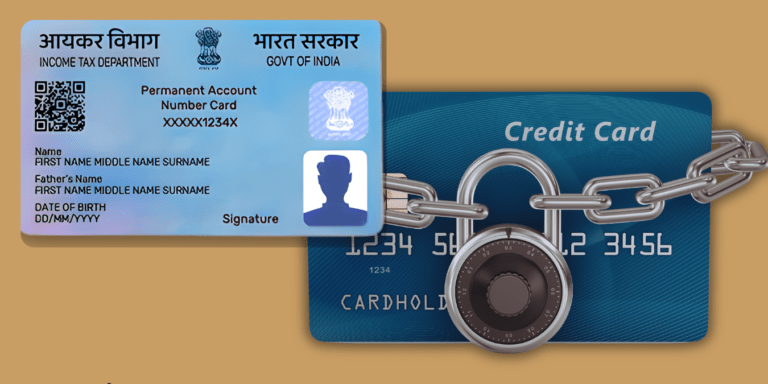
| PAN for Applications | PAN required but occasionally deferred or waived | PAN is strictly mandatory; no card application processed without it |
| Statement as Address Proof | Not accepted for PAN card applications | Credit card statements now valid address proof for PAN applications |
The income tax provisions above are drawn from draft rules open for public comment as of early 2026. High-income earners who make substantial credit card purchases should ensure their declared ITR income is consistent with their spending levels to avoid any discrepancy flags from the Income Tax Department.
6Bank-Specific Changes: SBI Card, Axis Bank & YES Bank
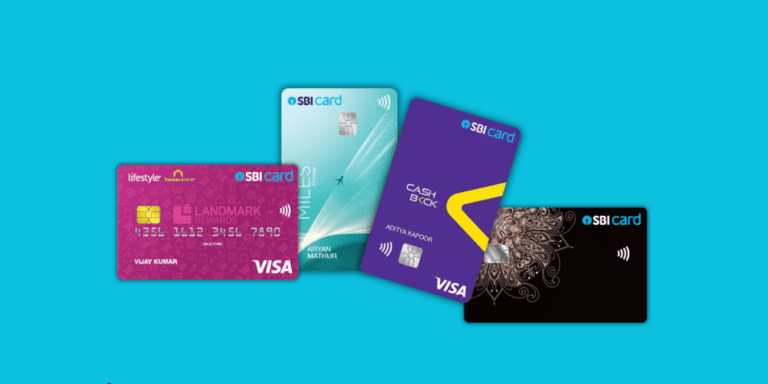
Beyond RBI-level mandates, several major banks are revising their individual credit card policies from April 2026, affecting cashback structures, reward redemption rules, and fees on specific payment categories. Cardholders should check which of their cards are impacted.
- Statement credit redemption capped at 60,000 reward points per month
- Redemption only in multiples of 4,000 points
- Air India SBI Signature Card remains exempt
- Effective: April 1, 2026
- Airtel Axis Card reward structure revised
- 10% cashback on Swiggy & BigBasket discontinued
- 10% value-back shifts to Zomato, Blinkit & District
- Effective: April 12, 2026
- 1% fee on utility bills above monthly card limits
- Toll payments over monthly limits attract 1% fee
- Per-transaction fee capped at Rs 5,000
- Effective: April 1, 2026
If you hold a card from any of these banks, review the email or SMS notification sent to you. Banks are required by RBI rules to notify cardholders in advance of term changes. If you have not received communication, log in to your bank’s app or call customer care before April 1.
7Billing Transparency: Your Statement Gets Smarter
RBI’s updated guidelines require banks to make credit card statements far more informative than they have historically been. Every statement must now display a detailed fee breakup as separate line items: interest charged, late payment fees, over-limit charges, applicable GST, and any recurring membership costs.
Statements must also clearly separate the billed amount, minimum due, and total outstanding balance — reducing confusion that has historically led to accidental defaults. Real-time alerts are now mandatory for all transactions, unusual activity, and upcoming due dates. The goal is to give you enough information to act proactively rather than discover a problem after the billing cycle closes.
8Pre-April Deadline Action Checklist
✅ 7 Things to Do Before April 1, 2026
9What Has NOT Changed — Clearing the Myths
There is no universal EMI opt-out mandate. The RBI has not created a standardised EMI opt-out mechanism across all banks. What has changed is the requirement for explicit consent before a purchase is converted to EMI — not a sweeping ban on EMI offers themselves.
There is no single central credit card registry. While RBI rules require all cards to be registered in issuer databases for traceability and fraud prevention, there is no unified central registry visible across all institutions as of April 2026.
Rewards are not being abolished. Banks are restructuring reward programmes and tightening redemption caps, but credit card benefits continue to exist. The change is in the structure and limits — not in the elimination of rewards altogether.
10Frequently Asked Questions
11The Bottom Line
The April 2026 credit card changes represent the most comprehensive rebalancing of cardholder rights and bank responsibilities India’s regulatory system has undertaken in years. From forcing principal repayment into minimum dues to mandating tokenisation and tightening income tax reporting, the direction is unmistakably clear: transparency for the consumer, accountability for the issuer, and visibility for the tax system.
For responsible cardholders who pay bills on time and treat credit as a convenience rather than a debt instrument, most changes are neutral or actively beneficial. Itemised billing, the ban on auto-EMI conversion, and faster card closure timelines all put more control in your hands.
For revolving credit users or high spenders, this is the moment to reassess spending patterns and repayment strategies. Use this guide as your foundation — and always verify your specific card issuer’s communications before April 1, 2026.