OnePlus India Lost38.8% of Its Shipmentsin One Year —Did Robin Liu'sResignationConfirm the Worst?
OnePlus India Lost
38.8% of Its Shipments
in One Year —
Did Robin Liu’s
Resignation
Confirm the Worst?
The steepest market-share collapse of any smartphone brand in India in 2025. A CEO who called the shutdown rumors “misinformation” — then quit. Here’s every data point, decoded.
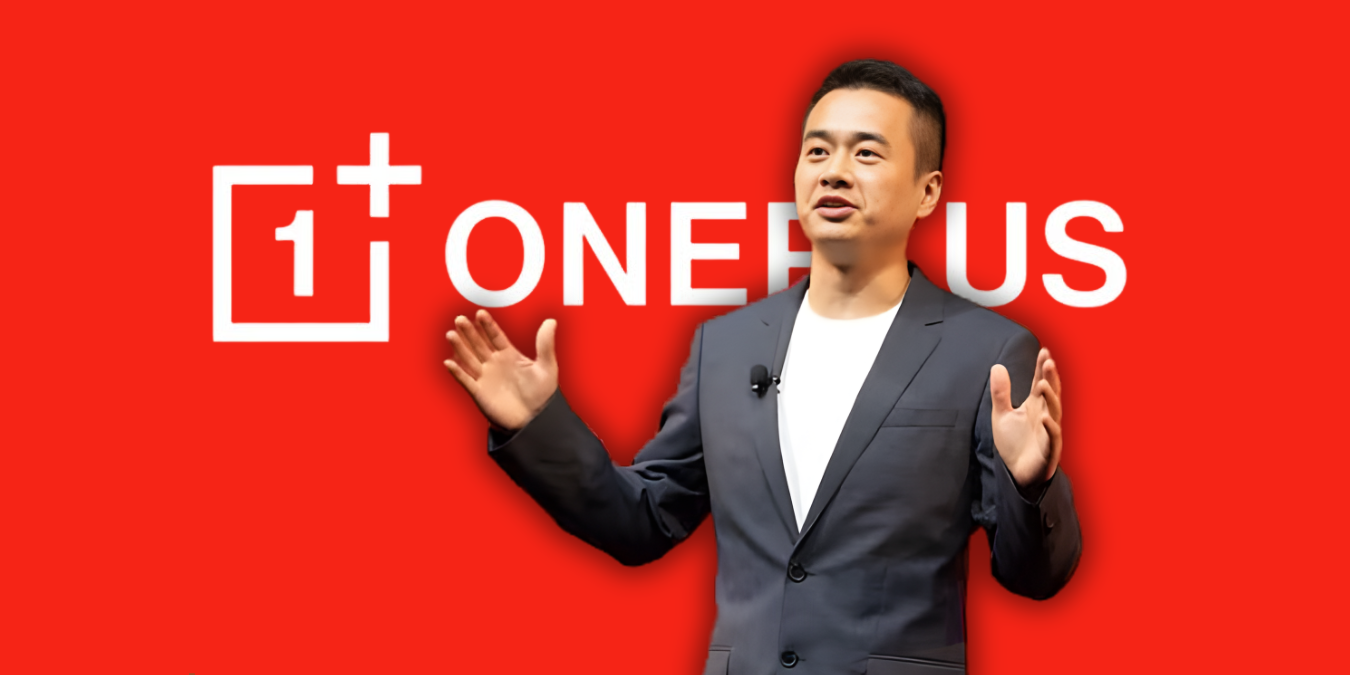
When the International Data Corporation published its India smartphone report for 2025, one number stood out like a distress flare: −38.8%. That was OnePlus India’s year-on-year shipment decline — the steepest of any brand operating in the country that year. Within 24 hours of that figure entering public circulation, OnePlus India CEO Robin Liu submitted his resignation, effective March 31, 2026.
The timing is impossible to ignore. And yet, the full story is more complex, more structurally revealing, and frankly more alarming than a single resignation or a single data point. This is a deep dive into how one of India’s most celebrated smartphone challenger brands went from owning 21% of the premium segment to fighting for survival — and what Liu’s departure actually tells us about what comes next.
The Numbers Behind the Collapse
Let’s start with the data. According to IDC (International Data Corporation), OnePlus India’s market share fell from 3.9% in 2024 to approximately 2.4% in 2025 — a 38.8% contraction that IDC identified as the steepest single-year decline of any smartphone brand in India that year. A separate estimate by CyberMedia Research (CMR) placed the shipment decline at 32%, confirming the damage is real across methodologies even if the exact magnitude varies by firm.
Those figures only become truly shocking when you zoom out. In 2023, OnePlus held 6.1% of India’s smartphone market. By 2025, that number had more than halved to 2.4%. The cumulative math is brutal: the brand surrendered over 60% of its India market share across roughly two years. For a company that derives approximately half of its global smartphone sales from India, this isn’t a bad quarter. It is a structural crisis.
The premium smartphone segment tells an even grimmer story. OnePlus built its entire brand identity at the premium tier — from the OnePlus 3 that shook the ₹30,000 segment to flagship 12-series devices competing with Samsung’s Galaxy S line. Data cited by ETV Bharat shows OnePlus’s share of India’s premium smartphone segment fell from 21% to just 6% in a single year — a 71% collapse. Losing ground in the very segment where the brand made its name isn’t a tactical setback. It’s an identity crisis.
The cumulative picture: OnePlus surrendered more than 60% of its India market share across roughly two years. The damage was sharpest exactly where the brand had built its reputation.
— Outlook Business / Gadget Hacks Analysis, March 2026Who Is Robin Liu — And Why Did He Really Leave?
Robin Liu joined OnePlus in 2018 and became one of the brand’s most visible regional faces. He was promoted to CEO of OnePlus North America in January 2022, then returned to India as CEO of OnePlus India from July 2024. His tenure was bookended by two contrasting realities: a brand in freefall, and a leader publicly committed to its survival.
Just two months before his resignation, Liu was firmly in denial mode. In January 2026, viral reports circulated that OnePlus was planning to wind down operations globally. Liu personally took to X to call these claims “misinformation” and insisted the brand was “operating as usual.” OnePlus branded the shutdown reports “unverified” and “false,” affirming North America, India, and European operations were continuing normally.
In January 2026, Robin Liu publicly dismissed shutdown rumors as “misinformation.” His last working day is confirmed as March 31, 2026 — just two months after that statement. His exit does not validate a full shutdown, but it confirms the organizational changes around him were already underway, and the commercial difficulties driving them were very real.
His resignation was confirmed by OnePlus: “We thank Robin for his contributions to OnePlus India. He moves on to pursue his personal passions, and we wish him the very best for his future endeavours.” Sources cited by The Economic Times pointed toward an ongoing restructuring across global markets. Most tellingly: Liu had already relocated back to China, and no successor has been named as of publication.
A Timeline of Decline
The market collapse did not happen overnight. It was the product of strategic decisions, missed opportunities, and structural changes playing out over several years.
The R&D Merger — Independence Begins to Erode
OnePlus merged key design and R&D teams with OPPO. A 2019 pledge to build an India R&D center employing 1,500 people by 2022 would produce just 116 employees by February 2024. Operational independence started quietly dissolving.
Identity Dilution via the Nord Series
The Nord mid-range lineup boosted volume but began diluting the brand’s premium positioning — the exact attribute that differentiated OnePlus from every other Android OEM in India.
Retail Channel Friction Deepens
Several brick-and-mortar sellers stopped stocking OnePlus devices, citing margin pressures and after-sales service issues. The brand retreated to an online-dominant model — reducing cost but narrowing market reach in a country where offline retail still moves the majority of smartphones.
Global Contraction & Dallas HQ Closure
OnePlus’s Dallas US headquarters closed without announcement. European teams were reduced. The end of a T-Mobile partnership left OnePlus phones unlocked-only in a carrier-driven market. Global shipments fell from ~17M units to 13–14M, a 20%+ drop.
38.8% India Collapse & Robin Liu Resignation
IDC records a 38.8% YoY shipment decline — the steepest of any brand in India that year. Premium segment share falls from 21% to 6%. Robin Liu submits his resignation effective March 31, 2026. No successor is named.
The OPPO Consolidation Nobody Is Talking About
To understand Robin Liu’s departure and the broader trajectory, you have to zoom out to parent company OPPO’s strategic posture. Industry reports indicate that OnePlus and Realme are now working more closely together under a unified group strategy, potentially led by Realme CEO Sky Li. In this configuration, Liu would have effectively reported beneath a Realme executive — an enormous structural subordination for a brand whose identity was built on being the “anti-establishment” challenger.
Premium & Global Expansion
- →OPPO Find X9 Ultra teased for global launch
- →Pete Lau (founder) positioned as flagship CPO
- →Pushing into Western premium markets
- →Centralizing sub-brand control under OPPO group
Cost-Focused & Absorbed
- →Retreating to online-only distribution in India
- →Deeper integration into OPPO’s infrastructure
- →R&D center pledge never fulfilled (116 vs 1,500)
- →CEO exit with no named successor
These are not parallel strategies. One is replacing the other. The numbers on the India R&D promise are particularly telling. A 2019 pledge to build a 1,500-person India R&D center by 2022 produced 116 employees by February 2024. That isn’t underperformance — that is a commitment made and quietly abandoned as the parent company centralized control.
OPPO is moving premium and global. OnePlus is moving cost-focused and centralized. Those are not parallel strategies — one is replacing the other.
— Gadget Hacks / OnePlus analysis, March 2026What This Means for OnePlus Owners in India
If you currently own a OnePlus device or are considering buying one, here is the most grounded, evidence-based picture available right now.
Software Support Intact
OnePlus has explicitly committed to software updates, security patches, and warranty support. Existing devices are covered by 3–4 years of Android updates and 4–5 years of security patches, backed by OPPO’s infrastructure.
Product Pipeline Active
The OnePlus Nord 6 is still scheduled for India next month, suggesting the brand does not consider its India chapter closed — though reversing the premium segment collapse is a different question entirely.
Succession Vacuum
No confirmed successor to Liu, no announced 2026 product roadmap for Western markets, and OPPO pushing its own flagship line globally. A brand without a local CEO is difficult to recommend with confidence.
Shipment figures are sourced from IDC and CyberMedia Research (CMR) — both established market research firms with documented methodologies. These figures have been reported by Business Standard, The Economic Times, Outlook Business, and Zee News within the last 48 hours. Leaker reports (including one deleted post claiming April shutdowns in the US, UK, and EU) are flagged as unverified and not used as primary evidence in our analysis.
Is OnePlus Shutting Down? The Honest Answer
The most searched question right now is the bluntest one: Is OnePlus shutting down? The evidence available as of March 25, 2026, does not support a full shutdown. What it does clearly support is a significant, sustained strategic retrenchment — a brand being pulled inward, not wound down.
The confirmed facts tell a consistent directional story: R&D merged with OPPO in 2021. India headcount never materialized. Offline retail abandoned. Online-only pivot executed. Dallas HQ closed quietly. European teams reduced. T-Mobile partnership ended. CEO departed with no replacement named. Reporting lines reorganized under Realme’s Sky Li.
Each individual step, taken alone, is explicable. Taken together, they describe a brand whose operational independence has been progressively dismantled over four years. The gap between “strategic rollback” and “full shutdown” is real — but that gap can close, and the direction of travel has been absolutely consistent.
A brand being absorbed, not wound down — but the warning signs are unmistakably real.
Robin Liu’s resignation does not confirm a OnePlus shutdown. But it does confirm that the organizational transformation around him was already underway — and the commercial difficulties driving it were undeniably real. This is the story of OPPO consolidating control over a sub-brand following years of deteriorating market performance and a recovery effort that failed to take hold.
The brand that once upended India’s premium smartphone segment with a ₹27,999 flagship — the same brand that inspired lines outside offline stores — is now a 2.4% market share player retreating to digital-only distribution. Whether the OnePlus name survives as a coherent, independent identity in the coming years depends on strategic decisions that have not yet been made public. What is certain: the data was the canary, and Liu’s exit was the signal that everyone in that coal mine already knew something was wrong.