Loan Restructuring vs OTS: When to Choose Loan Restructuring or One Time Settlement
Shocking: 70% of Indians restructuring loans in 2025 see CIBIL scores crash, trapping them in debt cycles—while OTS secretly unlocks freedom. RBI’s hidden rules, fintech hacks, and FY25 NPA surge reveal the trap. Will you choose relief or riches? Discover the 2025 game-changer now!
A middle-class family in Mumbai drowning in a ₹50 lakh home loan, EMIs eating 60% of their salary amid 2025’s 7% inflation spike. They opt for restructuring, breathing easy with lower payments—only to watch their CIBIL score plummet, blocking future loans and job perks. Shocking twist: The “relief” backfires spectacularly for 70% of cases, per recent trends. Why does this happen, and when does One-Time Settlement (OTS) flip the script for financial freedom? Dive in to uncover hidden traps, RBI’s 2025 game-changers, and steps to reclaim control before rising NPAs (now 3.6% in FY25) trap you.
India’s Debt Crisis in 2025
India’s personal loans hit ₹12 lakh crore in FY25, with NPAs climbing to 2.31% despite RBI’s cleanup drive. Rising inflation at 5.5% and unemployment at 8% push 15 million borrowers toward distress, amplified by fintech lending via apps like KreditBee and MoneyTap offering quick ₹5 lakh loans. RBI’s Project Finance Directions 2025 now allow DCCO extensions up to 3 years for infra without NPA tags, but retail borrowers face stricter norms under Resolution Framework 2.0 echoes.
Emotional relief surges as restructuring offers EMI cuts of 30-50%, yet urgency mounts with RBI’s 30-day grace before CIBIL hits, expiring soon amid scam surges – deepfakes stole ₹21,367 crore in H1 FY25.




Hidden Dangers of Loan Defaults in 2025 India
India’s loan defaults surged to 3.6% in FY25, with credit card NPAs jumping 28% to ₹6,742 crore by late 2024—rural youth and Tier-3 borrowers hit hardest. Small unsecured loans fuel over-borrowing amid fintech boom, RBI tightening rules to curb risks. Emotional toll? Sleepless nights, family stress, asset seizures—yet Gross NPAs dropped to 2.31% overall thanks to resolution drives.
RBI’s 2025 Master Circular mandates 90-day overdue for NPA tag: term loans unpaid, overdrafts ‘out of order’. Project loans get nuanced treatment under new Directions effective October 2025, allowing DCCO extensions up to 3 years for infra without immediate downgrade—if viable. Urgency alert: With inflation eroding savings, delays amplify losses 20-30% via penalties.
Loan Restructuring Unpacked
Restructuring tweaks terms like tenure extension (max 2 years for non-infra), EMI reduction, or moratorium, keeping accounts “standard” if pre-NPA. RBI mandates Techno-Economic Viability (TEV) studies for exposures over ₹100 crore, with DCCO uniform across lenders. For personal loans, Bajaj Finserv requires “standard” status as of March 2021 cut-offs, plus clean repayment history.
Surprise Pitfall: Lenders report it as “restructured” on CIBIL, dropping scores 100-200 points initially – signaling distress to future lenders. Consistent payments rebound it in 12-24 months, but one missed EMI resets progress. Tax-free under CBDT 2022, no TDS on waivers.
Aspiration alert: Wealth-builders use it for business loans, preserving cash flow for investments yielding 12% returns.
One-Time Settlement Exposed
OTS lets you settle full debt (principal + interest) for 40-70% via lump-sum or installments, closing the account forever. Banks recovered ₹61,000 crore via OTS in recent years, favoring it for quick NPA cleanup. RBI urges negotiation post-NPA tagging (90+ days overdue), with eligibility for NPAs based on recovery potential.
Hidden Gem: No TDS on OTS waivers for individuals post-CBDT clarification, slashing tax fears – waived ₹10 lakh saves ₹3 lakh tax at 30% slab. But CIBIL marks “settled,” worse than restructuring, blocking credit for 7 years. Fintechs like PaySense now offer OTS funding bridges.
Urgency: With RBI’s 2025 recovery rules mandating digital dashboards, banks push OTS offers expiring quarterly.
Key Differences: Restructuring vs OTS
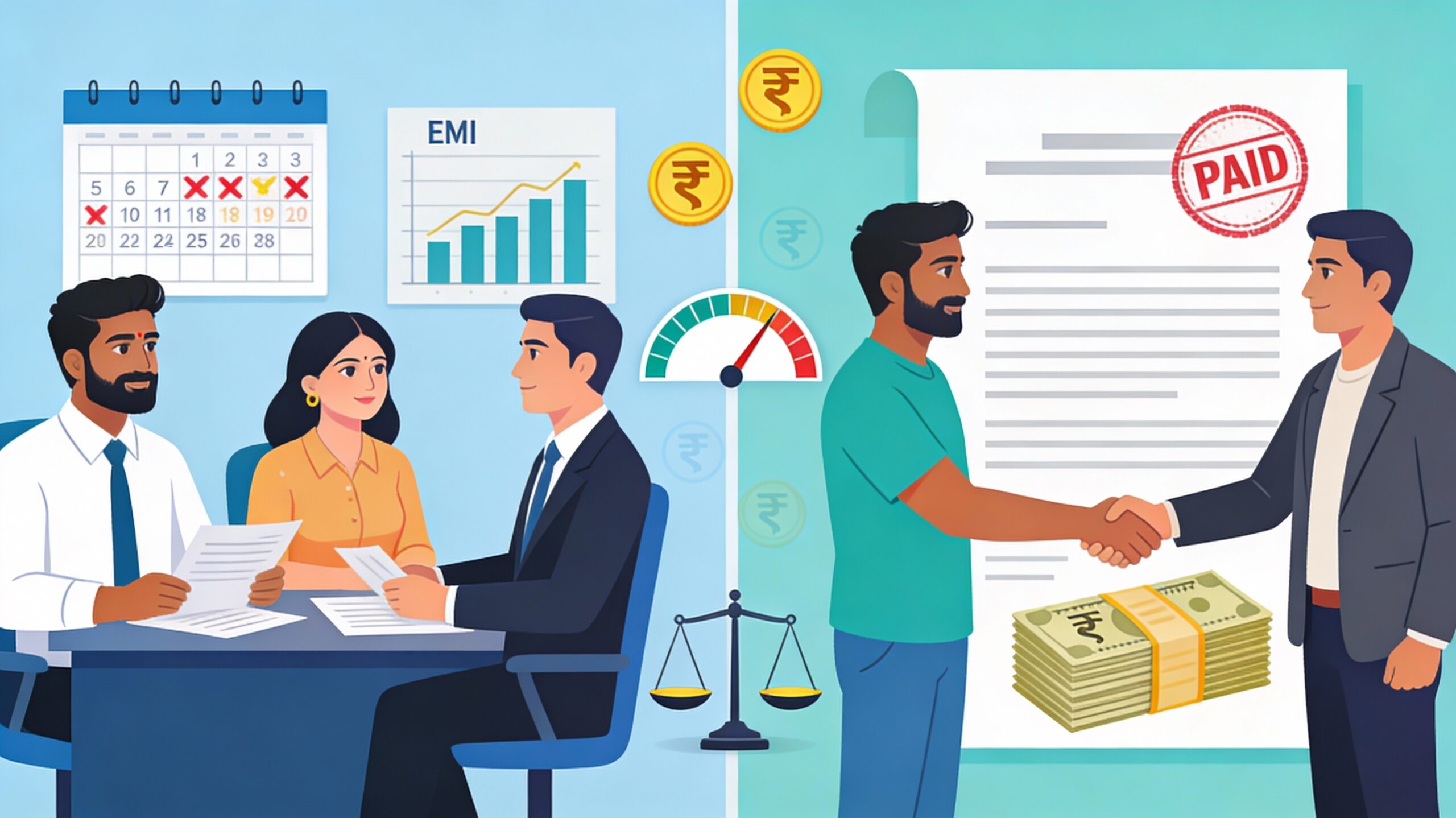
| Aspect | Loan Restructuring | One-Time Settlement (OTS) |
| Eligibility | Standard accounts pre-stress; TEV for large loans | NPAs; bank-assessed recovery |
| Cost | Lower EMIs, full repayment over time | 40-70% of dues; immediate cash |
| CIBIL Impact | “Restructured” tag, 100-200 pt dip, recoverable in 1-2 yrs | “Settled” mark, 7-yr blacklist |
| Tax | No TDS on concessions | Waiver tax-free for individuals |
| Time | 90-180 days implementation | 30-60 days negotiation |
| Best For | Ongoing viability, future credit needs | Total exit, no repayment capacity |
Restructuring suits aspiration-driven borrowers rebuilding wealth; OTS delivers relief for debt-trapped families eyeing financial freedom.
One-Time Settlement: Quick Exit with Tax Twists
OTS settles full debt via lump-sum <principal+interest, waiving balance—ideal for NPAs excluding wilful defaulters. Process: Eligibility check, proposal, bank eval (recovery potential), negotiation. Supreme Court 2025 ruling: No right without 5% upfront; SBI rejected Tanya Energy sans it, courts can’t force.
Little-known: Banks exempt from 10% TDS on waivers post-2022 CBDT clarity—no “benefit” tax on borrower, but waiver may count as income (taxable). CIBIL marks “settled,” less damaging than “written-off,” recoverable in 2-3 years with payments.
Urgency: FY25 small loan NPAs rising; OTS recovers faster for banks, relieves borrowers 40-60% debt. Example: Delhi trader settled ₹20 lakh NPA at ₹12 lakh, restarted business scam-free.
| OTS vs Restructuring | OTS | Restructuring |
| Debt Reduction | 20-60% waiver | No waiver, just reschedule |
| CIBIL Recovery | 2 years “settled” | 1-2 years “restructured” |
| Cash Needed | Upfront lump-sum | Ongoing EMIs |
| Tax Risk | Waiver as income? | None direct |
| Best For | Full exit, NPAs | Viable ongoing biz |
When Restructuring Wins Big
Choose restructuring if your business cash flows stabilize post-2025 policy shifts like eased KYC for G-Secs boosting liquidity. Example: A Bengaluru startup extends ₹2 crore loan tenure by 24 months, slashing EMI from ₹2 lakh to ₹1.2 lakh, freeing ₹9.6 lakh yearly for expansion amid RBI’s VRR auction halt flooding markets with cash.
Little-Known Edge: No NPA downgrade if DCCO extended within limits (2 years non-infra), preserving standard status – ideal pre-asset sale. Avoid if multiple loans; one tag contaminates all.
Relief: 30-day CIBIL grace under new rules prevents panic defaults.
When OTS Delivers Freedom
Opt for OTS if insolvent – settle ₹20 lakh NPA for ₹10 lakh via family funds or asset sale. Punjab National Bank led with 8.87 lakh OTS cases recovering billions. Real-world: Delhi trader pays 50% on ₹15 lakh loan, escapes harassment, restarts scam-free.
Shocking Fact: Waivers aren’t taxable income per courts, unlike myths – pure relief amid April 2025 tax slab hikes to 25% over ₹20 lakh.
Urgency: Fake OTS scams via deepfake calls spike; verify via RBI’s Sachet portal.
2025 RBI/SEBI Shifts: Game-Changers Exposed
RBI’s April 2025 Master Circular updates IRACP norms: Restructured standards drop to sub-standard instantly, but MSMEs get leeway. Project Finance Directions (June 2025) permit 2-3 year DCCO slips sans NPA if <10% overrun via Standby Credit Facility (SBCF). Provisioning jumps: 1.25% CRE construction, extra 0.375-0.5625% per deferred quarter.
SEBI eases high-value debt compliance (threshold ₹5,000 crore), boosting bond access for stressed firms. Hidden intrigue: Fintechs (Olyv-listed) automate via RBI-approved apps, but scams rise—verify NBFC ties. Policy urgency: Surplus liquidity ends daily VRR auctions June 2025, rates may firm.
Expert view: “Restructuring preserves value, OTS cuts losses—but pick per cash flow,” notes recovery pros.
Emotional & Financial Triggers: Aspire, Relieve, Act Now
Aspiration: Rebuild via OTS for wealth-building—post-settlement investors eye clean slates. Relief: Restructuring slashes EMI stress 30%, freeing ₹10k/month for family goals. Urgency: NPAs climbing, 2026 rules may tighten OTS eligibility amid inflation/scams.
Fintech revolution: PaySense, Navi offer instant checks, but read RBI caps. Trends: Rural over-borrowing risks seizures—act pre-90 days.
Step-by-Step: Choose & Implement Wisely
Assess Urgency:
- Check CIBIL: >750? Restructure viable biz.
- NPA? Compute OTS: 40-60% principal offer +5% upfront.
- Use RBI calculator/apps for EMI simulation.
Restructuring Path:
- Gather docs (financials, TEV if >₹100cr).
- Approach bank within 60 days default; invoke ICA if consortium.
- Negotiate tenure extension ≤2yrs; pay fair value diminution.
- Monitor: Day-end SMA flags start.
OTS Action Plan:
- Propose via letter: Offer + rationale (e.g., asset sale).
- Secure funds (family, P2P)—no TDS hit.
- Get NOC post-payment; dispute CIBIL if “written-off”.
Money Moves:
- Build emergency fund: 6 months EMI in liquid funds.
- Boost score: Pay utilities on time, limit inquiries.
- Consult: Free RBI grievance portal pre-litigation.
Track via CRILC reports if >₹5cr exposure. Implement today—save 15-30% interest.
Actionable Takeaways for Financial Freedom
- Audit Now: Download CIBIL report; flag overdues <90 days.
- Restructure If: Business viable, cash flow steady—target MSME FRR 2.0.
- OTS If: Lump-sum ready, seek quick exit; avoid wilful tag.
- Hybrid Hack: Partial OTS + restructure balance via fintech.
- Protect Score: 12 months flawless payments post-choice.
- Scam Shield: Verify bank portals, ignore unsolicited calls.
Power tip: 2025 Project Directions open infra goldmine—leverage SBCF for overruns.
Final Thought
Most Indians think loan restructuring or OTS is just about “getting relief from EMIs,” but the real game in 2025 is about positioning yourself for the next wave of policy, fintech, and credit-score disruption that is already forming below the surface. Over the next few years, unsecured lending is likely to face tighter norms, data-driven risk profiling will get harsher, and settlement windows could shrink just as AI-powered credit engines start flagging distress months before you even miss an EMI. The borrowers who treat today’s restructuring or OTS decision as a one-time escape will probably feel trapped again when future rules make second chances rarer and more expensive. Those who treat it as a strategic reset—cleaning up their credit, rebuilding buffers, and aligning loans with real cash flows—will be the ones ready to grab tomorrow’s cheaper credit, better job-linked offers, and safer digital finance products.