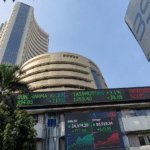
Why Did Sensex Jump 685 Points and Nifty 50 Reclaim 22,776 a Day Before the RBI Verdict?
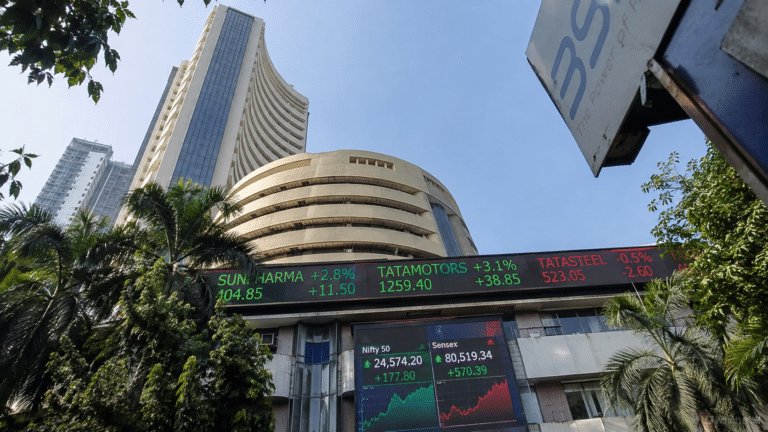
Indian equities are writing a fresh chapter this week, and if you’ve been asking whether the recent volatility is over or just the calm before another storm, you’re not alone. On July 1, 2026, the BSE Sensex jumped 443.97 points (0.58%) to close at 76,922.64, while the NSE Nifty 50 climbed 140.10 points (0.59%) to settle at 24,005.85, reclaiming the psychologically important 24,000 mark after two straight sessions of losses. This detailed briefing breaks down everything driving Indian stock market trends right now — from GDP growth and CPI inflation to RBI repo rate decisions, sector rotation, and the stocks smart money is watching heading into the second half of 2026.
Indian Market Overview: Sensex, Nifty 50 And Bank Nifty Snapshot
After a choppy end to June, Indian benchmark indices are showing signs of stabilization, even as investor sentiment remains cautious rather than euphoric. The rebound on July 1 came on the back of easing crude oil prices and a broadly positive tone across Asian markets.
- BSE Sensex: Closed at 76,922.64, up 443.97 points (0.58%), after touching an intraday high of 77,110.08
- NSE Nifty 50: Closed at 24,005.85, up 140.10 points (0.59%), reclaiming the 24,000 level
- Nifty Bank: Ended the prior session (June 30) at 57,542.90, down 184.45 points (0.32%), reflecting continued caution in rate-sensitive financials
- Investor sentiment: Mixed-to-cautiously-optimistic, with broader market breadth still selective rather than broad-based
It’s worth noting that this recovery follows a genuinely turbulent start to the year. Sensex had touched an all-time high of 86,159.02 on December 1, 2025, and Nifty 50 hit a record 26,373.20 on January 5, 2026, before a sharp correction driven by global trade tensions and geopolitical shocks pulled Sensex down by over 5,000 points and Nifty by roughly 1,450 points from their peaks. That correction is exactly why current market prediction India narratives are being watched so closely — investors want to know if this is a genuine trend reversal or another false dawn.
Why Investor Sentiment Is Still Fragile
Market participants remain wary of a handful of overhanging risks even as headline numbers improve. Analysts at HDFC Securities note that mid and smallcap stocks have seen a brutal median correction of nearly 40%, which — while painful — has also created some of the best valuation entry points seen in almost two years. This bifurcation between a stabilizing large-cap Nifty and a still-recovering broader market is one of the defining Indian stock market trends of mid-2026.
Key Economic Drivers Behind The Market Moves
Understanding where Sensex and Nifty are headed requires looking beyond daily point moves and into the macro engine room: GDP growth, inflation trends India, and RBI monetary policy.
India GDP Growth Trajectory
India’s GDP growth for FY26 was estimated at a robust 7.4%, driven by a “double engine” of consumption and investment activity, according to the government’s own assessment. However, the outlook for FY27 has been trimmed. The RBI’s June 2026 Monetary Policy Committee meeting lowered its FY27 growth projection to 6.6% from an earlier estimate of 6.9%, citing uncertainty from prolonged geopolitical tensions and global supply-chain disruptions. This growth deceleration is a key reason why equity benchmarks have struggled to sustain sharp rallies despite decent corporate earnings.
CPI Inflation Trends India
On the inflation front, there’s actually good near-term news. Retail inflation, measured by the Consumer Price Index (CPI), came in at 3.93% year-on-year for May 2026 (provisional), comfortably within the RBI’s tolerance band. That said, the central bank has flagged upside risk ahead: the RBI raised its FY27 CPI inflation projection to 5.1% from 4.6% earlier, largely due to elevated energy prices tied to the West Asia conflict. This tension between benign current inflation and a more worrying forward projection is exactly the kind of curiosity-gap dynamic that’s keeping bond yields and rate-sensitive stocks on edge.
RBI Repo Rate Status And Monetary Policy
The Reserve Bank of India kept the repo rate unchanged at 5.25% at its June 2026 MPC meeting — the third consecutive pause — while retaining a “neutral” policy stance. This followed a cumulative 100 basis points of rate cuts during FY25-26 (25 bps cuts in February, April, and December 2025, plus a 50 bps cut in June 2025). Governor Sanjay Malhotra explained that the MPC’s decision reflected a wait-and-watch approach given elevated energy prices, supply-chain disruptions from the West Asia conflict, and monsoon-related uncertainty.
- SDF rate: 5.00%
- MSF rate and Bank rate: 5.50%
- Repo rate: 5.25% (unchanged for third straight meeting)
Unemployment Data And What It Signals
India’s unemployment rate rose to 5.5% in May 2026, up from 5.2% in April — the highest reading in nearly a year, and above market expectations of 5.3%. Rural unemployment climbed to a one-year high of 5.1%, while urban unemployment actually eased to 6.4% from 6.6%. This uneven labor market picture adds another layer of complexity to India’s growth story, tempering some of the optimism from strong headline GDP figures and reinforcing why RBI is treading cautiously on rate cuts.
NIFTY Today: Point-Wise Breakdown
For readers tracking Nifty today specifically, here’s a clean point-wise summary of recent price action:
- Nifty 50 closed at 24,005.85 on July 1, gaining 140.10 points (0.59%), successfully reclaiming the 24,000 psychological level after slipping below it the previous session
- The rally was broad-based across Asian markets, with easing Brent crude prices (down 1.07% to USD 72.17 per barrel) providing a tailwind for oil-import-dependent India
- On June 30, Nifty had opened 86 points higher at 24,032, touched an intraday high of 24,035, but reversed to close lower at 23,865.75, down 80.50 points (0.34%)
- Immediate support for Nifty is placed around 23,750, with resistance near 24,000-24,100 based on recent technical structure
- Bank Nifty has underperformed the broader index, dropping 184.45 points (0.32%) to 57,542.90 on June 30, reflecting selective weakness in financials
- Sector-wise, Nifty IT fell roughly 1.5-2% during the June 30 session amid concerns over US rate outlook and softer demand, while Nifty Auto was the worst-performing sector on June 29, down nearly 2%
- Broader market breadth remains weak-to-mixed, with midcaps largely flat-to-negative and smallcaps showing only patchy outperformance
- Expiry-day volatility and profit-booking at higher levels have been recurring themes weighing on Nifty in the final week of June 2026
BSE Sensex Vs NSE Nifty 50: June 2026 Trend Comparison
Here’s a side-by-side look at how the two headline Indian stock market indices have moved through the final week of June and into early July 2026.
The pattern here tells an important story: both indices are still consolidating rather than trending decisively in either direction, oscillating within a fairly tight band as the market digests mixed domestic macro signals against a still-uncertain global backdrop.
Latest Market News Highlights And Their Immediate Impact
Several fresh news catalysts are shaping Indian stock market trends this week. Here’s a point-wise breakdown of what’s moving the needle and why it matters.
- Easing crude oil prices: Brent crude fell 1.07% to USD 72.17 per barrel on July 1, directly boosting sentiment for oil-import-heavy India and lifting consumption and paint-sector stocks
- RBI’s growth downgrade: The MPC’s decision to cut FY27 GDP growth forecast to 6.6% from 6.9% has made markets slightly more cautious on earnings growth expectations for FY27
- Inflation projection hike: RBI raising FY27 CPI inflation forecast to 5.1% has reduced expectations of near-term rate cuts, keeping banking and NBFC stocks range-bound
- West Asia conflict and geopolitical tensions: Continuing uncertainty around the conflict’s duration is being cited repeatedly by RBI and market strategists as the single biggest swing factor for energy prices, the rupee, and FPI flows
- Monsoon and El Niño risk: NSE has flagged monsoon performance as a critical risk factor for India’s 2026 economic outlook, given its direct bearing on rural demand and inflation trends India
- Rising unemployment print: The jump to 5.5% unemployment in May has added a note of caution to the domestic consumption narrative even as urban unemployment eased
- IT sector under pressure: Concerns over the US Federal Reserve’s interest-rate trajectory and softer demand outlook have kept Nifty IT among the weakest sectoral performers in recent sessions
- Expiry-day volatility: Monthly derivatives expiry created choppy trading patterns in late June, exaggerating intraday swings without a clear directional trend
Foreign Indices Movements That Influenced Indian Markets
Global cues remain a dominant force behind daily swings in Sensex and Nifty. Indian markets are especially sensitive to the following foreign indices and global developments right now.
- US Federal Reserve interest-rate outlook: Uncertainty around the Fed’s rate path has driven risk-off positioning in export-heavy Indian sectors like IT
- Asian markets (Nikkei, Hang Seng, Shanghai Composite): Delivered a mixed performance around early July, with pockets of strength helping support Indian sentiment on July 1
- Brent crude oil benchmark: Though not an equity index, crude price moves function as a de facto macro indicator that heavily sways Indian market direction given India’s import dependence
- US dollar index and rupee movement: The rupee erasing intraday gains and closing near session lows has repeatedly weighed on sentiment, particularly for import-dependent and highly leveraged sectors
- Geopolitical risk indices tied to the West Asia conflict: Continue to be the most cited external risk factor by RBI and market strategists alike
Top NSE/BSE Stocks: Performance Overview
Top 10 Stocks To Watch For 2026
Based on recent price action, sector triggers, and analyst commentary, here are ten stocks generating strong interest among Indian equity investors heading through 2026. Valuations mentioned are approximate and should be verified on NSE/BSE before investment decisions.
| Stock | Sector | Recent Trigger | Investment Rationale |
|---|---|---|---|
| State Bank of India | Banking (PSU) | Among Sensex’s top gainers July 1 | Strong credit growth, PSU banking rerating theme, attractive dividend yield |
| Kotak Mahindra Bank | Banking (Private) | Led Sensex gainers July 1 | Premium private bank with resilient asset quality and margin stability |
| Hindustan Unilever | FMCG | Top gainer, benefits from cooling inflation | Defensive bluechip play on rural and urban consumption recovery |
| Asian Paints | Consumer Goods | Led Sensex gains July 1 | Direct beneficiary of easing crude/input costs, strong brand moat |
| Mahindra & Mahindra | Auto | Among top gainers despite sector weakness | Tractor and SUV demand momentum, diversified auto-plus-farm exposure |
| Adani Ports | Infrastructure/Logistics | Top Sensex gainer July 1 | Infrastructure capex tailwinds, trade volume growth |
| Eternal (Zomato) | New-age/Consumer Tech | Leading Sensex gainer | Quick-commerce and food-delivery growth optionality |
| ICICI Bank | Banking (Private) | Sector leadership in private banking | Consistent earnings delivery, digital banking scale |
| Bharti Airtel | Telecom | Structural tariff-hike beneficiary | ARPU growth story, 5G monetization potential |
| Sun Pharma | Pharma | Defensive earnings visibility | US generics stability plus domestic branded formulation growth |
Top 10 Gainers And Losers — NSE Nifty 50 (July 1, 2026 Session)
Here’s the verified, complete list of Top 10 Gainers and Top 10 Losers for the most recent trading session (July 1, 2026), sourced directly from NSE Nifty 50 data.
| Rank | Top Gainers | Price (Rs) | % Change | Rank | Top Losers | Price (Rs) | % Change |
|---|---|---|---|---|---|---|---|
| 1 | Eternal Ltd. | 279.70 | +5.71% | 1 | HCL Technologies | 1,034.20 | -3.51% |
| 2 | Adani Enterprises | 3,143.60 | +3.54% | 2 | Tech Mahindra | 1,362.20 | -3.03% |
| 3 | Nestle India | 1,453.80 | +3.46% | 3 | TCS | 1,982.60 | -2.41% |
| 4 | Asian Paints | 2,716.40 | +3.07% | 4 | Hindalco Industries | 939.70 | -1.77% |
| 5 | Hindustan Unilever (HUL) | 2,182.00 | +3.02% | 5 | Tata Steel | 185.17 | -1.54% |
| 6 | Kotak Mahindra Bank | 400.45 | +2.10% | 6 | Infosys | 985.30 | -1.51% |
| 7 | Adani Ports & SEZ | 1,848.00 | +2.10% | 7 | Dr. Reddy’s Labs | 1,340.00 | -1.27% |
| 8 | Mahindra & Mahindra (M&M) | 3,130.00 | +2.00% | 8 | Tata Motors PV | 347.80 | -1.25% |
| 9 | State Bank of India (SBI) | 1,047.00 | +2.00% | 9 | Larsen & Toubro (L&T) | 4,093.00 | -1.23% |
| 10 | Maruti Suzuki | 14,395.00 | +1.99% | 10 | HDFC Life | 569.95 | -1.03% |
Quick Analysis Of The Session’s Movers
The gainers’ list was dominated by consumption and infrastructure themes, with Eternal (Zomato) leading by a wide margin on sustained quick-commerce momentum, while Adani Enterprises staged a sharp recovery reflecting renewed risk appetite in conglomerate stocks. FMCG heavyweights Nestle, Asian Paints, and HUL all rallied together, directly benefiting from Brent crude falling 1.07% to USD 72.17 per barrel, which eases raw-material and packaging costs for consumer goods makers. Banking names Kotak Mahindra Bank and SBI also featured prominently, supported by broader risk-on sentiment despite the RBI’s neutral policy stance.
On the losing side, the damage was heavily concentrated in IT, with HCL Technologies, Tech Mahindra, TCS, and Infosys all in the red, weighed down by ongoing uncertainty around the US Federal Reserve’s rate trajectory and softer export demand signals. Metal counters Hindalco and Tata Steel also slipped on global commodity price softness, while auto major Tata Motors PV and infra bellwether L&T saw modest profit-booking after recent gains. Overall, the session reflected a clear rotation out of export-facing IT and metals into domestic consumption and financial names.
Sector Performance India 2026: A Comparative View
Analysis And Recommendations: Building A Diversified Portfolio
Given the current mix of resilient large-cap performance and a still-recovering broader market, a risk-calibrated approach makes sense right now.
For Conservative Investors
- Core holdings: HUL, Sun Pharma, SBI (dividend yield focus)
- Pros: Lower volatility, steady dividend income, defensive earnings
- Cons: Limited upside in strong bull phases
- Recent driver: FMCG names benefiting directly from cooling crude and input costs
For Moderate Risk Investors
- Core holdings: ICICI Bank, Kotak Mahindra Bank, Bharti Airtel, Asian Paints
- Pros: Balanced growth-plus-stability profile, strong brand moats
- Cons: Sensitive to repo rate and margin-pressure cycles
- Recent driver: Repo rate pause at 5.25% keeps banking earnings growth steady but capped
For Aggressive/Growth Investors
- Core holdings: Eternal, Adani Ports, M&M, select quality midcaps post the 40% correction
- Pros: Higher upside potential from valuation reset in broader markets
- Cons: Elevated volatility, sensitive to global risk sentiment and Fed policy
- Recent driver: HDFC Securities’ assessment that mid/smallcap corrections have created the best entry points in nearly two years
Stock Recommendations For Today: Detailed Points
- Watch Sensex resistance near 77,100-77,300; a decisive breakout could confirm short-term bullish continuation
- Nifty 50 support at 23,750 remains critical; a break below could reopen downside toward 23,600
- Bank Nifty needs to reclaim 58,000 convincingly to signal renewed financial sector leadership
- IT stocks (Infosys, TCS, HCL Tech, Tech Mahindra) remain a “sell on rallies” theme until US rate clarity emerges
- FMCG and paint stocks (HUL, Asian Paints) look attractive on dips given the direct input-cost tailwind from falling crude
- Banking stocks like SBI and Kotak Bank are showing relative strength and could be accumulated on minor corrections
- Auto stocks warrant caution until monsoon progress and rural demand signals turn more constructive
- Keep a close watch on crude oil prices — every dollar move materially shifts sentiment for Indian equities given import dependence
- Track upcoming RBI commentary closely, since the neutral stance means future rate moves are entirely data-dependent
- Diversify across market caps cautiously — largecaps offer stability, while select quality midcaps offer valuation-driven upside post the recent correction
Final Thought
Indian stock market trends in early July 2026 paint a picture of cautious resilience rather than runaway optimism, with Sensex and Nifty 50 clawing back recent losses even as macro headwinds like a lowered FY27 GDP forecast (6.6%), a repo rate held steady at 5.25%, and rising unemployment (5.5% in May) keep investors watchful. The standout data insight this week is the divergence between benign current CPI inflation of 3.93% and RBI’s more worrying FY27 inflation projection of 5.1%, a gap that will likely dictate the central bank’s next move far more than any single day’s Sensex point change. For now, bluechip stock picks in banking, FMCG, and consumer goods are leading the charge, while IT and auto stay under pressure — a rotation pattern every serious Indian investor should be tracking closely through the rest of 2026.