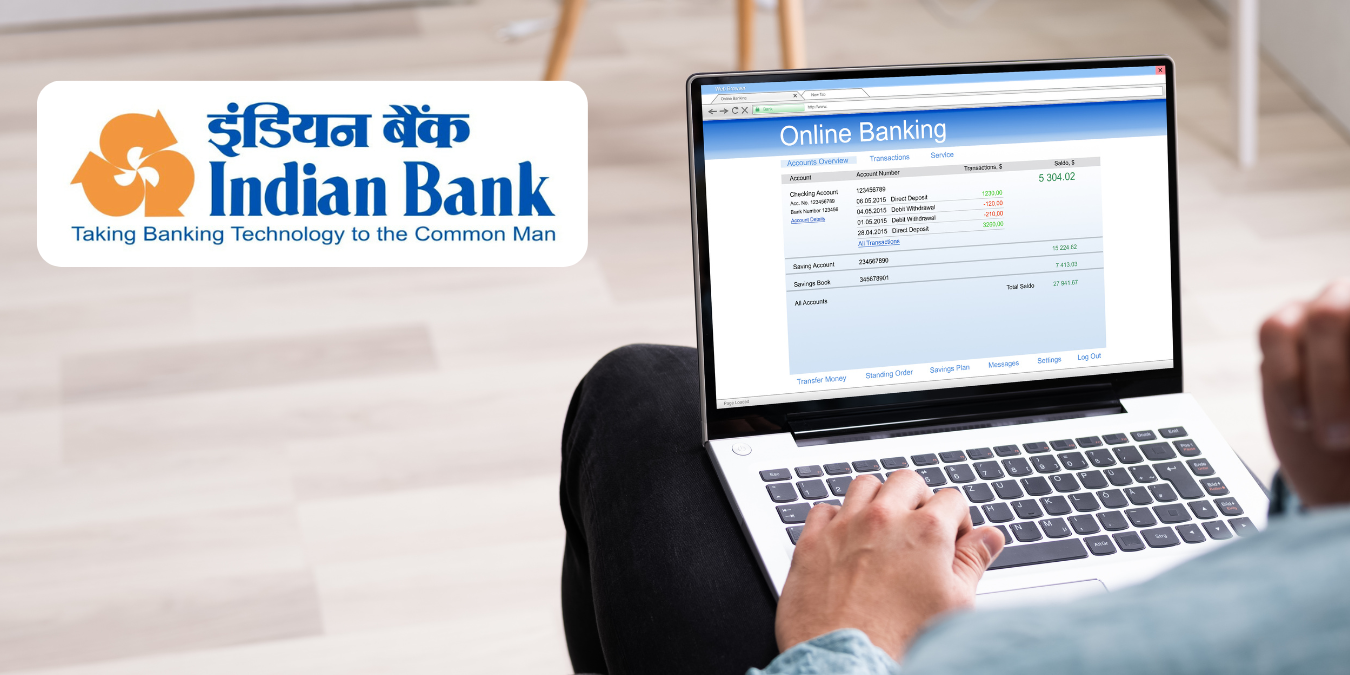
Indian Bank Net Banking 2025: Automated Debit Freeze Saves Your Money
Indian Bank’s 2025 net banking bombshell: A secret RBI-mandated .bank.in switch triggers auto-freezes at 150% spending spikes—saving millions from fraud overnight! But does it crush SBI & PNB? ESIC hacks, 180-day statements, and hidden UPI boosts revealed. Your money’s future hangs in the balance—click before hackers do!
Indian Bank net banking in December 2025 is a feature‑rich, mobile‑friendly and more secure platform that lets you manage almost every banking need from home, including UPI‑style instant transfers, FD/RD opening, tax and bill payments, card control and more. For users in 2025, the focus is clearly on tighter security (EV‑SSL, domain shift to .bank.in, automated fraud checks) along with smoother registration and login journeys.
Indian Bank net banking in 2025
Indian Bank is a large public sector bank serving over 10 crore customers through thousands of branches and ATMs, and net banking is now its default “digital branch”. In December 2025, the internet banking portal lets you access savings, current, loan, deposit and demat relationships on one dashboard with real‑time balances and downloadable statements.
Key 2025 highlights include:
- A refreshed net banking portal with a simplified menu for fund transfer, bill pay, deposits, cards and service requests.
- Deep integration with the IndSMART mobile app so you can start tasks on web and finish on mobile (and vice‑versa).
- Stronger cybersecurity with EV‑SSL certificates and a gradual move to the official indianbank.bank.in domain in line with RBI’s new rules.
Key features updated for December 2025
The core banking features remain familiar, but Indian Bank has refined limits, security flows and self‑service options by 2025. These updates are particularly useful if you use net banking for business, investments or high‑value transfers.
Main features now include:
- Account management: View balances, mini statements and detailed transaction history; download statements in PDF/Excel/CSV for custom date ranges.
- Fund transfers: Transfer via NEFT, RTGS, IMPS and intra‑bank, with daily caps that can touch ₹10 lakh for typical retail customers (subject to account profile).
- Bill/tax payments: Pay electricity, mobile, DTH, water, credit card, LIC premiums and direct/indirect taxes from one BillPay or payments section.
- Deposits and investments: Open and manage FDs and RDs online, view interest rates, and in some cases link demat or trading services through the same login.
- Cards and cheque services: Block/unblock debit cards, set usage limits, request new cheque books or stop payment on a cheque without visiting a branch.
- Service requests: Update email, submit KYC, raise complaints, ask for interest or TDS certificates and track service tickets online.


Registration and Login Process
Indian Bank now prioritises self‑service online activation so that most customers never need to visit a branch to start net banking. As of 2025, you can activate using your account details, registered mobile number and debit card, or use an offline form if you prefer in‑person assistance.
New user registration (online)
For a new user in December 2025, the typical steps are:
- Go to the official Indian Bank net banking portal and click “New User / Register Online”.
- Enter CIF or account number and the mobile number registered with the bank (with 91 country code where asked) and submit.
- Enter the OTP received on your mobile to validate ownership of the account.
- Provide extra details like date of birth, email and choose facility type – view only or view & transact.
- Set a strong login password and pick security questions; in many cases you then authenticate once using your debit card to fully activate the profile.
If you are not comfortable online, you can still fill a net banking application form at a branch, attach KYC if required, and receive your user ID and temporary password after processing.
Login and first‑time setup
Once activated, logging in is straightforward but uses multi‑layer checks. The usual sequence in 2025 is:
- Open the net banking login page from the official site and verify the secure lock icon and correct URL.
- Enter your user ID and password; in some cases you may be asked for an OTP or security answer, especially for first‑time login or new device.
- After first login, you are often prompted to reset the temporary password, choose a transaction password/PIN and review your contact details.
If you forget your password, a “Forgot Password” link lets you reset it using OTP, ATM card details or security questions without visiting the branch.
Security, RBI domain changes and fraud protection
Security has seen the biggest shift around 2024–2025, and this directly impacts how you should access Indian Bank net banking. The focus is on making genuine banking sites easy to recognise while blocking phishing and fake apps.
EV‑SSL and secure URLs
Indian Bank deploys Extended Validation SSL (EV‑SSL) on its internet banking site, which turns the browser address bar green or shows a prominent lock icon in modern browsers. This certificate helps confirm that you are on the genuine website, not a clone, and encrypts all data between your device and the bank’s servers.
Practical steps for users:
- Always check the https prefix and lock symbol before entering credentials.
- Avoid logging in from links shared over SMS, WhatsApp or email; instead, type the address manually or use the official bookmark.
RBI’s .bank.in domain move
From April 2025, RBI has mandated that authorised banks gradually move to exclusive .bank.in domains for digital services. Indian Bank is accordingly aligning its security pages and customer education to promote safe access under the indianbank.bank.in umbrella along with existing domains during the transition.
What this means for you:
- Over time, genuine Indian Bank online services will standardise around .bank.in domains that are harder for fraudsters to mimic.
- You should treat unrelated look‑alike domains or URLs without EV‑SSL as suspicious, especially if they ask for OTP or card details.
Automated digital freeze and transaction thresholds
To limit damage from fraud, Indian Bank now uses automated digital freeze mechanisms tied to transaction thresholds. When outgoing transactions shoot up abnormally (for example, 150–400% higher than usual limits), the system may trigger a debit freeze or partial block until you confirm activity with the bank.
This system:
- Helps detect unusual behaviour quickly, particularly in phishing or remote‑access fraud cases.
- May cause genuine users to see temporary blocks if they suddenly do very large or multiple high‑value transfers; planning ahead and informing the bank can help in such cases.
How to use Indian Bank net banking effectively (2025 edition)
Beyond one‑time registration, consistent, safe usage is what makes net banking really powerful for daily money management. With some simple habits, you can transform net banking into a personalised financial control panel, especially handy for salaried users and small business owners in cities like Delhi.
Everyday tasks you can automate
Indian Bank net banking now supports a wide range of recurring and on‑demand actions that can be scheduled or automated. Popular use cases in 2025 include:
- Salary and vendor payments via NEFT/RTGS with saved beneficiaries and preset limits.
- Monthly SIP‑like transfers from savings to RD/FD for disciplined saving.
- Auto‑pay for key utilities (electricity, broadband, mobile) and loan EMI to avoid penalties.
For people managing multiple accounts, the consolidated view of savings, current and loan accounts lets you track cash flow and EMIs in one place.
Limits, charges and best practices
Transaction limits in net banking can vary by customer category, but typical patterns are:
- RTGS: usually used for transactions of ₹2 lakh and above, with per‑day caps that can go up to ₹10 lakh for many retail users.
- IMPS: near‑instant transfers up to around ₹5 lakh per transaction, counted within overall daily caps.
- Intra‑bank transfers: generally flexible, often sharing the same daily ceiling as external NEFT/RTGS/IMPS transfers.
To keep things safe and smooth:
- Set personalised limits for each channel (net banking, mobile app, UPI) based on your real needs.
- Keep your mobile number and email updated so you never miss OTPs or fraud alerts.
Net Banking vs Mobile App vs Branch: Which to use when?
Many Indian Bank customers now juggle net banking on desktop, the IndSMART mobile app and occasional branch visits. Each channel has its strengths, and using them smartly can save both time and risk.
Where each channel works best
The IndSMART mobile app is built for quick, on‑the‑go tasks like balance checks, small transfers, UPI payments and mobile recharges. Net banking on a laptop or desktop is more suited for documentation‑heavy and high‑value work like downloading statements, doing RTGS transfers, or opening large deposits.
Branches remain important for high‑touch services such as complex loan processing, dispute resolution and KYC for senior citizens or non‑tech‑savvy users. For everything else, a mix of net banking and mobile app usually minimises queues and paperwork.
Channel comparison for 2025 users
| Use case | Net banking web portal | IndSMART mobile app | Branch visit |
| Quick balance & mini statement | Best on larger screen if you want to see multiple accounts at once. | Very convenient for one‑tap checks on the go. | Not ideal just for balances. |
| High‑value transfers (RTGS/NEFT) | Ideal for detailed entry and verification of large‑value beneficiaries. | Possible, but many users prefer web for big amounts. | Used when digital access is not available. |
| Opening FD/RD | Full view of rate options and maturity schedules on one page. | Works well for small, quick deposits. | Needed only for special schemes. |
| Statement downloads & tax work | Best option – multiple formats and long date ranges. | Limited for deep archival statements. | Used for certified physical statements. |
| Card/cheque services | Self‑service requests like block card or stop cheque possible 24×7. | Some card controls built‑in for instant action. | Required only if issue is complex. |
| KYC update & grievances | Online forms and tracking for many requests. | App‑based support and status checks. | Essential if documents or in‑person verification needed. |
Comparison of Indian Bank Net Banking vs other Public Sector Banks
Indian Bank net banking holds its own against peers like SBI, PNB, and Bank of Baroda in 2025, with standout 2025 upgrades in RBI-mandated security like .bank.in domain migration and automated freezes. While SBI leads in scale and app integration, others excel in specific areas like bulk payments or investments.
Feature Comparison Table
| Feature Category | Indian Bank | SBI | PNB | Bank of Baroda (BoB) |
| Domain/Security (2025) | .bank.in migration, auto digital/debit freeze (150-400% TTL) | 256-bit SSL, virtual keyboard, OTP, new UI launch | OTP + transaction password, encryption, Positive Pay | SSL, virtual keypad, OTP, Positive Pay |
| Fund Transfers | NEFT/RTGS/IMPS/UPI, standing instructions, ESIC/ICEGATE | NEFT/RTGS/IMPS/intra-bank, recurring/scheduled | NEFT/RTGS/IMPS/UPI, bulk/future-dated, Indo-Nepal | NEFT/RTGS/IMPS/intra-bank, scheduled/standing |
| Bill/Tax Payments | Utilities, taxes, BBPS, dedicated ESIC/ICEGATE videos | Utilities, taxes, insurance, credit cards, EMIs | Utilities, credit cards, taxes, insurance | Utilities, taxes, insurance, donations |
| Deposits/Investments | FD/RD open/close, PPF, IPO ASBA, AA ecosystem | FD/RD/PPF, mutual funds, IPOs, eSGB | FD/RD/PPF open/close, govt schemes (PMJJBY/APY) | FD/RD open/close/liquidate, PPF, Sovereign Gold Bonds |
| Account Management | Balances, 180-day e-statements, nominee/KYC updates | Balances, e-statements, CIBIL check, PAN/Aadhaar | Balances, statements, TDS, nomination, e-statements | Balances, statements, transaction history |
| Card/Cheque Services | Block/unblock, limits, cheque book/stop payment | PIN reset, hotlist cards, cheque book/stop | PIN reset, credit card payments, cheque status/book | Block cards, PIN reset, cheque book/stop payment |
| Mobile App Integration | IndSMART sync, m-Passbook, cross-channel limits | YONO (full/lite/business), seamless net banking link | PNB ONE (UPI/QR, card block, mutual funds) | M-Connect Plus for all services |
| Unique 2025 Additions | CKYC videos, Account Aggregator for loans | AI chatbots in YONO, e-KYC for UPI | Bulk payments, GSTIN registration, personalized dash | Insurance subscriptions, Form 26AS access |
| Daily Transfer Limits | Up to ₹10L (configurable) | Up to ₹15L+ (varies by profile) | Up to ₹15L (configurable) | Configurable, high for retail |
Key Strengths by Bank
- Indian Bank: Tops in 2025 fraud protection with automated freezes and RBI-compliant domain; ideal for secure high-value transfers and compliance payments like ESIC.
- SBI: Unmatched scale with YONO ecosystem for lifestyle/investments; best for comprehensive retail needs but can feel cluttered.
- PNB: Strong corporate/bulk features like Indo-Nepal remittances; user-friendly for businesses and recurring govt schemes.
- BoB: Balanced for deposits/investments with easy FD liquidation; smooth for everyday utilities and cards.
All platforms use multi-factor authentication and support 24/7 access, but Indian Bank’s recent security push makes it competitive for risk-averse users in 2025.
Action checklist for users
If the goal is to ride Google Discover–style digital trends and keep your banking future‑ready, 2025 is the right time to refresh how you use Indian Bank net banking. A simple action checklist can help you modernise your setup in under an hour.
Steps you can take now:
- Confirm that you access Indian Bank only via authentic domains with EV‑SSL and lock icon, preferably transitioning your bookmarks to the .bank.in addresses as they are rolled out.
- Register or upgrade your net banking profile from “view only” to “view & transact” if you are comfortable using online transfers.
- Link the IndSMART app with your net banking credentials so you can switch between web and mobile depending on the task.
- Review and fine‑tune your transaction limits, especially for IMPS and RTGS, to balance convenience and fraud protection.
- Turn on alerts and regularly skim SMS/email notifications to spot any suspicious login or transaction early.
Staying updated with these December 2025 net banking changes helps you keep your Indian Bank accounts more secure, more automated and better aligned with the evolving RBI‑driven digital ecosystem.
Disclaimer: The use of any third-party business logos in this content is for informational purposes only and does not imply endorsement or affiliation. All logos are the property of their respective owners, and their use complies with fair use guidelines. For official information, refer to the respective company’s website.