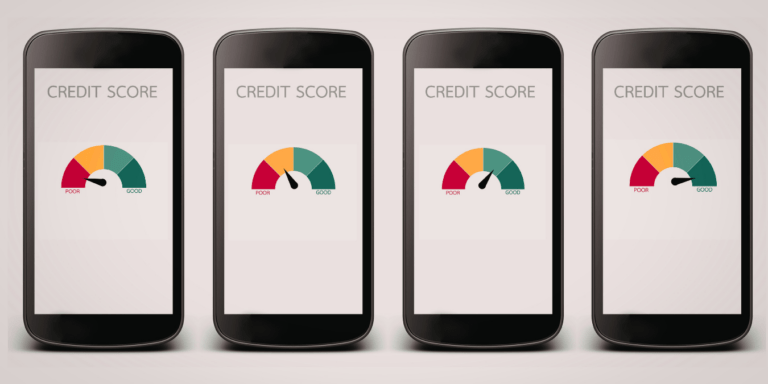
I Went From a 550 to 780 Credit Score in 6 Months — Here's the Exact Step-by-Step Breakdown Nobody Shares
I had a 550 credit score and got rejected for a car loan. Six months later, I hit 780 and got approved — same bank, better rate. No credit repair agency. No gimmicks. Just eight brutal, specific steps most financial blogs are too vague to actually tell you. Here’s exactly what I did.
Six months ago, I got rejected for a car loan. Not delayed, not countered with a higher interest rate — flat-out rejected. The loan officer handed me a printout with a single number on it: 550. She didn’t explain what it meant or how to fix it. She just said, “Come back when this improves,” and moved on to the next customer. I sat in my car for twenty minutes trying to process what had just happened. I had a steady job, I paid my rent every month, and I genuinely thought I was doing everything right with money. That rejection was the most financially humiliating moment of my life — and it turned out to be the best thing that ever happened to me.
Today, my credit score sits at 780. I got approved for that same car loan six months later with a 6.2% interest rate. I also got approved for a premium travel credit card and a personal line of credit. The entire journey from 550 to 780 took exactly 183 days, and every single step was intentional, documented, and repeatable. This is not a motivational story about willpower or cutting out lattes. This is a technical, step-by-step breakdown of what actually moved the needle — including the things most personal finance blogs are too vague or too cautious to tell you directly.
Why Most Credit Repair Advice Fails You
Before I walk you through what worked, you need to understand why most of the advice floating around online keeps people stuck. The standard guidance is: pay your bills on time, don’t max out your cards, and be patient. That advice is technically correct and almost completely useless if your score is already damaged. Telling someone with a 550 score to “be patient” is like telling someone with a broken leg to “walk it off.” It ignores the mechanics entirely.
Credit scores are calculated using a specific formula. In India, the CIBIL score — the most widely used bureau score — weighs factors in rough proportions: payment history carries the most weight at around 35%, credit utilization follows at roughly 30%, length of credit history accounts for about 15%, credit mix makes up 10%, and new credit inquiries take the remaining 10%. When you know these weights, you stop guessing and start engineering. That mindset shift alone is worth more than any tip I can give you.
Step 1 — Pull All Three Bureau Reports and Read Every Line
The first thing I did was pull my full credit reports from all three major bureaus: CIBIL, Experian, and Equifax. In India, you’re entitled to one free report per year from each bureau, and all three can be accessed online within minutes. I did not skim them. I printed all three, sat down with a highlighter, and went through every single account, every inquiry, and every remark.
What I found shocked me. Two accounts showed “settled” instead of “closed” — a critical distinction, because “settled” signals that you paid less than the full amount owed, which lenders treat almost as badly as a default. One account had a late payment marked from three years ago that I had no memory of — a ₹1,200 phone bill that had been sent to collections without any notice reaching me. There was also a hard inquiry from a lender I had never approached, which suggested either a data error or identity misuse. You cannot fix what you cannot see. Pulling all three reports is not optional — it is the foundation of everything else.
Step 2 — Dispute Every Error Immediately and Follow Up Aggressively
I filed disputes for three separate items within the first week. The fraudulent hard inquiry was the easiest — I submitted a written dispute with supporting documentation through CIBIL’s online portal and it was removed within 23 days. The old phone bill collection account was trickier. I contacted the original telecom company, confirmed the bill was valid, paid it in full (₹1,200 plus any accrued interest), and then requested a “No Objection Certificate” in writing. I submitted that certificate to both CIBIL and Equifax and requested the account status be updated from “in collection” to “closed — paid in full.”
The two “settled” accounts required the most work. I contacted both lenders and explained that I wanted to retroactively pay the remaining balance to convert the account status from “settled” to “closed — fully paid.” One lender agreed immediately. The other required three follow-up calls over six weeks before their backend team updated the record. This process — sometimes called “pay for delete” in informal personal finance communities — is not guaranteed to work, and it requires the lender’s cooperation. But it is legal, it is ethical, and it made a measurable difference on my report. Within 45 days of beginning the dispute process, my score had moved from 550 to 591 — a 41-point gain before I had changed a single spending behavior.
Step 3 — Understand Utilization and Attack It Strategically
Credit utilization is the percentage of your available revolving credit that you are currently using. If your total credit limit across all cards is ₹1,00,000 and your current balance is ₹60,000, your utilization is 60% — which is far too high. Most credit scoring models begin penalizing you meaningfully above 30%, and the highest-scoring individuals typically keep utilization below 10%.
When I audited my cards, I had two credit cards. One had a limit of ₹50,000 with a balance of ₹38,000 — a 76% utilization rate that was quietly destroying my score every single month. The second card had a limit of ₹30,000 and a balance of ₹4,000, which was fine. My blended utilization was around 52%. I needed to get that number below 30% as fast as possible, and ideally below 10% before my next statement closing date. I did two things simultaneously: I paid down the high-balance card aggressively using a lump sum I had been holding in a savings account as an “emergency fund” — and I called my bank to request a credit limit increase on my cleaner card. The limit increase request was approved within 72 hours, raising that card from ₹30,000 to ₹50,000. My blended utilization dropped from 52% to roughly 26% overnight, just from the limit increase — before I had paid a single rupee of the other balance. Within the next billing cycle, I paid the high-balance card down to ₹8,000, bringing my total utilization to around 10%. The score impact was immediate and significant.
Step 4 — Never Miss a Statement Closing Date Again
Most people know that paying on time matters. Far fewer people know that when you pay matters almost as much as whether you pay. Here is the mechanic that most blogs skip over: your credit card issuer typically reports your balance to the bureau once a month, on or around your statement closing date — not your payment due date. These are two different dates, and confusing them is expensive.
If your statement closes on the 15th of the month with a ₹45,000 balance, your bureau sees a ₹45,000 balance — even if you pay the entire amount in full on the 20th. The bureau never sees the zero balance. What this means practically is that you should make a significant payment before your statement closing date, not just before your due date. I set calendar reminders for two days before each card’s closing date and made sure to bring the balance down to below 10% of the limit before the statement generated. This single behavioral change, applied consistently over four months, had a compounding effect on my utilization score that built on itself each cycle.
Step 5 — Add a Secured Credit Card to Improve Credit Mix
At this point in my journey — around month two — my score had climbed to roughly 640. The easy gains from dispute resolution and utilization reduction were behind me. The remaining gap required building positive payment history and improving my credit mix. I applied for a secured credit card from my primary bank, depositing ₹20,000 as collateral in exchange for a card with a ₹20,000 limit. The deposit earns interest and is fully refundable when you close or upgrade the account. Secured cards are reported to bureaus identically to regular credit cards — lenders and scoring models cannot tell the difference.
I used the secured card for exactly one recurring expense: my monthly streaming subscription of ₹649. I set up autopay for the full statement balance. The card was never more than 4% utilized, payments were always on time, and every single month it added one more positive payment to my file. Small accounts with perfect history contribute more to your score than most people realize, especially when your existing history has blemishes. By month four, this card had added 16 positive payment records to my file and meaningfully diluted the impact of my older negative marks.
Step 6 — Treat Your Score Like a Dashboard, Not a Report Card
One of the biggest psychological shifts I made was changing how I thought about my credit score. Most people check their score occasionally, wince or smile, and move on. That approach treats the score as a judgment rather than a data instrument. I began checking my score every two weeks using my bank’s free CIBIL dashboard and tracking the changes in a simple spreadsheet. Every time the score moved — up or down — I tried to identify what had changed in the underlying data.
This practice revealed something counterintuitive: my score temporarily dropped by 8 points in month three, even though I had done everything right. When I investigated, I discovered that my oldest credit card had been inactively flagged — the bank had reduced my limit due to non-use, which compressed my available credit and spiked my utilization ratio. I called the bank, used the card once for a small purchase, and requested the limit be restored. It was. The score recovered within six weeks. Without the habit of active monitoring, I would never have caught this, and it could have quietly undermined two months of progress.
Step 7 — Be Strategic About New Credit Applications
In month four, my score had crossed 700 for the first time. I resisted the urge to immediately apply for every premium product I had been denied before. Each hard inquiry — the kind generated by a formal credit application — temporarily reduces your score by approximately 5 to 10 points and remains visible on your report for two years. Multiple inquiries in a short window signal financial desperation to lenders and can stall progress at the worst possible time.
I made exactly one new credit application during the entire six-month period: the secured card in month two. Everything else was either a soft inquiry (which does not affect your score) or a request to existing lenders for limit increases (which are often processed as soft inquiries when you have an existing relationship). If you are tempted to apply for new credit during your rebuilding phase, ask yourself whether that product will still be available and whether the terms will still be acceptable in three months — because in three months, your score will be higher and your negotiating position will be stronger. Patience in this phase is not passive. It is active strategy.
Step 8 — Negotiate With Lenders Directly and Know Your Rights
One thing almost nobody tells you is that lenders are more flexible than their customer service scripts suggest. In month five, I called the bank that held my former high-balance card and asked whether they would consider issuing a “goodwill adjustment” — a formal request to remove or update a historical late payment record in recognition of my improved payment behavior. I had been a customer for over four years. I spoke calmly, referenced my on-time payments over the prior six months, and asked specifically for the goodwill notation to be reviewed.
The call took 22 minutes. The representative told me the decision would be reviewed by their credit team within 10 business days. Eleven days later, a letter arrived confirming that the late payment notation had been removed as a one-time courtesy. This is not a trick or a loophole — it is a documented, legitimate process that lenders use at their discretion. It does not always work. But it costs nothing to ask, and when it works, the impact on your score can be substantial. That single adjustment added approximately 18 points to my score in the following month’s update.
The Final 30 Days: Crossing 750 and Beyond
By month five, I was sitting at 741. The last push to 780 came from two converging factors: the goodwill adjustment I described above, and the natural aging of my positive payment history. Each month of on-time payments added positive data points that gradually outweighed the older negative marks. The secured card, the disciplined utilization management, and the clean dispute resolution had created a file that looked fundamentally different from what it had six months earlier. When the month-six update came through, the dashboard showed 780. I took a screenshot. I applied for the car loan the next morning and was approved before lunch.
What This Journey Actually Costs
People assume credit repair is expensive. The entire process cost me under ₹3,000 in out-of-pocket expenses: ₹1,200 to settle the old phone bill, approximately ₹800 in total for bureau report access across all three agencies, and ₹20,000 in a secured deposit that I still hold and that is earning interest. The larger “cost” was the lump sum I redirected from savings to pay down my high-balance card — but that was not money lost, it was debt eliminated. The return on investment was a lower interest rate on my car loan that will save me more than ₹85,000 over the loan term.
What to Do Starting Tomorrow
If your score is below 650 right now, the gap between where you are and where you want to be is entirely closeable — but it will not close on its own. Pull your reports today. Read every line. Dispute every error. Attack your utilization before your next statement closes. Set up autopay. Add one clean account if your mix is thin. Monitor actively and adjust when the data tells you something is wrong. Treat every interaction with your lenders as a negotiation, not a transaction. And give the process time to work — not because patience is a virtue, but because the scoring model literally requires aged data to update.
The most important thing I learned in those 183 days is that a credit score is not a measure of your character or your worth. It is an algorithm, and algorithms respond to inputs. Change the inputs systematically, and the output changes. That is not a hope. It is math.