How Larsen & Toubro Is Turning India Into the World's Next AI Powerhouse — And Why It Changes Everything
India has always been the world’s back office for IT. But for the first time in history, a homegrown engineering giant is betting billions to make India the world’s AI engine — not just for domestic consumption, but for global hyperscalers, cloud providers, and enterprises hungry for sovereign, scalable, and cost-effective AI infrastructure. This is the story of Larsen & Toubro’s most audacious play yet.
The Moment That Changed the Narrative
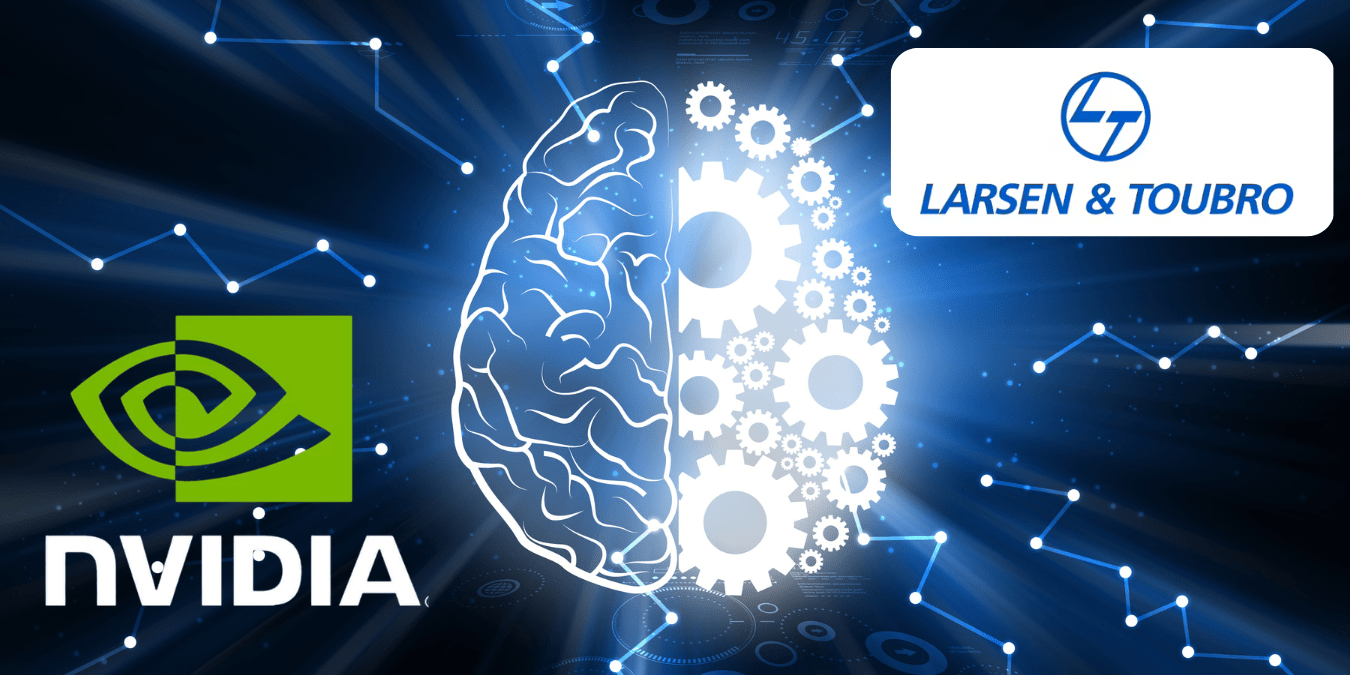
When Larsen & Toubro quietly announced its partnership with NVIDIA to build AI infrastructure at a scale India has never attempted before, most headlines treated it like another corporate press release. Another MoU. Another PowerPoint ambition.
But those who have watched India’s infrastructure journey closely — from the power plant construction booms of the 1990s, to the telecom revolution, to the smart city missions of the 2010s — recognised something different. This was not a technology company pivoting toward AI. This was India’s most trusted, most battle-hardened engineering conglomerate making a structural declaration: India will not just consume AI. India will manufacture it.
L&T’s vision is sweeping in its ambition and surgical in its execution. The plan is to position India as a strategic global AI hub — one capable of serving domestic requirements across healthcare, agriculture, defence, and finance, while simultaneously offering infrastructure capacity to global hyperscalers, cloud providers, and enterprises that are actively looking for trusted, geopolitically stable alternatives to Western data centre monopolies.
Why NVIDIA? Why Now? Why India?
To understand why this partnership is so consequential, you need to understand the global AI infrastructure crisis.
NVIDIA’s H100 and Blackwell GPU clusters are the lifeblood of every major AI model being trained today — from OpenAI’s GPT series to Google DeepMind’s Gemini architecture. The world is running out of compute. Hyperscalers like Microsoft Azure, Google Cloud, and Amazon Web Services are spending hundreds of billions of dollars trying to build more of it. But they face a fundamental bottleneck: land, power, skilled labour, and geopolitical trust are simultaneously scarce in traditional Western markets.
India offers all four in abundance.
The country has vast land banks in states with reliable renewable energy corridors — particularly in Rajasthan, Gujarat, and Andhra Pradesh. India’s engineering talent pool, while historically under-deployed in infrastructure roles, is arguably the deepest in the world for data centre operations, systems integration, and AI model fine-tuning. And crucially, India represents a geopolitically neutral, democratically governed, large-economy alternative to China for companies that need to diversify their AI supply chains.
L&T recognised this inflection point earlier than most. The company’s existing strengths — world-class execution in heavy infrastructure, deep relationships with government and enterprise clients, and decades of experience managing complex, capital-intensive projects — made it uniquely positioned to become the anchor investor and builder of India’s AI infrastructure layer.
The NVIDIA partnership gives L&T access to the most powerful GPU clusters on the planet. L&T gives NVIDIA something equally valuable: credible, bankable execution capacity in the world’s most strategically important emerging AI market.



What This Actually Looks Like on the Ground
The L&T AI infrastructure strategy operates across three distinct but interconnected layers.
The first layer is domestic sovereign AI capacity. India’s government, banks, hospitals, defence establishments, and public sector enterprises have enormous and rapidly growing AI workloads. But they cannot — and will not — run sensitive national AI applications on foreign-owned cloud infrastructure. L&T’s AI data centres, built on NVIDIA’s GPU architecture, will serve as the bedrock for India’s sovereign AI ecosystem. Think of it as building the nuclear reactors of the digital age — critical national infrastructure that cannot be outsourced.
The second layer is capacity-for-hire to global hyperscalers. This is where the real economic transformation lies. Microsoft, Google, Meta, and Amazon are in a furious race to build AI training and inference capacity. India, with its lower land costs, maturing fibre networks, and upcoming nuclear and renewable power surpluses, is emerging as a compelling location for their colocation and build-to-suit requirements. L&T, with NVIDIA-certified infrastructure and its trademark execution reliability, is positioning itself as the preferred Indian partner for these global giants — not a subcontractor, but a strategic infrastructure partner with equity skin in the game.
The third layer is enterprise AI services. Across Indian manufacturing, pharmaceuticals, BFSI (Banking, Financial Services, and Insurance), and retail, there is explosive demand for on-premise or private cloud AI deployment — models fine-tuned on proprietary Indian datasets, running on compliant infrastructure, with Indian-language capabilities baked in. L&T’s technology arm is building a full-stack enterprise AI offering that sits atop its GPU infrastructure, allowing mid-to-large enterprises to access NVIDIA-powered AI without building their own data centres.
The Scale of What’s Being Built
Let’s be direct about the numbers, because they reflect a seriousness of intent that goes far beyond symbolic announcements.
L&T has committed to building AI data centre capacity measured in gigawatts of compute power — a metric borrowed from the hyperscaler vocabulary that India’s infrastructure industry has never previously used. The company’s internal roadmap, as discussed in analyst briefings, involves phased GPU cluster deployments across multiple Indian cities and Special Economic Zones, with the first major facilities scheduled to go live in 2025–26.
The investment involved runs into multiple thousands of crores of rupees across the infrastructure, power, cooling, and connectivity layers. The NVIDIA partnership ensures that the GPU hardware — the rarest and most constrained component in this entire equation — is secured and roadmap-aligned, giving L&T a competitive moat that newer entrants simply cannot replicate overnight.
For context: building a credible hyperscale AI data centre today requires not just money, but allocation priority for NVIDIA GPUs. Those allocations go to companies that NVIDIA trusts to deploy at scale, with the right operational maturity and the right go-to-market relationships. L&T’s selection as a strategic partner is, in itself, a validation that few Indian companies have received.
What This Means for India’s AI Ecosystem
The downstream effects of this initiative extend far beyond L&T’s balance sheet.
When India has sovereign, credible, large-scale AI compute infrastructure, it changes the incentive structure for the entire technology ecosystem. Startups that currently rent GPU time on AWS or Azure — at dollar-denominated prices that make training competitive AI models prohibitively expensive for Indian entrepreneurs — will have access to rupee-denominated, domestically governed alternatives. Indian language AI models, which require massive training runs on Indic datasets, become economically feasible at a national scale.
India’s AI research institutions — IITs, IISc, IIIT Hyderabad, and the emerging National AI Mission — gain access to compute infrastructure that currently doesn’t exist in India at the required scale. The talent that today migrates to San Francisco or London to access frontier AI infrastructure has a compelling reason to stay.
And for the global AI community, India stops being a market and starts being a node in the global AI supply chain — a place where models are not just deployed but trained, fine-tuned, and operated for the world.
The Trust Factor: Why L&T Is the Right Company for This Mission
India has seen many infrastructure ambitions dissolve into delays, cost overruns, and abandoned projects. The credibility gap between announcement and execution is one of the most persistent challenges in Indian industrial history.
L&T is the exception. The company built India’s metro rail systems when people doubted Indian companies could. It constructed defence platforms that experts said required foreign expertise. It delivered data centres, smart city infrastructure, and complex EPC projects across more than 50 countries. Its execution record is, by any objective measure, among the finest in global infrastructure.
When L&T says it will build India’s AI infrastructure, the market — and more importantly, global hyperscalers making multi-billion dollar location decisions — believes it. That credibility is not transferable and not easily replicable. It has been earned over nine decades of engineering excellence.
The Road Ahead: Challenges and the Realistic Timeline
No transformational infrastructure story is without its friction. India’s data centre ambitions have historically been slowed by land acquisition complexity, grid reliability concerns in specific geographies, and the long lead times on power substation approvals. The GPU supply chain, while L&T’s NVIDIA partnership provides significant protection, remains globally constrained and subject to geopolitical pressures.
But the direction of travel is unambiguous. India’s renewable energy buildout is accelerating. The government’s Data Centre Policy framework is maturing. The demand signal from domestic enterprises and global hyperscalers is stronger than at any previous point in Indian technology history.
L&T’s AI infrastructure mission, anchored by NVIDIA’s most advanced GPU technology, is not a bet on an uncertain future. It is an infrastructure response to a demand crisis that is already here.
India’s AI Infrastructure Moment
Every generation gets one defining infrastructure project that sets the trajectory for the next thirty years. For independent India, it was the steel plants and dams of the Nehruvian era. For liberalised India, it was the telecom revolution. For digital India, it was the Jio network.
For AI India, it is what Larsen & Toubro is building right now, in partnership with NVIDIA — a network of sovereign, world-class AI compute infrastructure that serves the domestic economy, attracts global hyperscalers, and establishes India not as an AI consumer or an AI services provider, but as an AI infrastructure superpower.
The engineering has begun. The partnerships are signed. The compute is on its way.
India’s AI century has an address. And it is being built by the company that has always built India’s most important things.
Disclaimer: The use of any third-party business logos in this content is for informational purposes only and does not imply endorsement or affiliation. All logos are the property of their respective owners, and their use complies with fair use guidelines. For official information, refer to the respective company’s website.