HDFC Large Cap Fund at 30: How a ₹10,000 Monthly SIP Became ₹8.46 Crore — and What New Investors Can Realistically Expect
Mutual fundsLarge cap30-year record
HDFC Large Cap Fund at 30: How a ₹10,000 Monthly SIP Became ₹8.46 Crore — and What New Investors Can Realistically Expect
HDFC Mutual Fund says a ₹10,000 SIP running since the scheme’s October 1996 launch was worth about ₹8.46 crore on 30 September 2026. Here is the arithmetic, the crashes it sat through, and the caveats.
Imagine you signed a ₹10,000 standing instruction in late 1996, when ₹10,000 was a good monthly salary for many families, and never cancelled it. You would have paid in about ₹36 lakh over 30 years. According to HDFC Mutual Fund, that money in HDFC Large Cap Fund, formerly HDFC Top 100 Fund, was worth about ₹8.46 crore on 30 September 2026. The number is real, but it hides almost everything that made it hard: a dot-com bust, the 2008 crash, a pandemic collapse and a manager change. Understanding those is more useful than the headline.
The milestone and who announced it
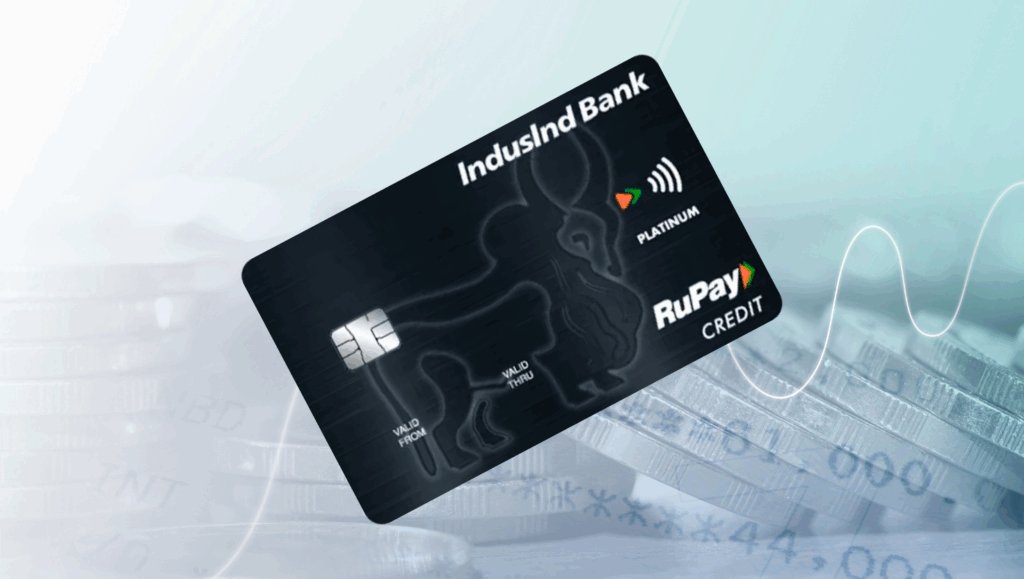
HDFC Mutual Fund marked the 30th anniversary of the scheme, launched on 11 October 1996, with a release published in late October 2026 and carried by outlets including SMEStreet and Newspatrolling. It states a compound annual growth rate since inception of 17.62% for the regular plan’s growth option, computed using the XIRR method, as of 30 September 2026.
The same release says ₹1 lakh invested at launch grew about 130 times to roughly ₹1.30 crore, and that a ₹10,000 SIP on the first business day of each month since inception grew to about ₹8.46 crore. The release names the NIFTY 100 TRI and BSE SENSEX TRI as reference indices, but the benchmark comparison table was not reproduced in the text reports we could access.
- 17.62%CAGR since inception, regular plan, to 30 Sep 2026
- 130xGrowth of a ₹1 lakh lump sum since launch
- ₹8.46 crValue of ₹10,000 monthly SIP since launch
- ₹40,085 crFund assets as reported by Value Research, March 2026
- 1.59%Regular plan expense ratio per Value Research, March 2026
- Jul 2022Rahul Baijal takes over as fund manager
Rebuilding the ₹8.46 crore from first principles
A ₹10,000 SIP from November 1996 to September 2026 means about 359 instalments, or ₹35.9 lakh paid in. Solving for the annual return that turns that stream into ₹8.46 crore gives about 17.06% a year, our calculation. That is very close to the fund’s 17.62% lump-sum CAGR, which makes sense: over three decades, the start and end points of SIP and lump-sum investing converge.
Our calculation; 359 to 360 monthly instalments, constant annual return. The fund’s actual figure, per HDFC MF, is shown in gold.
The chart makes the core point of compounding brutally clear. Moving from 12% to 16% a year does not add a third to the result. It more than doubles it, from about ₹3.08 crore to ₹6.90 crore. Over 30 years, small differences in annual return become enormous differences in rupees.
The uncomfortable truth about the first decade
Run the same SIP at a smoothed 17.06% and look at the corpus at each milestone. After 10 years it is about ₹29 lakh. After 20 years, about ₹1.71 crore. The final ten years then add more than ₹6.8 crore. Only about a fifth of the final corpus existed at the 20-year mark.
Our calculation, constant return assumed; the real path was far bumpier. Final smoothed value is slightly above HDFC MF’s ₹8.46 crore because it uses 360 instalments.
What people get wrong: they read “₹8 crore in 30 years” as a steady climb. It was not. For most of the journey the corpus looked unremarkable, and an investor who stopped at year 15 with about ₹74 lakh would have kept less than a tenth of what the final 15 years produced.
Thirty years, four crashes and one handover
The SIP that reached ₹8.46 crore was not running in calm markets. It bought through several severe falls in Indian equities, any one of which tempted investors to stop. The dates below are well documented; the market falls are approximate and refer to broad indices, not this fund.
- HDFC Top 100 Fund launches on 11 October 1996, more than two decades before SEBI’s 2017 rules defined large caps as the top 100 companies.
- The dot-com bust drags Indian stocks sharply lower; SIP instalments buy at depressed prices for years.
- The global financial crisis; Indian indices fall by more than half from their January peak by October.
- Direct plans with lower expense ratios are introduced across all schemes; the 30-year record is for the regular plan.
- The Covid crash; the Nifty 50 drops by over a third in about two months before recovering.
- Rahul Baijal becomes fund manager, after a long tenure under Prashant Jain ended in mid-2022.
- The scheme completes 30 years; the Nifty 50 sits about 14% below its September 2024 peak.
Each of these falls cut the value of a large accumulated corpus, sometimes by several years of contributions. They also let each new ₹10,000 buy more units. That combination, painful paper losses plus cheaper buying, is the mechanism behind every long SIP success story. Investors who stopped during 2008 or 2020 locked in the pain and missed the buying.
Why the next 30 years may not look like the last
A 17% annual return from a large-cap fund over three decades came from a specific period: India’s economy and corporate profits growing quickly from a low base, falling interest rates over long stretches, and a market that rerated sharply as domestic investing took off. None of that guarantees a repeat.
- What could repeatIndian companies may keep growing earnings faster than those in mature economies, and disciplined SIPs will still benefit from buying through corrections. Large caps also tend to fall less than small caps in bad years.
- What may notA much bigger market and fund size make it harder to beat the index. Large-cap funds compete with low-cost index funds tracking the same top 100 stocks. A starting base of much higher valuations can mean lower future returns.
HDFC AMC chief executive Navneet Munot struck a measured tone in the anniversary release.
“Large caps are currently at decent valuations.”
Navneet Munot, MD and CEO, HDFC AMC, in the 30th anniversary release, October 2026Fund manager Rahul Baijal similarly said many large caps trade at relatively reasonable valuations, which he described as an opportunity for long-term investors. Both comments come from the fund house and should be read as such.
The return gap that compounds into crores
The ₹8.46 crore figure is for the regular plan, which Value Research listed with a 1.59% expense ratio in March 2026. A direct plan, available since 2013, charges less for the same portfolio. Over a long SIP, the expense ratio is one of the few things an investor fully controls.
| Annual SIP return | After 10 years | After 20 years | After 30 years | Multiple of ₹36 lakh |
|---|---|---|---|---|
| 10% | ₹20.1 lakh | ₹72.4 lakh | ₹2.08 crore | 5.8x |
| 12% | ₹22.4 lakh | ₹92.0 lakh | ₹3.08 crore | 8.6x |
| 14% | ₹24.9 lakh | ₹1.17 crore | ₹4.60 crore | 12.8x |
| 16% | ₹27.8 lakh | ₹1.50 crore | ₹6.90 crore | 19.2x |
| 17.06% (implied) | ₹29.4 lakh | ₹1.71 crore | ₹8.57 crore | 23.8x |
Our calculation; ₹10,000 a month for 360 months, constant returns. Shows the effect of higher costs or weaker returns.
The cost of one percentage point. Take the smoothed 17.06% path and knock off one point a year, to 16.06%. The 30-year value drops from about ₹8.57 crore to about ₹6.99 crore. Knock off two points and it falls to about ₹5.70 crore. Our calculation.
That is why the direct-plan discount, or a low-cost index fund, matters so much on a long horizon. A 0.6 to 1 point yearly difference in cost, the kind of gap often seen between regular and direct plans or between active funds and index funds, can be worth well over a crore over 30 years on this SIP.
What a new SIP investor should take from this
The lesson is not “buy this fund”. It is that the three ingredients behind the ₹8.46 crore are available to anyone, and only one of them depends on fund selection.
- 30 yearsTimeThe final decade produced about 80% of the corpus in our smoothed example. Starting early matters more than starting at the right moment.
- 359 debitsConsistencyEvery instalment ran through 2000, 2008 and 2020. Stopping in a crash breaks the mechanism.
- 17% a yearReturnThe only ingredient you cannot control. Choose low costs and a sound fund, then expect less than history.
Large-cap fund or index fund?
Large-cap funds must hold mostly the top 100 companies by market value, the same universe a Nifty 100 or Nifty 50 index fund tracks. Some active large-cap funds beat their benchmark over long stretches, as this one did across 1- to 10-year periods to March 2024, according to Business Standard; many do not. An index fund removes manager risk and costs less, while an active fund gives a chance of outperformance at a higher fee. Both are reasonable, as long as the choice is deliberate.
Plan with a lower number
For goal planning, using 10% to 12% a year for large-cap equity is more prudent than the past 17%. At 12%, ₹10,000 a month for 30 years grows to about ₹3.08 crore. If that outcome would also meet your goal, you are planning safely. If you need 17% to get there, the plan is fragile.
A checklist before you start a 30-year SIP
- Choose the direct plan unless you value paid advice
- Plan with 10% to 12% returns, not 17%
- Step up the SIP by 5% to 10% each year
- Commit in writing not to stop during a 20% fall
- Compare the fund with a Nifty 100 index fund on cost
- Check the 1% exit load applies only within 365 days
- Review the fund once a year, not every month
- Keep 6 months of expenses outside equity
- Note that gains above ₹1.25 lakh a year are taxed at 12.5% when held over 12 months
- Add nominees to the folio from day one
Questions readers ask about this 30-year SIP
How did ₹10,000 a month become ₹8.46 crore in HDFC Large Cap Fund?
HDFC Mutual Fund says a ₹10,000 SIP on the first business day of each month since the October 1996 launch was worth about ₹8.46 crore on 30 September 2026. By our estimate, about ₹35.9 lakh was invested, implying an SIP return of roughly 17% a year.
What is HDFC Large Cap Fund’s return since inception?
HDFC MF reports a compound annual growth rate of 17.62% since inception for the regular plan, growth option, as of 30 September 2026. ₹1 lakh invested at launch grew to about ₹1.30 crore.
Was HDFC Large Cap Fund earlier called HDFC Top 100 Fund?
Yes. The scheme launched in 1996 as HDFC Top 100 Fund and now carries the name HDFC Large Cap Fund.
Who manages HDFC Large Cap Fund?
Rahul Baijal has managed the fund since 29 July 2022. Before that, it was managed for many years by Prashant Jain until mid-2022.
Can a new SIP in HDFC Large Cap Fund also reach ₹8 crore in 30 years?
It would need a return close to 17% a year, which past performance does not guarantee. Planning with 10% to 12% is more prudent; at 12%, ₹10,000 a month for 30 years grows to about ₹3.08 crore.
Is the direct plan better than the regular plan?
The direct plan holds the same portfolio at a lower expense ratio, so it compounds faster. The 30-year record quoted is for the regular plan, because direct plans only began in 2013.
What is the exit load on HDFC Large Cap Fund?
Value Research lists an exit load of 1% if units are redeemed within 365 days of investment, and nil after that.
Is a large-cap fund better than a Nifty index fund?
It depends on cost and outperformance. Active large-cap funds may beat the index but charge more; index funds track the market at low cost. Many large-cap funds have not beaten their benchmark over long periods, though some have.
The short version for a busy reader
HDFC MF says ₹10,000 a month in HDFC Large Cap Fund since 1996 grew to about ₹8.46 crore by September 2026, from roughly ₹36 lakh invested, implying about 17% a year. The result came from time and from never stopping through four big crashes; most of the money appeared in the last decade. Do not plan on 17% again. Plan on 10% to 12%, keep costs low, step up the SIP, and stay invested.