Gold Rate May Fall Further to ₹1.35 Lakh — 4 Mistakes Indian Investors Must Avoid During Gold Volatility
After scaling all-time highs above ₹1.60 lakh per 10 grams, gold prices are showing signs of a meaningful correction. Here’s what savvy Indian investors need to know — and what they must stop doing — right now.
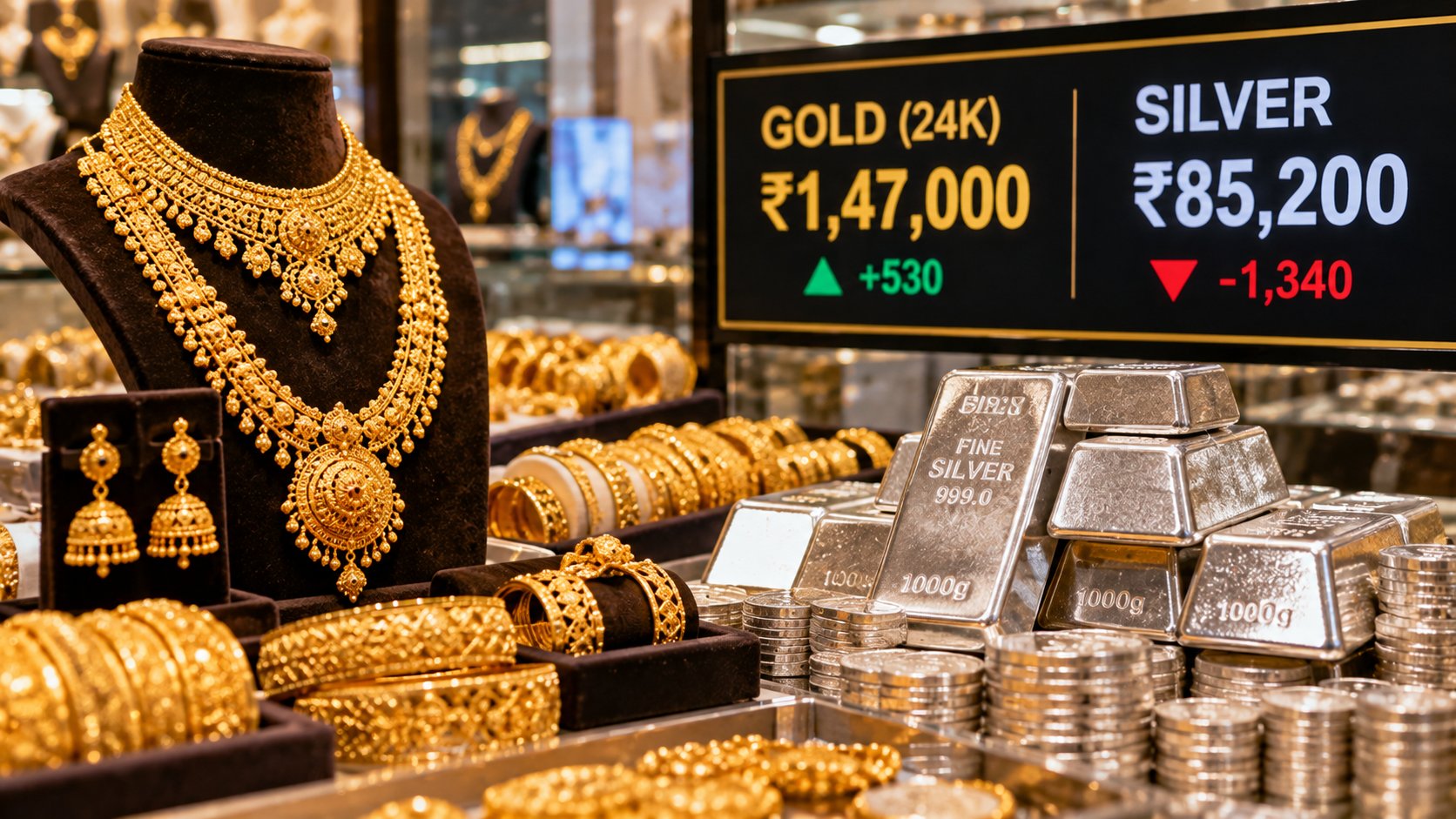
Gold in India crossed ₹1.60 lakh per 10 grams in early 2026 — a jaw-dropping rally that left millions of Indian investors wondering: Should I buy more? Should I sell? Is the peak already behind us?
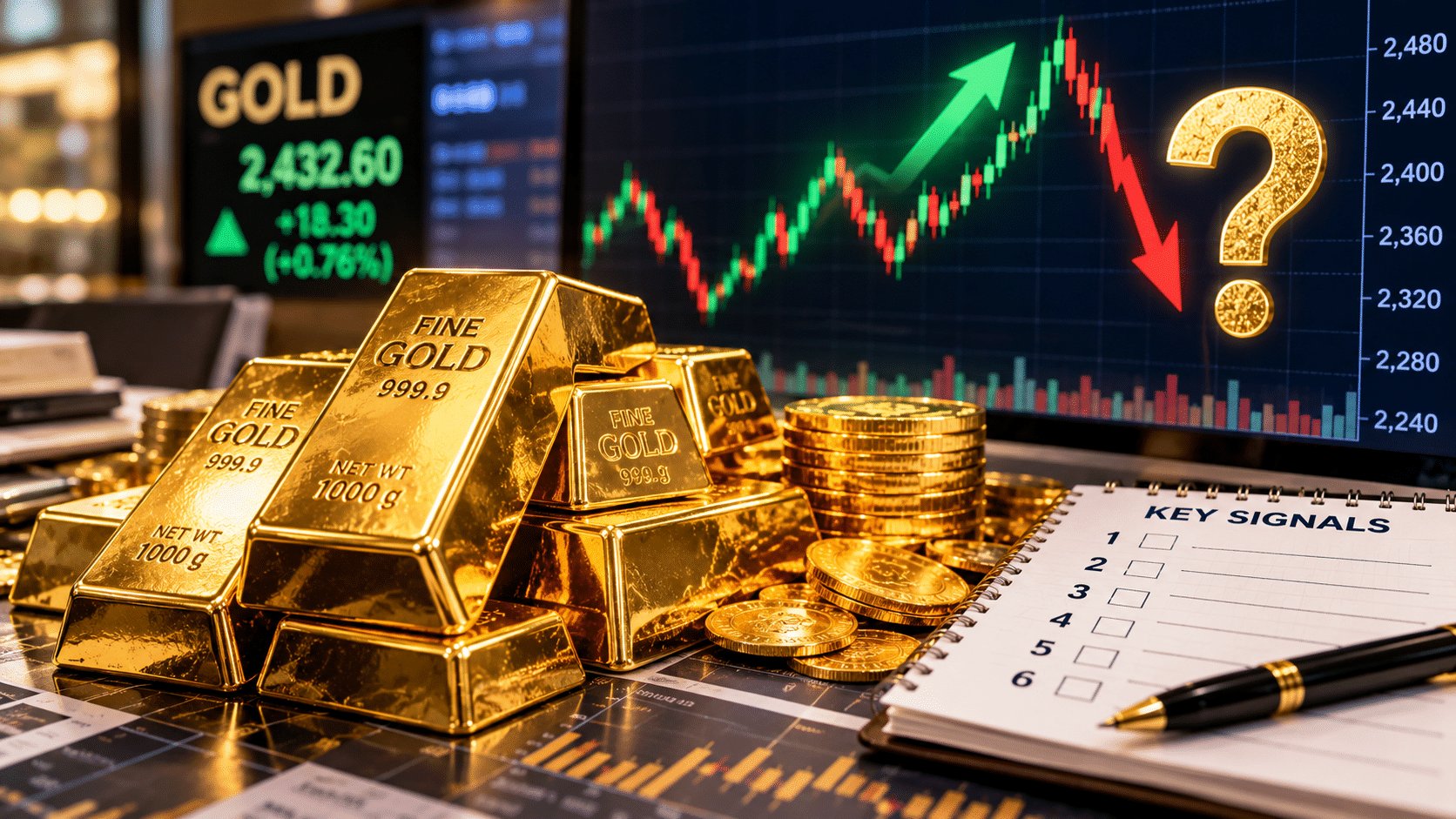
The truth, as of March 2026, is more nuanced — and more dangerous for the unprepared. Global gold prices have started consolidating, the US dollar has shown intermittent strength, and some analysts are now placing a credible near-term downside target of ₹1.35 lakh per 10 grams if a confluence of bearish factors materialises. That’s a potential fall of nearly 9–10% from current levels.
Before you make your next move in gold — buying more jewellery, investing via Sovereign Gold Bonds, doubling down on Gold ETFs, or panic-selling your holdings — read this article carefully. What you avoid doing right now may matter more than what you do.
Market Context
Table of Contents
Why Analysts Predict Gold Could Slide to ₹1.35 Lakh
Gold’s spectacular rally — from under ₹70,000 in 2022 to over ₹1.60 lakh in 2026 — was driven by a rare alignment of tailwinds: de-dollarisation trends, central bank gold buying (led by China, India, and Turkey), Middle East geopolitical tensions, and a global flight to safe-haven assets. But many of these tailwinds are now moderating.
Here are the key forces that could drag gold lower toward the ₹1.35 lakh zone:
A stronger US dollar is one of the primary forces working against gold right now. Gold and the dollar share a well-documented inverse relationship — when the dollar appreciates, gold prices decline in USD terms, and a stronger rupee means the INR-denominated price falls even faster. The US Federal Reserve’s posture on rates continues to suppress gold’s upside.
Profit booking by institutional investors is another trigger. After a 100%+ rally from 2022 lows, large funds are locking in gains. This wave of selling can create cascading price pressure, especially in derivative markets. Technical analysts have flagged the $4,161–$4,260 zone (approximately ₹1.35–1.38 lakh in INR terms at current USD/INR) as a critical support region. A breakdown below it could accelerate the slide.
Equity markets in India are showing a recovery narrative. When Sensex and Nifty reclaim momentum, risk appetite improves and investors rotate from gold (a zero-yield asset) toward equities — reducing gold demand and putting further pressure on prices.
“While a complete collapse in gold prices is very unlikely in 2026 — given central bank buying from China, India, and Turkey creates a strong floor — short-term corrections of 10–12% are perfectly normal after a 100% rally. Investors who ignore this are setting themselves up for painful temporary losses.”
The Core Warning
4 Critical Mistakes Indian Investors Must Avoid Right Now
Gold volatility creates emotional pressure that leads to predictably bad decisions. These four mistakes are the most expensive — and the most common.
Panic-Selling Physical Gold to “Lock In Profits” Before It Falls Further
This is the most emotionally driven mistake. When gold prices slide from ₹1.62 lakh to ₹1.49 lakh and experts start talking about ₹1.35 lakh, panic grips many investors — especially those who bought during the 2024–2025 rally. The instinct to sell jewellery, coins, or bars to avoid further losses feels logical. It is almost always wrong.
Here’s why: Physical gold has high exit costs in India. A jeweller will apply a 2–5% “making charges discount” when buying back jewellery. You also lose the GST you paid at purchase (3%). If you bought gold above ₹1.50 lakh and sell at ₹1.48 lakh, after transaction costs you could be realising a loss of 5–8% on a paper loss of just 1.5%. You crystallise a real loss while gold could recover to ₹1.60 lakh within 6–12 months.
Don’t wait to buy gold; buy gold and wait. The long-term trend for gold in rupee terms has been consistently upward since 2001 — from under ₹4,500 per 10g to over ₹1,49,000 today. That’s a 33x return in 25 years.
If you’re holding physical gold for wealth preservation or as a family asset, a 10% correction should not change your thesis. Sell only if you genuinely need the liquidity or if the gold was purchased as a short-term trade — not because of short-term fear.
Investing a Large Lump Sum in Gold Right Now, Betting on a “Quick Recovery”
On the other side of the spectrum are investors who see the current dip as a buying opportunity and rush in with large, lump-sum purchases — sometimes deploying ₹5–10 lakh or more in one go. The logic seems sound: “Gold is down from its highs, so this is cheaper.” But this thinking ignores the most important rule of volatile markets: you cannot know where the bottom is.
If gold does fall further to ₹1.35 lakh per 10g as some models forecast, an investor who deployed ₹5 lakh at ₹1.49 lakh would immediately be sitting on a notional loss of approximately ₹46,000 — a 9.2% hit before any recovery. In physical gold terms, this would mean buying roughly 33.5 grams at ₹14,900/gram only to see it fall to ₹13,500/gram.
The antidote to lump-sum timing risk is the Gold SIP (Systematic Investment Plan) strategy: invest a fixed amount in Gold ETFs, Digital Gold, or Sovereign Gold Bonds every month, regardless of price.
A Systematic Investment Plan in Gold ETFs of even ₹5,000/month averages your cost over time, reduces the psychological stress of market timing, and builds meaningful gold exposure over 2–3 years without the “what if it falls more?” anxiety. This is not a compromise — it is the mathematically superior strategy for most retail investors during volatile phases.
Confusing Gold Investment Products and Choosing the Wrong Format for Your Goal
India’s gold investment ecosystem has expanded dramatically. Today, Indian investors can access gold through physical jewellery, gold coins/bars, Digital Gold (on platforms like Paytm or PhonePe), Gold ETFs (listed on NSE/BSE), Sovereign Gold Bonds (SGBs issued by RBI), and Gold Mutual Funds. During volatile markets, investors frequently switch between these formats — often making expensive, irreversible errors.
The most common confusion is between Sovereign Gold Bonds and Gold ETFs. SGBs carry a 2.5% annual interest benefit and zero capital gains tax if held to maturity (8 years). But selling SGBs on the secondary market before maturity often means transacting at a significant discount to NAV — sometimes 5–8% below gold’s spot price. Investors who panic-sell SGBs when gold falls are doubly punished: they lose from gold’s price decline and from the SGB illiquidity discount.
Gold ETFs are the most liquid and transparent format for investment-grade gold in India. Unlike jewellery, there are no making charges. Unlike SGBs, there’s no lock-in. They track gold prices almost perfectly.
Similarly, many investors buy jewellery thinking of it as “gold investment.” But jewellery is not a pure investment — it carries 10–25% making charges, 3% GST, and a guaranteed resale loss. For pure investment purposes during a volatile period, Gold ETFs and SGBs are superior choices. Match the product to your objective: short-term tactical exposure belongs in ETFs; long-term wealth building belongs in SGBs; jewellery belongs at weddings.
Over-Allocating Portfolio to Gold Beyond the Recommended 10–15% Threshold
Perhaps the most insidious — and hardest to recognise — mistake is over-concentration in gold. After gold’s extraordinary run from 2022 to 2026, many Indian households now find that gold (including inherited jewellery, coins, SGBs, and ETFs) accounts for 40–60% of their entire investable wealth. This is extremely dangerous during a correction phase.
Gold is a zero-yield asset. Unlike equities, it pays no dividends. Unlike fixed deposits or bonds, it generates no income. It is fundamentally a store of value and a hedge against inflation and currency risk — not a primary growth engine. When gold falls 10%, a portfolio with 50% gold allocation loses 5% of total wealth while a balanced portfolio with 15% in gold loses only 1.5%.
Standard portfolio theory, endorsed by SEBI-registered investment advisors, recommends gold should comprise no more than 10–15% of a diversified investment portfolio for most salaried individuals. This applies to all forms of gold combined — jewellery, ETFs, SGBs, digital gold, everything.
If gold now represents more than 20% of your portfolio due to price appreciation, this correction phase is actually a strategic opportunity — not to sell in panic, but to consciously rebalance by deploying new money into underweight asset classes like equity mutual funds or debt instruments.
This rebalancing approach lets you reduce gold concentration risk without triggering premature capital gains tax on gold sales, while ensuring you benefit from the long-term secular trend in gold prices through your maintained base position.
Quick Reference Guide
Right vs. Wrong: What to Do During Gold Volatility
| Situation | ✗ Wrong Move | ✓ Smart Move |
|---|---|---|
| Gold falls 5–8% in a week | Panic-sell physical holdings to stop losses | Hold if long-term; start SIP buying for new allocation |
| You have ₹3 lakh to invest | Buy all at once in jewellery/coins “at the dip” | Deploy ₹25,000/month via Gold ETF SIP over 12 months |
| Holding Sovereign Gold Bonds | Sell on secondary market at 5–8% discount to NAV | Hold to maturity (8 yrs) for tax-free capital gains + 2.5% interest |
| Gold = 40% of your portfolio | Do nothing; keep high concentration hoping for rally | Rebalance by directing new savings to equity/debt; don’t sell gold |
| Buying for daughter’s wedding | Wait for “₹1.35 lakh bottom” — may never come | Buy in tranches via Gold ETF, convert to physical jewellery closer to date |
| Short-term gold trading intent | Hold physical gold for 6-month speculation | Use MCX Gold Futures or Gold ETF options with strict stop-losses |
2026 Outlook
Where Is Gold Headed? Two Realistic Scenarios
The gold market in 2026 is genuinely at a crossroads. The long-term secular bull case remains intact — central banks globally continue accumulating gold, de-dollarisation is a structural trend, and India’s domestic demand is supported by cultural affinity, rising middle-class wealth, and the SGB program. But near-term headwinds are real and cannot be dismissed.
₹1.35L–₹1.42L per 10g
If the US dollar strengthens further, the Fed delays rate cuts, and Indian equity markets rally strongly, gold could correct 9–12% from current levels. This is not a collapse — it’s a healthy consolidation after a 100%+ rally.
₹1.65L–₹1.85L per 10g
If Middle East tensions escalate, the Fed cuts rates faster than expected, and the rupee weakens, gold could resume its rally to new highs. Goldman Sachs has a target of ~$5,400/oz by end-2026, which translates to ₹1.75–1.90 lakh at current USD/INR.
Most responsible analysts are not calling for a catastrophic gold crash — because they understand the structural floor created by central bank buying. What they are calling for is caution, patience, and disciplined position sizing. Neither panic selling nor reckless buying is warranted.
Action Plan
Your Gold Investor Checklist for March 2026
- 1 Audit your total gold exposure across all forms — jewellery, coins, ETFs, SGBs, digital gold. Calculate as a % of total portfolio.
- 2 If gold exceeds 20% of investable wealth, resolve to direct new savings to equity or debt — not necessarily sell gold.
- 3 If you plan to invest fresh money in gold, commit to a monthly SIP via Gold ETF rather than a lump-sum purchase.
- 4 Check your SGB maturity dates. If within 6–12 months, plan to hold to maturity for tax-free redemption.
- 5 For jewellery needs (weddings, gifts), start buying in tranches now via Gold ETF — don’t gamble on timing a “bottom.”
- 6 Set a stop-loss in your mental framework: if you’re a short-term gold trader, decide your exit levels before the market decides for you.
Common Questions
Frequently Asked Questions
It is a realistic scenario under specific bearish conditions — primarily a stronger US dollar, delayed Fed rate cuts, and strong equity market performance that pulls money away from gold. However, it is not a certainty. Many analysts still hold a bullish base case for gold in 2026. The ₹1.35 lakh figure represents a credible downside risk level, not a guaranteed outcome. Always plan for multiple scenarios.
Gold ETFs are generally a sound long-term investment. Given the current uncertainty — with prices down from all-time highs but not yet at confirmed bottom levels — the best strategy is a Systematic Investment Plan (SIP) approach. Invest a fixed amount monthly rather than a lump sum. This removes the stress of timing and averages your cost automatically over 6–12 months.
Almost never, for most investors. SGBs offer 2.5% annual interest plus full capital gains tax exemption at maturity (8 years from issue date). Early redemption on the secondary exchange often means selling at a 5–8% discount to NAV. Unless you have an urgent liquidity need, holding SGBs to maturity is almost always the superior strategy, even through price corrections.
SEBI-registered investment advisors typically recommend 10–15% of total investable wealth in gold for a balanced portfolio. For conservative investors or those nearing retirement, the upper band is 15%. For aggressive growth-oriented portfolios, 5–10% is more appropriate. Indian households with significant inherited jewellery often already exceed this — which is why conscious rebalancing through new investment allocations (rather than selling gold) is recommended.
Long-term forecasts for gold in rupee terms remain broadly bullish, driven by India’s structurally weak currency tendency over decades, continued global de-dollarisation, central bank demand from emerging markets, and India’s insatiable cultural demand for gold. Goldman Sachs has projected gold could approach $5,400/oz by end-2026 and some models suggest $8,000–$10,000/oz ranges by 2028–2030. In rupee terms, ₹2 lakh per 10g by late 2026 to 2027 is within the realm of plausible outcomes if bullish scenarios materialise.