Elon Musk Reveals X's Game-Changing Smart Cashtags for Instant Crypto and Stock Trades
X will let you trade stocks and crypto straight from your timeline in weeks via Smart Cashtags. No app-switching, just tap and go. But is this the investing revolution US traders crave—or a FOMO trap waiting to explode? You won’t believe the risks hiding in plain sight.
Elon Musk’s social platform X is preparing to let U.S. users trade stocks and crypto directly from their timelines within “a couple weeks,” using a new feature called Smart Cashtags that connects market chatter with instant trading actions.
What is X actually launching?
X plans to roll out Smart Cashtags, an upgraded version of the existing “$TSLA” or “$BTC” style tickers that already show basic price data.
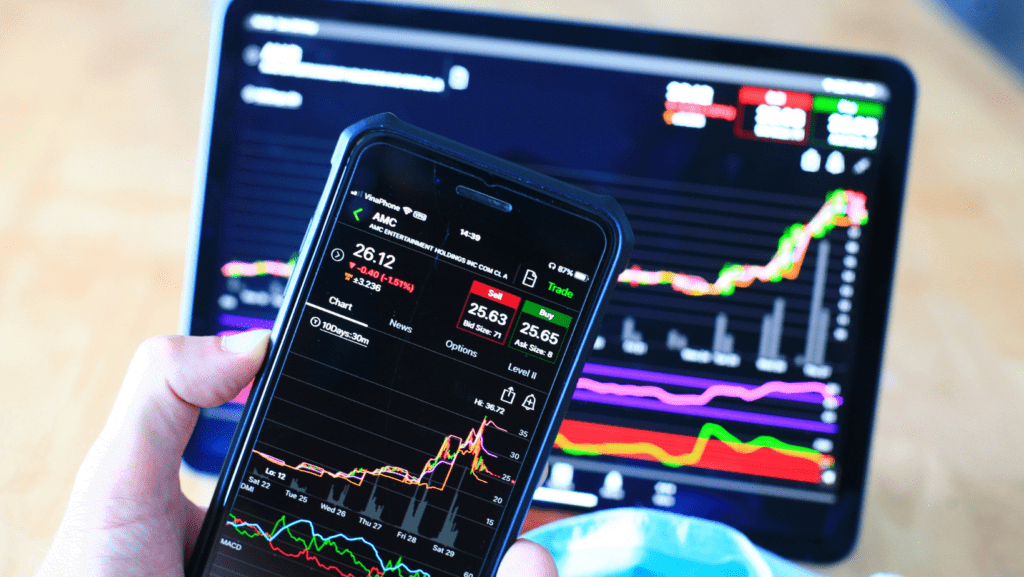
In the new version, tapping these tickers will pull up live prices, charts, discussions and, crucially, options to buy or sell stocks and cryptocurrencies from within the app.
Nikita Bier, X’s head of product, has said that in a “couple of weeks” users will be able to “trade stocks and crypto directly from the timeline,” integrating execution flows into the social feed itself.
However, Bier has also clarified that X will not itself be a brokerage; instead, it will provide data and interfaces while routing trades through external regulated partners.
For users in the U.S., the launch is expected to coincide with the broader rollout of X Money, a peer‑to‑peer payment layer that aims to sit at the center of how money moves on the platform.
That combination—payments plus trading—marks a deliberate shift from X as “just social media” into a hybrid of social network, payments rail, and investing gateway.
The “everything app” vision in a US context
Musk has repeatedly described his ambition to turn X into an “everything app,” comparable in spirit to how WeChat bundles messaging, payments, commerce, and services in China.
In the U.S., no platform yet dominates this entire spectrum, but X is steadily adding pieces: encrypted messaging, digital payments via X Money, and now in‑timeline trading.
To support that roadmap, X Payments LLC has been obtaining money‑transmitter licenses across U.S. states, a prerequisite for handling fiat payments and wallet balances.
Recent reports indicate X now holds money‑transmitter approvals in dozens of jurisdictions, though not yet all, which means the trading and payments experience may initially vary by state.
For American users, this pushes X into territory currently occupied by fintech and brokerages—Robinhood, Cash App, PayPal, SoFi, and others—by embedding similar capabilities right where financial conversations already happen.
If executed well, this could significantly reduce friction: you see a chart, skim commentary, tap the ticker, and place a trade without swapping apps.




How Smart Cashtags and in‑app trading may work
Early descriptions from X and industry coverage suggest several expected elements:
- Clickable tickers in posts (e.g., $AAPL, $NVDA, $BTC, $ETH).
- A dedicated asset page with real‑time prices, basic charts, and aggregated posts mentioning that asset.
- Prominent “Buy” and “Sell” buttons tied into partner brokerages or crypto exchanges.
- Funding and settlement via X Money or linked external accounts.
From a user‑journey standpoint, this turns X into a unified discovery‑to‑execution funnel: research (posts, threads, Spaces), sentiment (likes, reposts, polls), and action (one‑tap trading) happen in one place.
Importantly, because X won’t be the broker of record at launch, order routing, regulatory protections (like SIPC for securities) and crypto custody will depend on those underlying partners.
This architecture mirrors what we’ve seen with “trade from social” integrations on platforms like Reddit or Stocktwits, but with tighter in‑timeline embedding and Musk’s explicit super‑app ambition behind it.
It also positions X as a high‑level orchestrator: it owns the attention and interface, while third‑party financial institutions own licensed execution and custody.
Opportunities for investors and creators
From a U.S. perspective, X’s move creates both upside and new responsibilities for retail investors, creators, and professionals.
For retail traders and long‑term investors
- Faster move from idea to execution: Seeing a compelling thesis or earnings reaction and trading in seconds is appealing for active traders.
- Unified view of narrative and price: You can watch how sentiment around $TSLA, $SPY, or a memecoin evolves while tracking price in the same interface.
- Potentially more onboarding into markets: Lower friction and familiar UX may bring first‑time U.S. users into both stocks and crypto, especially younger demographics that live on X.
But this convenience magnifies behavioral risks:
- Impulse and FOMO trading: Viral posts and influencer narratives can already move thinly traded assets; tying them directly to order buttons could exacerbate chase‑the‑pump behavior.
- Over‑reliance on unvetted “alpha”: X hosts excellent analysts and outright scammers; distinguishing them becomes even more critical when the trade button is inches away.
For US creators, analysts, and financial pros
- New monetization channels: If X develops revenue sharing or affiliate structures around trading tools, credible analysts may turn their feeds into semi‑interactive research terminals.
- Higher compliance bar: Registered advisors, brokers, and RIAs in the U.S. will need to think carefully about how their posts might be interpreted when “trade now” is embedded directly below content.
- Demand for better education: There is a clear opportunity for U.S. educators to build series on risk management, fundamentals, and crypto literacy directly tailored to this new in‑timeline trading context.
Regulatory and trust considerations in the U.S.
Because X is operating in one of the world’s most scrutinized financial markets, the success of in‑app trading will hinge on regulatory alignment and user trust.
First, payments and stored‑value:
- X Payments LLC is securing money‑transmitter licenses across many states, permitting it to move money and power services like X Money.
- Until nationwide coverage is complete, some users may see limited functionality or phased rollouts based on their state of residence.
Second, securities and brokerage:
- Since Bier has indicated X will not directly execute trades, U.S. investors will likely interact with FINRA‑regulated broker‑dealers behind the scenes for stock trades.
- That means investor protections—such as best‑execution requirements, account segregation, and dispute resolution—will flow from those partners, not from X itself.
Third, crypto oversight:
- Crypto trading in the U.S. is governed by a patchwork of state and federal rules, including money‑services regulation and, in some cases, securities law when tokens are deemed investment contracts.
- Partner exchanges will need the appropriate licenses (like money‑transmitter or BitLicense equivalents) and compliance programs for KYC/AML, sanctions, and consumer protection.
Finally, communications and promotions:
- When a social feed becomes a trading interface, regulators can view certain posts as “recommendations” or promotions, especially if there are revenue ties.
- U.S. authorities have already fined influencers and celebrities over undisclosed paid crypto promotions; adding in‑timeline execution could invite even closer scrutiny.
For U.S. users, the practical takeaway is simple: X is the discovery layer; regulatory protections live with the regulated institutions behind the scenes, and you should know exactly which entities you are opening accounts with and sending funds to.
Practical safety checklist for X users
As someone looking at this through an investor‑protection and E‑E‑A‑T lens, it helps to approach “trade from timeline” with a structured checklist:
- Know your counterparty
Before you place any trade via Smart Cashtags, identify which brokerage or exchange is actually handling execution and custody, then verify its registration and reputation. - Separate information from execution speed
Just because you can trade within seconds of seeing a hot take does not mean you should. Build a rule: no trade without at least a quick check of fundamentals, liquidity, and your own risk limits. - Treat viral posts as marketing, not research
Assume that any widely shared thread about a small‑cap stock or micro‑cap token may be part of a narrative push or pump. Cross‑check with neutral sources before acting. - Understand fees and spreads
In‑app experiences often abstract the cost of trading. Look for disclosures on commissions, spreads, payment‑for‑order‑flow, and crypto withdrawal fees affecting your real all‑in cost. - Use position sizing and risk caps
For U.S. retail investors, a simple rule—risk only a small, fixed percentage of capital per speculative trade—goes a long way to limiting damage when sentiment‑driven trades go wrong. - Guard against scams and fake links
If scammers imitate Smart Cashtags with look‑alike URLs or phishing overlays, they may exploit user trust in the new feature. Always confirm you’re interacting with official in‑app flows, not external spoofed sites.
How this could reshape the investing landscape
If X executes its plan effectively, in‑timeline trading and X Money could accelerate several ongoing shifts in the U.S. market.
- Social + trading convergence becomes mainstream: While meme‑stock waves and crypto Twitter already blurred the lines, Smart Cashtags could normalize the idea that “research, sentiment, and execution all live in one scroll.”
- Retail influence may grow further: During past episodes like GameStop or dog‑themed meme coins, loosely coordinated retail activity had outsized impact; tighter integration may amplify such dynamics in both directions.
- Pressure on existing fintech apps: If a large share of early‑stage research and discussions happens on X, standalone brokerage apps may have to double down on education, research tools, and community features to stay competitive.
- Regulators may respond with new guidance: As trading and social content intertwine, U.S. regulators could issue clearer rules on disclosures, conflicts of interest, and platform responsibilities when trades originate from content feeds.
For serious U.S. investors, this means X may become a more powerful tool but also a more hazardous environment if you don’t filter noise, manage risk, and understand where legal protections begin and end.
Disclaimer: The use of any third-party business logos in this content is for informational purposes only and does not imply endorsement or affiliation. All logos are the property of their respective owners, and their use complies with fair use guidelines. For official information, refer to the respective company’s website.