Petrol and LPG Price in Major Cities: Full Breakdown for March 13, 2026 – Hike Alert!
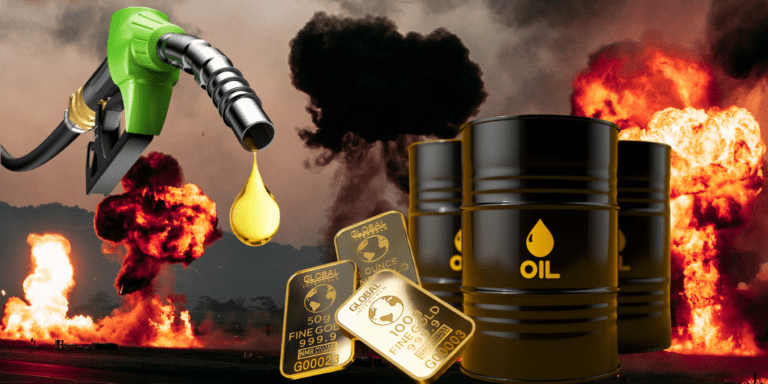
Key Takeaway Iran’s declaration that the Strait of Hormuz is “closed” has sent global crude prices sharply higher, with Brent crude surging past the $85–$90 range. India, which holds roughly 25 days of strategic oil reserves, has activated emergency monitoring protocols. No immediate retail price hike for petrol or diesel has been announced — but analysts warn that a prolonged closure could force tough decisions on fuel subsidies and import strategy, making Russia a critical fallback supplier.
The Hormuz Crisis: What Triggered the Alarm
In early March 2026, a dramatic escalation in the US-Iran-Israel conflict sent shockwaves through global energy markets. Iran’s Islamic Revolutionary Guard Corps (IRGC) formally declared the Strait of Hormuz — the world’s single most critical oil chokepoint — “closed” for international shipping, warning that vessels attempting to transit the waterway could face attacks.
The consequences were immediate. Vessel tracking data from Kpler confirmed that commercial traffic through the strait had ground to near-halt, with only Iranian and Chinese-flagged ships continuing limited movements. At least five tankers suffered damage, two crew members were killed, and approximately 150 ships were stranded in the area, unable to proceed in either direction.
For India, this was not an abstract geopolitical event. It was a direct threat to the artery through which a substantial share of the country’s crude oil imports flow.
| Metric | Data |
| Daily oil flow through Hormuz (2024) | 20 million barrels per day |
| Share of global petroleum consumption | ~20% |
| Share of flows going to Asian markets | 84% of crude oil and condensate |
| Brent crude price jump (2-day surge) | From ~$73/bbl to $85–90 range |
| MCX crude oil price surge (India) | More than 10% single-session |
Sources: U.S. EIA, Kpler, MCX India, Khaleej Times
India’s Exposure: How Dependent Are We on the Strait?
India is the world’s third-largest crude oil importer, fourth-largest refiner, and fifth-largest exporter of petroleum products. The country imported 232.5 million tonnes of crude oil in FY2023–24, with crude import dependence rising to approximately 87.7%, according to the Petroleum Planning and Analysis Cell (PPAC).
A substantial portion of that import volume originates from Gulf producers whose shipments must pass through the Strait of Hormuz. China, India, Japan, and South Korea together account for nearly 69% of all Hormuz crude oil flows — making India one of the nations most acutely exposed to any disruption.
Beyond crude oil, the exposure extends further:
- LPG (cooking gas): The vast majority of India’s imported LPG originates from Gulf suppliers, transiting through Hormuz. While some diversification has occurred — including US supply agreements covering roughly 10% of annual imports — most household cooking gas remains linked to this route.
- Natural gas / LNG: Half of India’s natural gas arrives as LNG, predominantly from the Gulf region.
- Petroleum products: Diesel, aviation turbine fuel (ATF), and other refined products are also affected by shipping disruptions and cost escalation.



India’s Oil Reserves: 25 Days of Buffer — Is That Enough?
The central question on every Indian fuel consumer’s mind is straightforward: how long can India hold out?
Government sources confirmed that India holds approximately 25 days of strategic oil reserves. Additionally, Indian refineries maintain close to two weeks of crude inventories in storage tanks and in transit. Fuel storage tanks across the country are described as full, covering roughly 10 days of immediate national requirements.
Government Statement Petroleum and Natural Gas Minister Hardeep Singh Puri stated that India is well-prepared to manage short-term disruptions arising from geopolitical developments, and that the overall stock position is “reasonably comfortable.” A 24×7 control room has been activated to continuously monitor fuel supply and inventory levels nationwide.
However, energy economists caution against complacency. The 25-day reserve figure assumes no significant reduction in inflow — and a genuine Strait closure would halt new supply within days, not weeks. The real question is not just how much is in the tank today, but how quickly alternative supply chains can be activated.
The Russia Card: India’s Strategic Fallback
One of the most significant developments in India’s energy strategy over the past three years has been the sharp increase in Russian crude oil imports. Capitalising on Western sanctions that drove Moscow to offer discounted barrels, India became one of Russia’s largest oil customers — a move that now appears geopolitically prescient.
Energy analysts at Kpler noted that with Middle East barrels facing logistical disruption, India faces strong incentives to deepen its reliance on Russian supply. The proximity of established logistics infrastructure — already well-tested through two years of high-volume trade — gives India a credible alternative that most Western nations lack.
There is, however, a critical logistical constraint: while Gulf crude takes approximately five days to reach Indian shores, Russian crude takes close to a month in transit. This means that even if India pivots immediately to Russian supply, there is an unavoidable lag before those barrels arrive.
| Supply Source | Transit Time to India | Hormuz Dependence |
| Gulf (Saudi, UAE, Iraq, Kuwait) | ~5 days | High — direct Strait exposure |
| Russia (Urals crude) | ~25–30 days | Low — bypasses Gulf entirely |
| US, Brazil, West Africa | 15–45+ days | None — alternative routes |
Source: Khaleej Times, Kpler Analysis, DailyFinancial.in Research
Icra Senior Vice President Prashant Vasisht warned that as Iran and West Asian energy producers straddle the Strait of Hormuz, a prolonged or widening conflict involving several oil and gas producers could adversely impact global crude oil and LNG supplies for months. India had reportedly reduced Russian crude purchases under US diplomatic pressure in recent months. Officials now indicate that those purchases can quickly be scaled back up if the Middle East crisis deepens.
What This Means for Diesel Prices in India
At the retail level, India’s diesel prices are currently deregulated, though in practice the government exercises considerable influence over pricing decisions by state-owned OMCs (Oil Marketing Companies) such as Indian Oil, BPCL, and HPCL. The last major price revision occurred in early 2024.
For now, the government has firmly stated that there will be no immediate petrol or diesel price hike. This position is understandable — diesel price increases carry significant inflationary consequences across the economy, from logistics and transport costs to food prices.
However, the sustainability of this position depends critically on how long the Hormuz disruption lasts. Analyst assessments suggest:
- Short-term scenario (disruption under 2 weeks): India’s existing reserves and front-loaded Gulf supplies are likely sufficient to avoid a retail price hike.
- Medium-term scenario (2–6 weeks): Procurement costs rise sharply as India diverts to Russian and other non-Gulf sources at higher freight costs. Pressure on OMC margins intensifies; an excise duty cut or under-recovery subsidy becomes necessary to avoid a consumer price shock.
- Long-term scenario (over 6 weeks): A retail price revision of Rs 5–10 per litre or more becomes very probable, with downstream inflationary consequences for freight, food, and industrial sectors.
Market Context Crude oil prices on India’s Multi-Commodity Exchange (MCX) jumped more than 10% in a single session following the Hormuz escalation. Brent crude rose from approximately $73 per barrel to an expected range of $85–90 at market open. Freight and insurance costs for tankers operating in the region have also surged as companies reassess geopolitical risks.
India’s Alternative Pipeline Routes: A Limited But Real Buffer
Saudi Arabia and the UAE maintain pipeline infrastructure that bypasses the Strait of Hormuz entirely. Saudi Arabia’s East-West Pipeline (capacity approximately 7 million b/d) and the UAE’s Fujairah pipeline offer partial alternatives. However, infrastructure constraints at terminal end points mean these routes can only sustain a portion of displaced volumes — they cannot fully offset a complete Strait closure.
India also has the option to source crude from Venezuela, Brazil, and West African producers, all of which involve no Hormuz exposure. The significant disadvantage, as government officials have acknowledged, is the substantially longer transit time — and the correspondingly higher shipping cost — compared to Gulf barrels.
The Broader Economic Risk: Inflation and the Rupee
Rising crude prices do not just affect petrol and diesel. Their inflationary transmission through the Indian economy is broad and deep. Diesel in particular is the fuel of India’s commercial transport sector: trucks, farm equipment, rail freight, and power backup generators all depend on it. A diesel price spike ripples through logistics costs into food inflation, manufacturing input costs, and service sector overheads.
A sustained $10–15 per barrel increase in crude prices is estimated to widen India’s current account deficit by approximately 0.4–0.5 percentage points of GDP. This in turn puts downward pressure on the Indian rupee — a weaker rupee further amplifies import costs in a self-reinforcing feedback loop.
The Reserve Bank of India (RBI) would face a difficult balancing act: inflationary pressure argues against rate cuts, while slowing growth would normally call for monetary easing. The Hormuz crisis therefore has implications well beyond the fuel pump.
What Should Indian Consumers and Businesses Do Now?
For Individual Consumers
- Do not panic-buy fuel. Current retail prices remain stable and reserves are adequate for the short term.
- Monitor official government communications via the Ministry of Petroleum and Natural Gas for any price revision announcements.
- If you run a personal vehicle on diesel, note that a price revision — if it occurs — is unlikely before at least 4–6 weeks unless the crisis dramatically worsens.
For Businesses and Logistics Operators
- Review your fuel hedging exposure if you use MCX or OTC contracts. Crude has moved sharply and diesel crack spreads are widening.
- Consider locking in fuel supply agreements at current prices where contractually possible.
- Build contingency cost assumptions for a Rs 5–10/litre diesel price increase into your Q1 FY27 planning.
- Watch for Under-Recovery bulletins from OMCs — a key leading indicator of an imminent price revision.
Expert Perspective
Kpler analyst Sumit Ritolia captured the multi-dimensional nature of India’s exposure clearly: “Crude oil dependency is the beginning and possibly the easiest to tackle. The second involves natural gas, half of which comes from overseas in the form of liquefied natural gas, predominantly from the Gulf. The third, or the central prong, is LPG — nearly all of which comes from West Asia, which is used for cooking by most Indian households in urban centres.”
This layered exposure — crude, LNG, and LPG — means that India must simultaneously manage three distinct supply vulnerability vectors, each with different timelines and alternative sourcing options.
Frequently Asked Questions (FAQs)
As of March 5, 2026, the government has confirmed there is no immediate plan to revise petrol or diesel prices. However, if the Strait of Hormuz remains disrupted for more than 2–4 weeks, a price revision becomes increasingly likely.
India holds approximately 25 days of strategic oil reserves. Additionally, Indian refineries maintain around 14 days of crude inventories, and fuel storage tanks hold approximately 10 days of immediate national requirements.
Yes, this is the most likely outcome. India has established logistics and payment infrastructure for large-scale Russian crude imports, and the route avoids Gulf exposure entirely. Officials have confirmed that purchases from Russia can be scaled up quickly if needed. The key limitation is transit time: Russian crude takes approximately 25–30 days to reach India versus 5 days from the Gulf.
The majority of India’s LPG is imported from Gulf suppliers whose shipments transit Hormuz. A prolonged closure could affect LPG availability and pricing for Indian households over the medium term, though strategic reserves and some US-sourced LPG provide a partial buffer.
| Disclaimer This article is intended for informational purposes only and does not constitute financial, investment, or trading advice. Fuel price decisions are made by the Government of India and OMCs based on multiple factors including global crude benchmarks, exchange rates, and fiscal policy. Readers should refer to official Ministry of Petroleum and Natural Gas announcements for authoritative information. |
Sources: U.S. Energy Information Administration (EIA) | Kpler Market Intelligence | Al Jazeera | Khaleej Times | The Hans India | The Better India | PPAC India | Icra Ratings

With over 15 years of experience in Banking, investment banking, personal finance, or financial planning, Dkush has a knack for breaking down complex financial concepts into actionable, easy-to-understand advice. A MBA finance and a lifelong learner, Dkush is committed to helping readers achieve financial independence through smart budgeting, investing, and wealth-building strategies, Follow Dailyfinancial.in for practical tips and a roadmap to financial success!