Creative Pros React as Apple Replaces the Mac Pro Desktop with the Mac Studio — What's Really Changing?
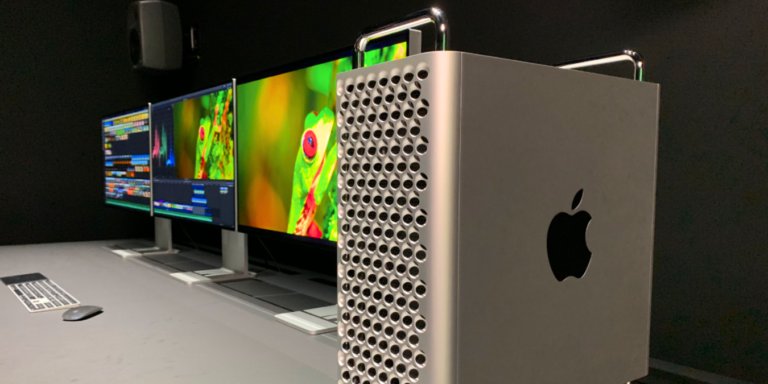
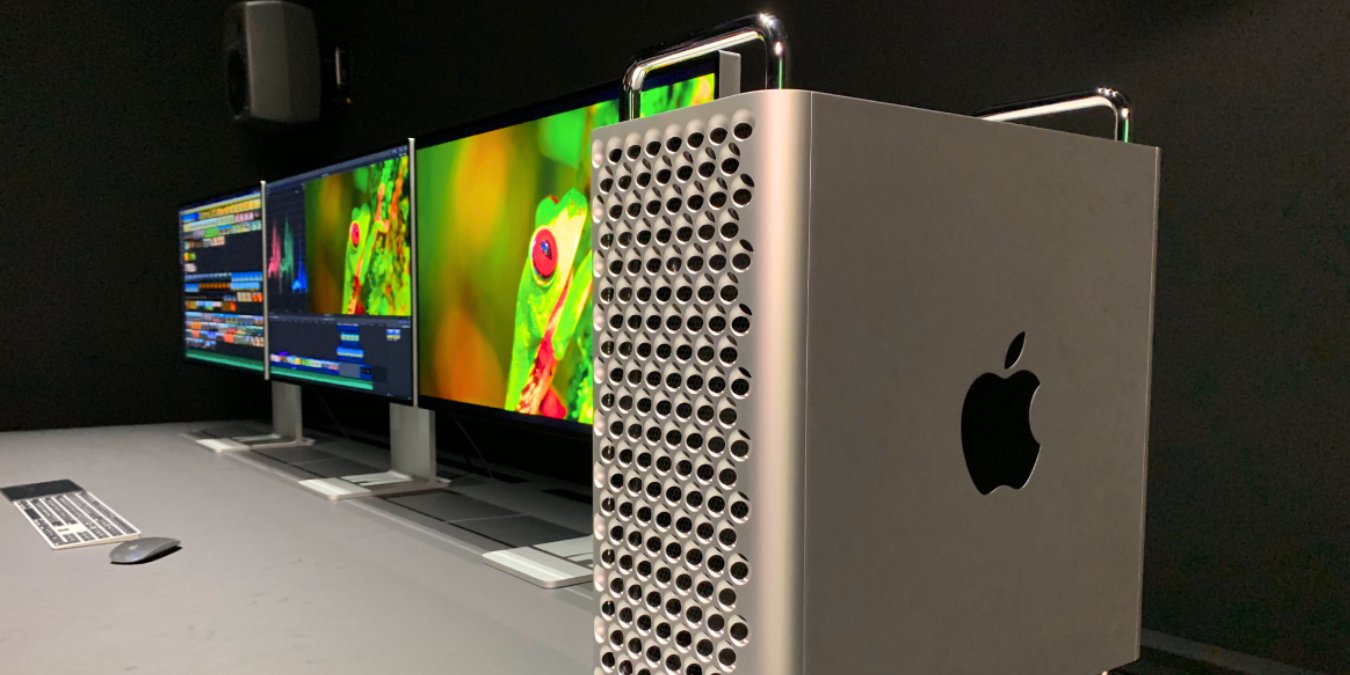
For nearly three decades, the Mac Pro tower was more than just a computer. It was a statement. A symbol. A declaration that if you were serious about creative work — whether you were editing Hollywood films, composing orchestral soundtracks, designing skyscrapers, or rendering visual effects for blockbuster productions — you bought the Mac Pro. It sat under your desk like a monolith: powerful, expandable, expensive, and unmistakably professional.
That era is now over.
Apple has officially discontinued the Mac Pro desktop, redirecting its professional desktop lineup squarely to the Mac Studio. For creative professionals around the world — video editors, motion graphics artists, music producers, 3D animators, architects, and software developers — this announcement has landed like a seismic event. Forums are buzzing. Reddit threads are running into thousands of comments. Veteran Final Cut Pro editors are questioning their workflows. And the question on every creative professional’s lips is the same: what is really changing here, and what does it mean for me?
The Mac Pro’s Legacy: What Is Being Left Behind
To understand the significance of what Apple has done, you need to understand what the Mac Pro represented — and why its discontinuation is such a psychologically charged moment for the creative community.
The Mac Pro, in its various iterations over the years, was Apple’s promise to the most demanding users that the Mac ecosystem could handle anything. The 2019 “cheese grater” Mac Pro — a return to the modular, expandable tower form factor after the critically panned 2013 “trash can” design — was celebrated as Apple’s renewed commitment to professional users. It offered:
- PCIe expansion slots for adding custom cards — GPUs, high-speed storage controllers, specialised audio interfaces, video capture cards, and more
- ECC RAM upgradeable to massive capacities for memory-intensive tasks like 3D rendering and scientific computing
- Modular architecture allowing users to upgrade components over time, extending the machine’s useful life
- Apple Afterburner card for hardware-accelerated ProRes and ProRes RAW video decode
- Rack-mountable configuration for studio and broadcast facility deployments
For industries like broadcast television, visual effects, music production, and architectural visualisation, the Mac Pro’s expandability was not a luxury — it was an operational necessity. These professionals needed to install specific PCIe cards that connected to proprietary hardware: Avid HDX cards for Pro Tools audio production, AJA or Blackmagic video I/O cards for broadcast workflows, GPU expansion cards for compute-intensive rendering, and specialised cards for real-time video processing.
The Mac Studio, in its compact desktop form factor, offers none of this PCIe expansion. It has Thunderbolt ports — excellent and fast, but not the same as direct PCIe slots. And this is precisely the fault line around which the creative professional community is divided.
What Apple Has Actually Announced
Let’s be precise about what Apple has done, because the details matter enormously for professional users evaluating their options.
Apple has discontinued the Mac Pro as a product line and is not replacing it with a new tower-form-factor machine. Instead, the company is positioning the Mac Studio — available in two configurations powered by the M4 Max and M4 Ultra chips respectively — as the new ceiling of its desktop performance lineup.
The current Mac Studio lineup, as positioned to replace the Mac Pro, offers:
- M4 Max chip: Up to 16-core CPU, up to 40-core GPU, up to 128GB unified memory
- M4 Ultra chip: Up to 32-core CPU, up to 80-core GPU, up to 192GB unified memory — Apple’s most powerful chip configuration available in any Mac
- Connectivity: Thunderbolt 5 ports (front and rear), USB-A, HDMI 2.1, 10Gb Ethernet, SD card slot
- Compact form factor: Approximately 197mm square and 95mm tall — dramatically smaller than the Mac Pro tower
- Starting price: Significantly lower than the Mac Pro’s entry price — making it accessible to a broader range of professional users
Apple’s argument is straightforward: the M4 Ultra chip in the Mac Studio is so powerful that it matches or exceeds the real-world performance of the Mac Pro for the vast majority of professional workloads. The company points to benchmarks showing the M4 Ultra delivering exceptional performance in Final Cut Pro, Logic Pro, DaVinci Resolve, Adobe Creative Suite, and Xcode — the core applications used by Apple’s target creative professional audience.




The Community Reacts: A Divided Creative World
The announcement has produced a genuinely split reaction among creative professionals, and it is important to represent both perspectives fairly.
Those Who Welcome the Change
A significant portion of the creative professional community — particularly those working in video production, photography, music production for streaming, and app development — has responded positively to the Mac Studio replacing the Mac Pro.
For these users, the Mac Studio’s performance is genuinely sufficient for their most demanding workloads. A video editor cutting 8K RED footage in Final Cut Pro or DaVinci Resolve does not need PCIe expansion. The M4 Ultra’s media engine — with hardware acceleration for ProRes, H.264, H.265, and AV1 — handles these workflows with remarkable efficiency. Music producers working in Logic Pro with hundreds of tracks and thousands of plug-in instances report that the M4 Ultra handles sessions that would have brought previous Intel Macs to their knees.
For these professionals, the Mac Studio offers something the Mac Pro never could: the same professional-grade performance in a form factor small enough to fit in a carry-on bag. The ability to take your full-power workstation between studio locations, on location for productions, or simply to declutter a desk is genuinely valuable.
There is also the economics argument. A Mac Studio with M4 Ultra is significantly less expensive than the Mac Pro was at equivalent performance levels. For independent creators, small studios, and growing production companies, this price democratisation of peak Mac performance is genuinely welcome.
Those Who Are Deeply Concerned
However, for a specific segment of the professional community, the Mac Pro’s discontinuation creates a real problem — and their concerns deserve serious attention.
Broadcast and post-production facilities that rely on Avid Pro Tools with HDX hardware cards cannot simply switch to Thunderbolt alternatives without significant workflow disruption and potential quality compromise. The Avid HDX card is a PCIe card — it slots directly into the Mac Pro’s expansion slots — and delivers low-latency, high-channel-count audio processing that is the industry standard in major recording studios, film post-production facilities, and broadcast networks. There is no direct Thunderbolt-connected equivalent that offers identical performance and compatibility.
Visual effects studios that use GPU expansion cards to maximise rendering performance for complex simulations and ray-traced rendering have relied on Mac Pros configured with additional NVIDIA or AMD GPUs in PCIe slots. The Mac Studio’s GPU, while impressive for an integrated solution, cannot be supplemented with discrete GPU cards.
Specialised scientific and research applications that use PCIe-connected instruments, data acquisition cards, and custom accelerators built around the PCIe standard have no direct migration path to the Mac Studio ecosystem.
For these users, Apple’s discontinuation of the Mac Pro is not just an inconvenience — it is a potential platform migration event. Some may be forced to consider switching to high-end Windows workstations from manufacturers like HP Z-series or Dell Precision, which continue to offer full-tower, fully expandable configurations.
The Apple Silicon Argument: Why Apple Believes the Mac Studio Is Enough
To understand Apple’s decision, you need to understand the fundamental architectural shift that Apple Silicon has brought to the Mac.
When Apple used Intel processors, the CPU was a commodity chip bought from a third party. Apple’s only way to offer more performance was to configure the system around the CPU — adding more RAM slots, more PCIe lanes, faster storage controllers, and custom expansion cards. The modular Mac Pro tower was a direct consequence of Intel’s processor architecture.
Apple Silicon changes this equation entirely. The M-series chips integrate CPU, GPU, Neural Engine, media engines, memory, and I/O controllers onto a single piece of silicon — what Apple calls the System on a Chip (SoC) architecture. The unified memory in Apple Silicon means the CPU and GPU share the same high-bandwidth memory pool, eliminating the bottlenecks that traditionally occurred when transferring data between CPU RAM and GPU VRAM on Intel/AMD systems.
In this architecture, the traditional arguments for PCIe expansion become weaker. You do not need a discrete GPU card if the integrated GPU is already world-class. You do not need a PCIe storage controller if the SoC already delivers extraordinary storage performance natively. The performance that previously required a tower full of expansion cards is now delivered by a chip the size of a postage stamp.
This is Apple’s honest and defensible argument for replacing the Mac Pro with the Mac Studio. From Apple’s perspective, it is not removing capability — it is delivering the same capability through a fundamentally more elegant architecture.
What About Thunderbolt 5? The Expansion Alternative
Apple’s answer to the PCIe expansion question is Thunderbolt 5, the latest iteration of the Thunderbolt connectivity standard that the Mac Studio supports on its most powerful configuration.
Thunderbolt 5 offers:
- 120 Gbps bandwidth — three times faster than Thunderbolt 4
- Support for external GPU enclosures for additional graphics performance
- Daisy-chaining of multiple high-bandwidth peripherals
- Compatibility with eGPU boxes, high-speed NAS storage, video I/O boxes, and audio interfaces
For many of the workflows that previously required internal PCIe expansion, Thunderbolt 5-connected external devices now offer a viable alternative. Blackmagic Design, OWC, Sonnet, and other peripheral manufacturers have been building Thunderbolt-connected alternatives to PCIe cards — video I/O boxes, audio interfaces, storage solutions — that work seamlessly with the Mac Studio.
However, the critical caveat remains: Thunderbolt 5, fast as it is, does not provide the same direct, low-latency PCIe bus access that an internal expansion slot delivers. For the most latency-sensitive applications — professional audio with HDX hardware, real-time signal processing, and certain scientific instruments — this difference is not theoretical. It is audible and measurable.
The Price Reality: What You Now Pay for Peak Mac Performance
One of the most significant practical changes created by the Mac Pro’s discontinuation is the pricing structure of Apple’s professional desktop lineup.
The Mac Pro, in its final Intel configurations, started at a price point that put it firmly in the territory of high-end professional equipment — comparable to a high-end workstation from HP or Dell. The Apple Silicon Mac Pro similarly carried a substantial price premium over the Mac Studio.
With the Mac Studio now serving as the performance ceiling:
- Mac Studio with M4 Max starts at a price accessible to serious prosumers and independent creative professionals
- Mac Studio with M4 Ultra — the configuration that replaces the Mac Pro — is priced significantly lower than the Mac Pro was at equivalent chip configurations
This price reduction is genuinely significant for the creative community. Many independent video editors, music producers, and designers who previously could not justify the Mac Pro’s price now have access to the same M4 Ultra performance in a more affordable package. This democratisation of peak Mac performance may ultimately expand Apple’s professional user base — even as it disappoints the relatively small segment of users who needed the Mac Pro’s unique expandability.
Who Should Buy the Mac Studio, and Who Should Look Elsewhere?
Based on a clear-eyed assessment of what the Mac Studio offers and what it does not:
Buy the Mac Studio with M4 Ultra if:
- Your professional workflow is primarily software-based — video editing, motion graphics, music production, photography, app development, or 3D animation
- You work in Final Cut Pro, Logic Pro, DaVinci Resolve, Adobe Premiere, After Effects, Cinema 4D, or similar applications that benefit from Apple Silicon optimisation
- You value desk space, low noise, and the option of portability between locations
- Your connectivity needs are well-served by Thunderbolt 5 and the Mac Studio’s onboard ports
Consider Windows workstation alternatives if:
- Your workflow depends on Avid HDX PCIe cards for professional audio
- You need to install specialised PCIe expansion cards for scientific, broadcast, or industrial applications
- You require GPU expandability beyond what integrated Apple Silicon can deliver for extreme rendering workloads
- You need ECC RAM beyond 192GB for specialised memory-intensive scientific computing
The Bigger Picture: Apple’s Vision for the Pro User
Apple’s discontinuation of the Mac Pro desktop is not a betrayal of professional users — it is Apple making a bold architectural bet that its own silicon is now so capable that the traditional modular expansion model is no longer necessary for the professionals it cares most about.
That bet is largely correct for the vast majority of creative professionals. The M4 Ultra is genuinely extraordinary — and for most video editors, music producers, designers, and developers, it is more than enough. The Mac Studio is a remarkable machine that delivers performance previously reserved for tower workstations in a package that fits on a bookshelf.
But Apple’s decision also reveals a clear-eyed prioritisation of its core professional audience: creators working primarily in software. For the smaller but real segment of professionals whose workflows depend on PCIe hardware — the broadcast engineers, the recording studio owners with HDX systems, the visual effects supervisors with GPU farms — Apple has effectively said: your needs are no longer central to our roadmap.
Whether that turns out to be a temporary gap that Thunderbolt 5 peripherals eventually close, or a permanent departure of certain professional segments from the Mac ecosystem, will be one of the defining stories of Apple’s professional strategy over the next three to five years.
The Bottom Line
The Mac Pro is gone. The Mac Studio is its heir. And for most creative professionals, that transition is not the disaster it might initially appear. The M4 Ultra in the Mac Studio is a genuinely world-class processor that handles the most demanding creative workflows with speed, silence, and efficiency that the Mac Pro tower — for all its expandability — could not always match.
But for the professionals who needed that tower’s PCIe slots, Apple’s decision is a genuine disruption. Their options are now to adapt their workflows to Thunderbolt-connected alternatives, to stay on existing Mac Pro hardware for as long as it serves them, or to make the difficult decision to migrate to the Windows workstation ecosystem.
The Mac Studio era has begun. The question now is whether Apple has correctly estimated just how many professionals can thrive in it — and how many it has left behind.
Disclaimer: This article is for informational purposes only. Product specifications, pricing, and availability are subject to change. Please visit Apple’s official website for the most current product information.