Cash App and Square Owner Block Announces Massive Job Cuts as It Moves Aggressively to Automate Operations with AI
Block’s CEO just fired 4,000 employees — not because the business is failing, but because it’s thriving. Jack Dorsey says most companies will do the same within a year. Is your job next? What Wall Street celebrated as a 24% stock surge, 4,000 families woke up to as a nightmare.
In one of the most dramatic corporate restructurings of 2026, Block Inc. — the fintech giant behind Cash App, Square, Afterpay, and Tidal — has announced it will lay off more than 4,000 employees, slashing its global workforce by nearly half. The reason? Artificial intelligence.
The announcement sent Block’s stock soaring as much as 24% in after-hours trading — a jaw-dropping reaction that reveals just how much Wall Street has begun to reward companies that choose lean, AI-powered operations over traditional workforce-heavy models. For millions of workers and businesses that rely on Square and Cash App, this move raises urgent questions: What exactly is happening at Block? Why now? And what does it signal for the future of work, fintech, and even the Indian economy?
Let’s break it all down — with facts, context, and real insight.
What Exactly Did Block Announce?
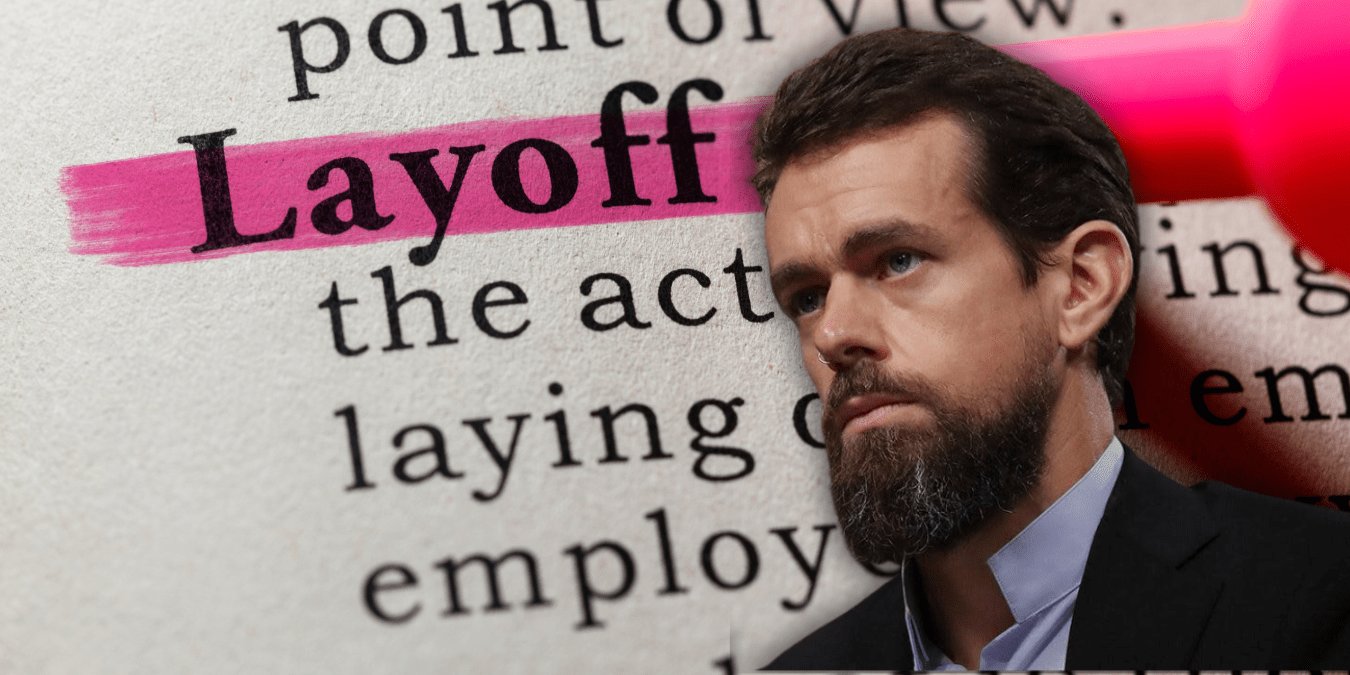
On February 26, 2026, Block Inc. CEO Jack Dorsey — co-founder of Twitter and one of Silicon Valley’s most influential voices — posted a shareholder letter and an X (formerly Twitter) post confirming that the company is reducing its workforce from over 10,000 employees to just under 6,000.
That is more than 4,000 people losing their jobs — in a single, decisive action.
Block’s CFO Amrita Ahuja was direct about the reason: the job cuts would enable the company “to move faster with smaller, highly talented teams using AI to automate more work.”
Dorsey echoed this in his shareholder letter, saying the company’s internal “intelligence tools” — including a proprietary AI automation tool called Goose — have already transformed how work gets done at Block. According to Dorsey, “A significantly smaller team, using the tools we’re building, can do more and do it better. And intelligence tool capabilities are compounding faster every week.”
The announcement came alongside Block’s Q4 2025 earnings results, which were strong — adjusted earnings per share of $0.65 on revenue of $6.25 billion, meeting analyst expectations, with gross profit for the full year 2025 reaching $10.36 billion, up 17% year-over-year.
This Is Not a Distress Decision — It’s a Strategic Power Move
Here is what makes this story so important: Block is not cutting jobs because business is failing. In fact, the company is growing.
In a post on X, Dorsey guaranteed that the cuts weren’t happening because the business is struggling, but rather because “our business is strong… gross profit continues to grow.”
Cash App gross profit surged 33% to $1.83 billion in Q4 alone. For 2026, Block expects to generate $12.2 billion in gross profit with adjusted earnings per share of $3.66, and raised its first-quarter operating income guidance to $600 million versus a $574 million analyst consensus estimate.
This is a company operating from a position of financial strength, choosing to restructure proactively before AI forces its hand — not after.
Dorsey explained his reasoning candidly. He said he could have cut jobs “gradually over months or years as this shift plays out, or be honest about where we are and act on it now.” He chose the latter, because “repeated rounds of cuts are destructive to morale, to focus, and to the trust that customers and shareholders place in our ability to lead.”



What Is “Goose” — Block’s Secret AI Weapon?
Much of the internal transformation at Block is being driven by an AI tool the company built in-house called Goose. While details about the tool remain proprietary, it is described as a workflow automation platform that allows smaller teams to handle significantly more output — from product development to customer operations.
The strategic bet underlying these cuts centres on the productivity gains from AI tools like Goose. If successful, smaller teams using advanced automation can replicate or exceed the output of larger teams.
This is not a hypothetical. Block’s financial results suggest the efficiency gains are already materialising. The fact that gross profit grew 24% year-on-year in Q4 2025 — even as operational complexity increased — points to real productivity improvements, not just cost-cutting theatre.
How Are Laid-Off Employees Being Treated?
While the scale of the layoffs is jarring, Block has put forward a severance package that is notably generous by industry standards.
Affected employees will receive 20 weeks of base salary plus one week per year of tenure, equity vested through May, and six months of health coverage.
Dorsey acknowledged the emotional weight of the decision. He announced he would host a live video session to thank every departing employee personally — including the 4,000 being let go. “I know doing it this way might feel awkward,” he wrote. “I’d rather it feel awkward and human than efficient and cold.”
It is a line that will spark debate — you cannot easily make firing 4,000 people feel “human” — but it reflects at least an awareness of the human cost behind the strategic logic.
Dorsey’s Warning: Most Companies Are Late to This Realisation
Perhaps the most consequential part of Dorsey’s announcement was not the layoffs themselves — it was his prediction about what comes next for every other company in the world.
“I think most companies are late. Within the next year, I believe the majority of companies will reach the same conclusion and make similar structural changes. I’d rather get there honestly and on our own terms than be forced into it reactively,” he wrote.
This is a remarkable statement from the CEO of a major publicly listed fintech company. He is essentially telling every other business — across every industry — that AI-driven workforce reduction is not a possibility, but an inevitability.
Block CFO Amrita Ahuja framed it as an opportunity: “We are choosing to shift how we operate at a time when our business is accelerating and we see an opportunity to move faster with smaller, highly talented teams using AI to automate more work.”
Other tech companies have already followed a similar path. Pinterest, CrowdStrike, and Chegg have recently announced job cuts and directly attributed the layoffs to AI reshaping their workforces. Block’s announcement is different only in its sheer scale and the bluntness with which Dorsey has named AI as the direct cause.
The Sceptic’s View: Is This Really About AI, or Something Else?
Not everyone is convinced that AI alone justifies laying off nearly half a workforce overnight.
Wharton associate professor Ethan Mollick — a well-known voice in AI research — pointed out that “given that effective AI tools are very new, and we have little sense of how to organize work around them, it is hard to imagine a firm-wide sudden 50%+ efficiency gain that justifies [massive] organizational cuts.”
There is also a broader context to consider. Many of the companies that are cutting hordes of jobs — and blaming it on AI — had swelled in size during the pandemic years, when tech companies were meeting demand for online services. Block, for example, employed 3,835 people by the end of 2019 and had grown its headcount to over 10,000 before Thursday’s announcement.
In other words, Block more than doubled its workforce during a hiring boom and is now reversing that expansion. AI may be the stated reason — and likely a genuine part of the picture — but rightsizing from pandemic-era over-hiring is also clearly part of the equation.
What This Means for India’s Fintech and Financial Sector
While Block primarily operates in the United States, Australia, the United Kingdom, Canada, and Japan, the implications of this announcement are deeply relevant to India’s fast-growing fintech ecosystem.
India is home to thousands of fintech startups and a rapidly expanding digital payments infrastructure led by UPI, Razorpay, Paytm, PhonePe, and others. Many of these companies are also investing in AI-powered automation for fraud detection, loan underwriting, KYC processing, and customer service.
If Block’s experience is any guide, Indian fintech firms — especially those that expanded rapidly post-2020 — may face similar pressures to demonstrate AI-driven efficiency gains to investors, even if it comes at the cost of workforce reduction.
For Indian investors and professionals working in banking, insurance, or financial technology, Block’s move is a signal worth watching closely. The automation of back-office financial operations, compliance workflows, and customer-facing tools is accelerating — and companies that fail to adapt risk being left behind.
The Bottom Line
Block’s decision to cut 4,000 jobs in favour of AI-powered, leaner operations is one of the most significant fintech moments of 2026. It is a move that combines genuine business logic — strong financial performance, growing gross profits, and rising AI capability — with a stark reminder that the age of large, stable corporate workforces may be giving way to something entirely different.
Whether Dorsey is a visionary trailblazer or simply the latest executive to use AI as cover for an overdue workforce correction, the consequences are real: 4,000 people out of work, a stock market cheering from the sidelines, and a warning to every company in the world to reckon with what AI is already doing to the economics of running a business.
For ordinary workers, investors, and business owners alike — in India and globally — the Block layoffs are not just a headline. They are a glimpse of where the economy is heading.