Block's Bold AI Strategy Unveiled as Nasdaq Tumbles — One Company's Growth Play Amid Market Chaos
Jack Dorsey just fired 4,000 people — and Wall Street cheered. While the Nasdaq bled red on inflation fears, Block’s stock exploded 23% overnight. Is this the boldest AI bet in fintech history, or a ticking time bomb? What Dorsey revealed will shock most investors.
When the broader markets are bleeding red, it takes something extraordinary to steal the spotlight. On February 27, 2026, that something was Jack Dorsey — and his announcement may have just rewritten the rulebook for how technology companies operate in the age of artificial intelligence.
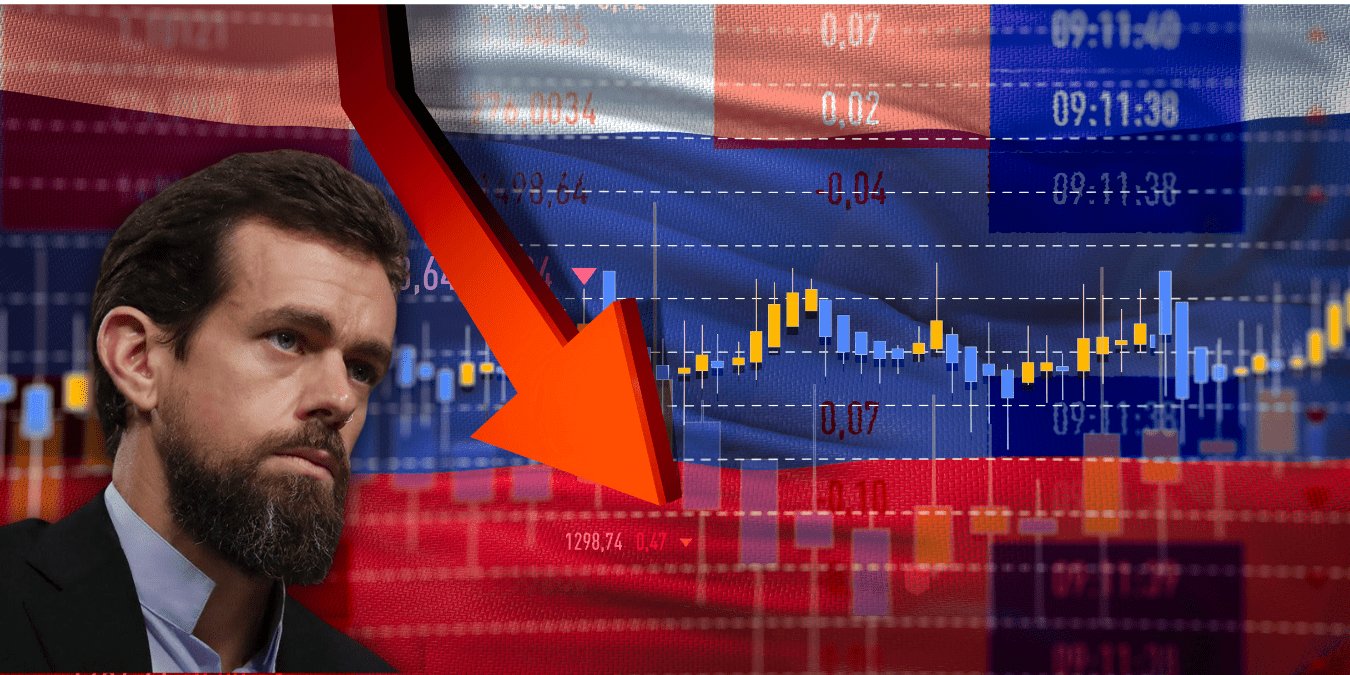
While the Dow Jones Industrial Average, S&P 500, and Nasdaq all sank sharply following a hotter-than-expected Producer Price Index (PPI) inflation report — reigniting fears that the Federal Reserve will keep interest rates elevated for longer — one stock was quietly surging in after-hours trading by over 23%. That stock was Block, Inc. (NYSE: XYZ), the fintech giant behind Square, Cash App, and Afterpay.
Here’s the full story — and what it means for investors navigating today’s volatile market.
What Just Happened? The Block Announcement Explained
On the evening of February 26, 2026, Block CEO Jack Dorsey dropped a bombshell that sent shockwaves through the financial technology world. The company announced it would lay off more than 4,000 employees — nearly 40% of its entire workforce — reducing headcount from over 10,000 to just under 6,000 people.
In any other context, a layoff of this magnitude would signal distress. Companies that cut half their staff are usually fighting for survival. But Block’s announcement landed very differently.
Why? Because Block reported blockbuster earnings at the same time.
In Q4 2025, the company posted:
- Gross profit of $2.87 billion — up 24% year-over-year
- Cash App gross profit surged 33% year-over-year to $1.83 billion
- Adjusted Operating Income of $588 million — up 46% year-over-year
- Adjusted Diluted EPS growth of 38% year-over-year
- 2026 full-year gross profit guidance raised to $12.2 billion — implying 18% growth
This wasn’t a company on the ropes. This was a company growing strongly and choosing to become leaner by design, not by desperation. Dorsey himself framed it plainly: “Intelligence tool capabilities are compounding faster every week. A significantly smaller team, using the tools we’re building, can do more and do it better.”




The AI-First Vision: What “Intelligence-Native” Actually Means
Jack Dorsey didn’t just cut jobs. He announced a fundamental transformation of how Block operates — a shift toward what he calls an “intelligence-native” enterprise.
This is not corporate jargon. It’s a concrete operating philosophy backed by real AI tools already deployed inside Block. Let me break down the three pillars of this strategy:
1. Goose — The Internal AI Development Agent
Block has developed an internal AI agent called Goose that has already automated roughly 40% of routine coding and documentation tasks across its engineering teams. The result? A smaller team of engineers is now capable of shipping at the velocity previously associated with a 10,000-person organization. In plain terms — fewer people, same or faster output.
For a company that competes with PayPal, Stripe, and traditional banks, this is a significant operational edge. Development cycles shrink, costs fall, and new features reach customers faster.
2. ManagerBot — AI for Square Merchants
For the millions of small businesses that use Square as their payment and operations platform, Block is rolling out ManagerBot — an AI assistant that handles everything from inventory reordering to staff scheduling. Think of it as giving every small business owner access to a virtual Chief Operating Officer that works 24/7, never asks for a raise, and gets smarter over time.
This is where Block’s AI strategy directly impacts revenue. If ManagerBot saves merchants hours every week and meaningfully reduces their operational costs, those merchants become stickier customers. Churn drops, lifetime value rises, and Square’s competitive positioning strengthens against rivals.
3. MoneyBot — Personalized AI in Cash App
On the consumer side, MoneyBot is being deployed within Cash App to offer personalized budgeting guidance and automated savings recommendations. With Cash App now reporting 59 million monthly active users and 9.3 million primary banking customers (up 22% year-over-year), the potential reach of MoneyBot is enormous.
The most engaged Cash App users — those who use it as their primary bank — already generate nearly 10x the gross profit of casual peer-to-peer users. MoneyBot is designed to accelerate that migration from passive to deeply engaged user, which is the single highest-leverage move Block can make on its consumer side.
Why Wall Street Loved It — Even as the Nasdaq Fell
Here’s the fascinating paradox of this story: Block’s stock surged 23%+ in after-hours trading on the same day that the broader Nasdaq tumbled on inflation fears.
The reason isn’t complicated. Markets have been relentlessly rewarding companies that pair revenue resilience with aggressive efficiency improvements. When a company can grow gross profit by 24% and simultaneously announce a structural cost reduction that will slash operating expenses — all while raising forward guidance — it becomes a magnet for institutional capital.
Block’s CFO Amrita Ahuja captured the investor thesis succinctly: “We see an opportunity to move faster with smaller, highly talented teams using AI to automate more work.”
The numbers support the bet. Block’s restructuring is expected to cost between $450 million to $500 million in one-time charges — significant but manageable given its financial trajectory. In return, the company projects adjusted operating income of $3.2 billion in 2026 at a 26% margin, a remarkable improvement for a company that was barely breaking even just two years ago.
What This Means for the Broader Market — and for India
As someone who tracks global financial markets and their impact on Indian investors through DailyFinancial.in, I want to offer some perspective on why the Block story matters beyond Wall Street.
First, the inflation picture. Today’s hot PPI data reignited fears that the Federal Reserve may delay rate cuts further into 2026 or even tighten again. This matters for Indian markets because a hawkish Fed strengthens the US Dollar, which puts pressure on the Indian Rupee and can trigger Foreign Institutional Investor (FII) outflows from Indian equities. Keep a close eye on the USD/INR exchange rate and FII data in the coming days.
Second, the AI-driven restructuring trend is global. Dorsey himself warned: “I don’t think we’re early to this realization. I think most companies are late. Within the next year, I believe the majority of companies will reach the same conclusion and make similar structural changes.” This is a direct signal to every technology company globally — including Indian IT giants like Infosys, TCS, and Wipro — that AI is going to fundamentally reshape workforce planning. Indian IT companies that service global clients need to accelerate their own AI adoption strategies or risk being undercut on cost.
Third, for Indian investors with exposure to US tech through international mutual funds or stocks, today’s volatility is a stress test. Block’s surge amid a broader market decline demonstrates that company-specific catalysts can still outperform macro headwinds. Quality and execution still win — even on bad market days.
The Risks — Because Every Bold Strategy Has Them
As a finance professional with banking experience, I’d be doing you a disservice if I only presented the bullish case. Block’s AI transformation carries real risks that deserve honest assessment.
Execution risk is the big one. Cutting 4,000 employees in one announcement is operationally complex. Customer service quality, risk management, and product support could all suffer in the short term as institutional knowledge walks out the door alongside those employees. Block faces highly regulated categories — payments, lending, consumer financial services — where errors are costly and trust is fragile.
Lending quality is worth watching. Block reported higher portfolio losses in December and January due to a deliberate expansion into new borrower cohorts. The company anticipates elevated risk loss growth in the first half of 2026. As someone who has analyzed credit risk in a banking context, I’d watch Block’s loan loss provisions closely over the next two quarters.
AI tools aren’t infallible. If Goose, ManagerBot, or MoneyBot experience significant failures or security vulnerabilities, the backlash in a heavily regulated fintech environment could be swift and severe. The smaller team means fewer people to catch and fix issues in real time.
And finally — the market has priced in a lot of optimism. Analysts currently maintain a “Strong Buy” consensus with a mean price target of $83.83, implying meaningful upside. But that target assumes clean execution of a strategy that has never been attempted at this scale in fintech.
Courage in the Face of Chaos
What Jack Dorsey announced on February 26, 2026, is genuinely historic. Whether you applaud it as visionary or question it as reckless depends on your time horizon and risk tolerance. But one thing is undeniable: in a market gripped by inflation anxiety and rate uncertainty, Block chose to act boldly rather than wait cautiously.
The company’s message to the world is this — AI is not a tool you layer on top of your existing operation. It is the operation. And the companies that internalize this fastest will have a structural cost and speed advantage that will compound for years.
For investors, the near-term picture remains clouded by today’s PPI data and its implications for Fed policy. But Block’s story offers a reminder that even in turbulent markets, companies that execute transformative strategies backed by real financial results will find their audience.
Watch Block’s next two earnings reports carefully. They’ll tell us whether this bold experiment is the blueprint for the next era of corporate America — or a cautionary tale about moving too fast, too soon.
Key Takeaways:
- Block, Inc. cut 40% of its workforce (4,000 jobs) as part of a deliberate AI-native transformation strategy.
- Q4 2025 gross profit grew 24% YoY to $2.87 billion; 2026 guidance raised to $12.2 billion gross profit.
- Block’s AI tools — Goose, ManagerBot, and MoneyBot — are designed to maintain or exceed output with a leaner team.
- Stock surged 23%+ in after-hours trading even as the broader Nasdaq fell on hot PPI inflation data.
- Risks include execution challenges, lending quality, and the regulatory complexity of AI in fintech.
Disclaimer: This article is for informational purposes only and does not constitute financial or investment advice. Please consult a registered financial advisor before making investment decisions.