Your Bank Will Now Automatically Alert the Income-Tax Department If Your Fixed Deposit Crosses This Amount in 2026
Your bank is already watching your Fixed Deposit — and under India’s Draft Income-Tax Rules 2026, it will report you automatically. The threshold? Lower than most Indians expect. Before you renew that FD, there’s one number you absolutely must know. Most savers are getting this dangerously wrong.
For decades, the Fixed Deposit has been India’s most trusted savings instrument. Retired government employees in Varanasi, teachers in Nagpur, small business owners in Surat — generations of Indians have tucked their hard-earned money into FDs, considering them safe, simple, and relatively private. That era of quiet, unexamined savings may now be coming to an end.
On February 7, 2026, the Central Board of Direct Taxes (CBDT) released the Draft Income-tax Rules, 2026 — the operational blueprint for the newly enacted Income-tax Act, 2025. Among its sweeping reforms, the draft introduces revised thresholds for reporting Fixed Deposit transactions to the Income-tax Department. If you have an FD — or plan to open one — this is the most important tax development you will read about this year.
The Bigger Picture: Why These Rules Exist
Before diving into the specifics, it helps to understand what the government is trying to achieve. India’s tax-to-GDP ratio has historically lagged behind peer economies. A significant portion of high-value financial activity — including bank deposits — either goes unreported or is not cross-verified against declared income.
The Statement of Financial Transactions (SFT) framework, which has existed for years, was designed to bridge this gap. Banks, post offices, and financial institutions are required under the SFT mechanism to report “specified financial transactions” to the Income-tax Department. These reports are then matched with taxpayers’ returns. Where there is a mismatch, scrutiny follows.
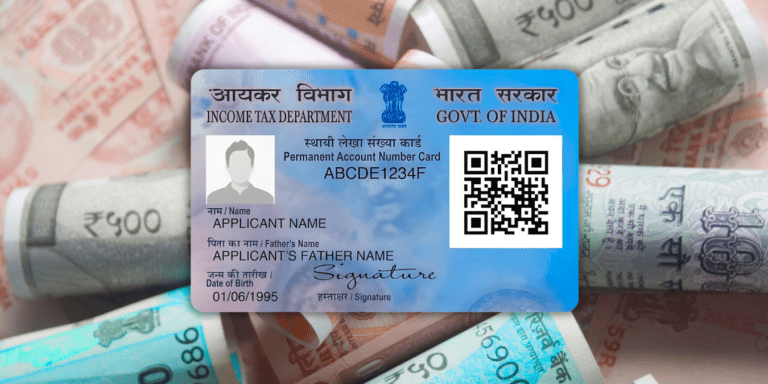
The Draft Income-tax Rules 2026 sharpen this mechanism significantly. They recalibrate the thresholds at which your FD activity triggers a report to the taxman — and whether you hold a PAN card plays a decisive role.




The Core Change: ₹10 Lakh with PAN, ₹5 Lakh Without
Here is the central rule every Indian depositor must understand:
Under the proposed draft rules, if you deposit more than ₹10 lakh in Fixed Deposits in a single financial year and you possess a PAN card, your bank or post office is required to report this to the Income-tax Department. If you do not have a PAN, the reporting threshold drops sharply to ₹5 lakh.
This is not a tax on your FD. Let that sink in. The rule is about reporting, not about imposing a new levy. Your FD interest remains taxable under “Income from Other Sources” as it always has been — TDS at 10% is deducted by the bank if your annual interest income exceeds ₹40,000 (₹50,000 for senior citizens). What changes is the level of scrutiny the tax department can apply to your deposit behaviour.
Critically, the ₹10 lakh limit is aggregate across all accounts and branches. So if you place ₹4 lakh in an FD at your State Bank branch in Chennai, ₹3 lakh at a Post Office in Pune, and ₹4 lakh at a private bank in Hyderabad — your total for the year is ₹11 lakh, and every institution reporting under SFT norms will flag this to the department.
Who Is Affected? A Realistic Look at Indian Depositors
Let us be honest about who this rule actually impacts in the Indian context.
Retired professionals and senior citizens who have received lump sums from provident funds, gratuity, or property sales often park this money in FDs. A retired teacher receiving ₹25 lakh from her EPF corpus and placing it in fixed deposits will clearly cross the ₹10 lakh threshold. The bank will report this transaction. As long as the source of funds is documented and declared, there is nothing to fear — but the documentation must be in order.
Housewives and family members receiving large gifts are another group to watch. Under Indian family tradition, it is common for assets to be transferred to spouses or adult children. If these amounts are deployed into FDs, the reporting mechanism will flag the transaction. The I-T department may then ask: where did this money come from? Was it declared in the giver’s returns?
Small business owners who prefer FDs to market-linked instruments need to be especially careful. Business income that is not fully declared and parked in FDs is precisely the kind of financial behaviour these rules are designed to surface.
NRIs making deposits in NRO accounts also fall within the ambit of reporting requirements, particularly given the draft rules’ tightened cross-border compliance provisions.
The PAN Divide: A Deliberate Policy Signal
The two-tier threshold — ₹10 lakh for PAN holders vs. ₹5 lakh for non-PAN holders — is not arbitrary. It reflects a deliberate policy message from CBDT: get a PAN, stay compliant, and you earn a higher threshold. Those who operate outside the PAN framework are subject to closer scrutiny at lower transaction values.
For the vast majority of urban and semi-urban Indians, PAN is already standard. But in rural areas and among older demographics, PAN penetration remains incomplete. For these groups, a single large FD — perhaps funded by a land sale or inheritance — could now trigger an automatic report to the department at just ₹5 lakh.
The message from the government is clear: the era of using financial instruments to park undeclared wealth quietly is drawing to a close.
How the SFT Mechanism Actually Works
Understanding the reporting mechanism helps demystify the process. Here is how it works end-to-end:
Step 1 — Deposit made: You open or top up an FD at your bank or post office.
Step 2 — Bank aggregates data: The bank’s systems track all your FD deposits across its branches through your PAN or Aadhaar linkage.
Step 3 — Annual SFT filing: By May 31 of the following financial year, the bank files a Statement of Financial Transactions with the CBDT, listing all customers whose aggregate FD deposits crossed the threshold during the year.
Step 4 — AIS population: This data flows into your Annual Information Statement (AIS), which you can view on the income-tax portal. You can see exactly what your bank has reported about you.
Step 5 — Cross-verification: The department’s AI-powered systems compare SFT data with your filed return. If your ITR shows declared income inconsistent with large FD deposits, a notice or query follows.
Step 6 — Response opportunity: Before any assessment, the department is required to give you an opportunity to explain the source. If your documentation is sound, the matter rests.
This is a far cry from the intrusive raids of earlier decades. The entire process is increasingly faceless, data-driven, and digital — one of the deliberate design features of the new Income-tax Act, 2025.
What Has NOT Changed: The Tax on FD Interest
One point of confusion that has circulated on social media deserves direct clarification. The draft rules do not impose any new tax on Fixed Deposit interest. The interest you earn on your FD was taxable before these rules, and it remains taxable at the same rate after.
The existing TDS provisions continue:
- If your FD interest income exceeds ₹40,000 in a financial year (₹50,000 for senior citizens aged 60 and above), your bank deducts TDS at 10% if PAN is furnished.
- If PAN is not furnished, TDS is deducted at the higher rate of 20%.
- Senior citizens can submit Form 15H and individuals below the taxable income threshold can submit Form 15G to avoid TDS deduction altogether, provided they genuinely do not have taxable income.
The draft rules are about the reporting of the principal deposit, not an additional charge on the interest earned.
The Broader Reform Context: Income-tax Act 2025
These FD reporting changes do not exist in isolation. They are part of India’s most comprehensive overhaul of direct tax law in six decades. The Income-tax Act, 2025 replaces the Income-tax Act, 1961 — a law that had accumulated decades of amendments, provisos, and circulars into an unwieldy edifice.
The Draft Income-tax Rules, 2026 — released by CBDT on February 7, 2026, with public feedback invited until February 22, 2026 — provide the operational details. Key aspects of the broader reform include:
Streamlined compliance: The existing rules ran to over 500 provisions. The draft reduces this to 333 rules, making the framework considerably leaner. Forms have been redesigned as “smart forms” with pre-filled data, reducing the scope for errors.
Revised PAN thresholds: Across a range of transactions — cash deposits, vehicle purchases, property purchases, hotel payments — the thresholds for mandatory PAN quoting have been revised upward to reflect current economic realities. The PAN requirement for cash deposits and withdrawals now kicks in at ₹10 lakh annually rather than the previous ₹50,000 per-day limit.
Crypto reporting: Crypto-asset service providers are now explicitly brought within the SFT reporting framework — a significant expansion of the tax department’s visibility into digital asset activity.
Faceless assessments: The draft further entrenches the faceless assessment mechanism, reducing human discretion and the scope for corruption in the assessment process.
Practical Advice: What Indian Depositors Should Do Right Now
Given these upcoming changes, here is what every Indian with Fixed Deposits or FD plans should consider:
1. Link PAN and Aadhaar to all your bank and post office accounts without exception. This not only ensures you receive the higher ₹10 lakh threshold but also prevents TDS deduction at the penalty rate of 20%.
2. Start maintaining a “Source of Funds” file. For every large FD you open, keep the documentary trail — salary slips, savings account statements showing accumulation, property sale deed, retirement corpus letter, gift documentation. If the department ever queries the deposit, your defence must be documentary.
3. Regularly check your AIS on the income-tax portal. Your bank is already reporting data about you. Knowing what is in your AIS allows you to reconcile it with your filed returns before a notice arrives.
4. Do not spread FDs across family members to evade reporting. The clubbing provisions of the Income-tax Act remain in force. Income from assets transferred to a spouse or minor child without adequate consideration is clubbed back to your income. Spreading deposits to avoid the ₹10 lakh threshold while the underlying funds are yours remains legally and technically problematic.
5. File your ITR accurately and on time. This remains the most powerful protection available to any taxpayer. A properly filed return with consistent income disclosure is your best insurance against scrutiny.
The Bigger Message for Indian Savers
For the honest, compliant taxpayer, these rules change very little in practice. Your FD gets reported, it matches your declared income, and life continues undisturbed. The digital infrastructure being built around the Income-tax Act, 2025 is, in many ways, designed to make life easier for this majority — pre-filled returns, fewer forms, faster refunds.
The discomfort these rules bring is directed squarely at a smaller segment: those who have used the relative opacity of Fixed Deposits to park income that was never declared. For this group, the mathematics has permanently changed.
India’s banking sector holds tens of trillions of rupees in Fixed Deposits. These deposits are now, more explicitly than ever, part of the income-tax department’s data ecosystem. The FD has not lost its safety. It has simply become more transparent.

With over 15 years of experience in Banking, investment banking, personal finance, or financial planning, Dkush has a knack for breaking down complex financial concepts into actionable, easy-to-understand advice. A MBA finance and a lifelong learner, Dkush is committed to helping readers achieve financial independence through smart budgeting, investing, and wealth-building strategies, Follow Dailyfinancial.in for practical tips and a roadmap to financial success!