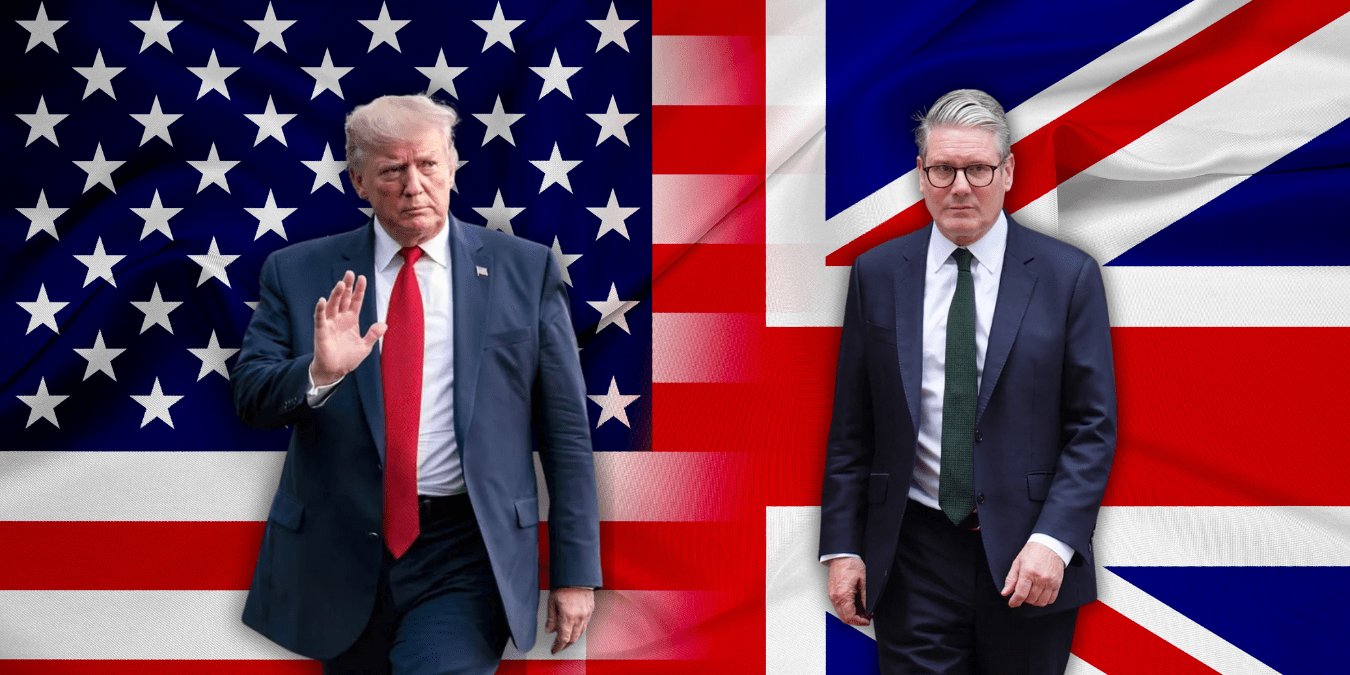
Why Trump Suddenly Turned Against the Chagos Deal Hours After Britain Said No to Iran Strikes
Trump backed the Chagos deal — then reversed overnight. The trigger? Britain secretly blocked US Iran strikes from Diego Garcia. A late-night phone call, a legal standoff, and a furious Truth Social post later, the UK-US special relationship hit its most dangerous moment in decades. Here’s the full story.
What Just Happened? The Story in Brief
Donald Trump has refused to back the Chagos deal unless Prime Minister Sir Keir Starmer allows the use of the joint UK-US base on Diego Garcia to strike Iran. This is a stunning about-face for a president who, just months earlier, had welcomed the deal as a historic achievement.
The sequence of events that led here reads like a geopolitical thriller — involving a late-night phone call between two world leaders, a transatlantic dispute over international law, and a tiny Indian Ocean atoll that holds enormous strategic power over events in the Middle East and beyond.
The Chagos Deal: What Was Agreed and Why It Mattered
To understand what is now unravelling, you need to understand what was originally built.
When “the Diego Garcia deal” was signed on May 22, 2025, between the United Kingdom and Mauritius, the White House welcomed it and called it Starmer’s “monumental achievement” for securing the future of the military base in Diego Garcia.
Under the arrangement, the UK transferred sovereignty of the Chagos Islands to Mauritius — ending decades of legal and diplomatic disputes — while securing a long-term operational lease. The UK will maintain a 99-year lease of Diego Garcia with an option to extend, which will cost about £100 million ($135 million) a year.
The deal also addressed one of modern history’s most significant colonial wrongs. Native Chagossians, who were forcibly removed in the 1960s and 70s, will be permitted to resettle on any of the Chagos islands except Diego Garcia, which remains restricted for military use.
From a security standpoint, the base is irreplaceable. Both Diego Garcia, an island in the Indian Ocean, and RAF Fairford, a base in the UK, would be important to any American plans to use long-range bombers in a sustained campaign against Iran.
The Phone Call That Changed Everything
The unravelling began on a Tuesday evening in February 2026. The president spoke to the prime minister on Tuesday night, and the two men discussed Trump’s ultimatum to Iran over its nuclear program. The following day, Trump made his statement attacking the Chagos deal.
What happened between that call and that statement tells the whole story.
British Prime Minister Keir Starmer blocked a request from US President Donald Trump to allow US forces to use UK air bases during any preemptive attack on Iran, saying it could break international law, according to multiple reports in British media citing government sources. According to The Times of London, which first reported the split over airbase access, Starmer denied the use of RAF Fairford in England and Diego Garcia for any strike on Iran.
The legal reasoning was specific. The Times “understands that the UK is yet to give permission for the US to use the bases in the event that Trump orders a strike on Iran, owing to concerns that it would be a breach of international law which makes no distinction between a state carrying out the attack and those in support if the latter have ‘knowledge of the circumstances of the internationally wrongful act.'”
In short: if Britain knowingly allowed its territory to be used as a launchpad for strikes that might themselves be unlawful, the UK could be held internationally responsible. Downing Street’s lawyers had drawn a red line.
Trump’s response was instant and volcanic.
Trump’s Reversal: The Truth Social Posts and What They Revealed
Trump said on Wednesday that Prime Minister Keir Starmer was “making a big mistake” in the agreement to transfer sovereignty of the archipelago to Mauritius and lease the island of Diego Garcia. “DO NOT GIVE AWAY DIEGO GARCIA!” Trump wrote in a post on Truth Social, saying the base could be called upon in any future military operation to counter a potential attack from Iran.
He went further, warning that it “may be necessary for the United States to use Diego Garcia, and the Airfield located in Fairford in order to eradicate a potential attack” from Iran, should it decide against making a deal on its nuclear programme with the US.
This was not simply presidential frustration. It was a direct and very public linking of two previously separate issues: the Chagos sovereignty question and the Iran military standoff. Trump was signalling that British cooperation on the latter was, in his view, a prerequisite for American support of the former.
According to reports by the BBC, The Times and The Guardian, the issue also explains why President Donald Trump reversed his position on supporting a plan under which Britain would transfer sovereignty over the Chagos Islands, including Diego Garcia, to Mauritius and lease the military facilities there for 100 years.


The Wider Military Context: Why Diego Garcia Is Irreplaceable
Diego Garcia is a small island, covering just 30 square kilometers, but it is the largest of roughly 60 islands that make up the Chagos Archipelago in the central Indian Ocean. Since the 1970s, it has hosted a strategic air base leased by the United States from Britain.
Its value is not accidental. Positioned roughly equidistant between Africa, the Middle East, South Asia, and Southeast Asia, it allows American heavy bombers — including the B-2 Spirit stealth bomber and the B-52 Stratofortress — to reach targets in the Middle East with significantly reduced flight times compared to missions launched from the continental United States.
In April of last year, Trump sent a third of the B-2 fleet, capable of carrying the massive bunker-buster bomb known as the “Mother of All Bunker Busters,” to the island in what was widely seen as a warning to Iran.
A senior regional official told CBS News on Thursday that one reason the US is moving two aircraft carriers to the region is the reluctance of some US allies to grant permission for their territory to be used in any strikes on Iran. Saudi Arabia, Jordan, and UAE have all said their airspace and territory cannot be used for strikes by any party.
In this context — with most regional allies refusing to cooperate — Britain’s refusal hit Washington with particular force.
Starmer’s About-Face and the Political Fallout
Eventually, the Prime Minister relented. In a statement on Sunday night, Starmer accepted the US request to use the base for “specific and limited defensive purpose.” But Trump said Starmer “took far too long” to change his mind.
Trump said the Prime Minister’s refusal to allow the US military to use the base was unlike anything that had “happened between our countries before.” He said: “That’s probably never happened between our countries before. It sounds like he was worried about the legality.”
The domestic political backlash was fierce. Sir Michael Ellis, a former Attorney General of England and Wales, condemned the Prime Minister’s earlier decision — and said it was “perfectly lawful” in pursuit of self-defence.
Foreign Secretary Yvette Cooper confirmed Diego Garcia was among the UK bases being authorised for the US to use to “deal with some of those launches and strikes.” But by the time that confirmation arrived, military operations were already underway.
The Deal’s Parliamentary Future: Uncertain at Best
The diplomatic turbulence has landed squarely on an already troubled piece of legislation.
Though it completed its House of Lords stages in January 2026, it is now facing hurdles in the House of Commons. Apart from the Trump factor, there are growing demands within Britain to reconsider and negate the deal. So much so that the Starmer government now is said to have “paused for thought.”
Former Foreign Secretary William Hague has publicly opposed the deal, arguing in The Times that “Trump is right: the Chagos deal is a mistake. As foreign secretary, I would have been ashamed to back a treaty that disregards the islanders and fleeces the taxpayer.”
Meanwhile, Chagossians themselves are divided and vocal. There are about 3,500 of the original Chagossians and their descendants living in the UK. A small group of them have landed on the islands in the past week to register their strong opposition to the treaty, as they feel no connection with Mauritius.
Downing Street insists the deal is alive. Downing Street denied the deal had been delayed, but admitted discussions were continuing. The Prime Minister’s official spokesman said: “There is no pause. We have never set a deadline. That is the position.”
The Hidden US Demand: Secrecy Guarantees
There is one more demand from Washington that has received less coverage but could prove the most difficult to satisfy.
The US has demanded written confirmation that if the deal goes through, the UK would not alert Mauritian officials about attacks launched from the base. Britain has said there would be no “notification” requirement, but US Government lawyers are unconvinced by the claim.
The concern is operationally obvious: if Mauritius had any formal or informal right to be notified of operations launched from its territory, intelligence could be compromised before strikes are executed. Iran maintains substantial diplomatic relationships across the developing world, making any potential leak potentially catastrophic.
Until this written guarantee is secured — and US lawyers are satisfied — the deal remains structurally vulnerable regardless of what either government says publicly.
The Historical Background: Why the Chagos Islands Are So Contested
This crisis does not exist in isolation. The Chagos Islands carry over five decades of contested history.
Britain in 1965 detached the archipelago from Mauritius, then a British colony, and leased Diego Garcia, the largest island of the archipelago, to the United States as a joint US-British military facility in the following year.
This advisory opinion was subsequently voted upon in the UN General Assembly, which, on May 22, 2019, by an unprecedented majority of 116 to 6, with 56 countries abstaining, urged the UK to withdraw its “colonial administration” from the Chagos Archipelago unconditionally within six months and restore it to Mauritius. Only six countries — the United States, the UK, Australia, Israel, and the Maldives — voted against the resolution.
Against this backdrop, the Starmer government’s 2025 deal was intended as a pragmatic settlement — a way to regularise the legal situation while preserving British and American military capabilities. The Iran crisis has transformed it into a flashpoint.
What Happens Next: The Key Questions
As of March 2, 2026, several critical questions remain unresolved.
Will the Chagos deal pass the House of Commons? The political arithmetic is uncertain. Conservative opposition, American pressure, and Chagossian legal challenges all complicate the bill’s passage. The government’s majority may not hold if backbench Labour MPs decide to vote against it.
Will Trump formally re-endorse the deal? Mr Trump has changed opinion on the Chagos deal multiple times after intense lobbying from the UK and US intelligence community, right-wing politicians in the UK, and Republicans on Capitol Hill. Another reversal is not impossible — but it is no longer the default expectation.
Will the Iran strikes change the strategic calculation? With military operations now underway, the immediate pressure around Diego Garcia access may ease. But the structural questions about the base’s governance, the Mauritius notification issue, and the long-term viability of the 99-year lease arrangement remain unresolved.
What of the Chagossian people? Regardless of sovereignty arrangements between governments, the rights and aspirations of the original islanders remain largely unaddressed by any of the parties to these negotiations.
What This Crisis Really Tells Us
The Chagos Islands are tiny. Diego Garcia covers just 30 square kilometres. But the events swirling around this remote atoll reveal profound truths about the nature of modern alliances, the limits of legal principle in the face of geopolitical pressure, and the enduring importance of strategic geography.
Trump’s about-face on the Chagos deal is not simply a story about one man’s transactional style. It is a story about what happens when a junior partner in an unequal alliance exercises independent legal judgement at a moment of maximum American strategic urgency — and discovers that the price of principle, in this partnership, is very high indeed.
Britain reversed its position within days. Not because the law changed. Not because the legal advice changed. But because the political cost of maintaining a principled stance against Washington became untenable.
For observers of global geopolitics, the Indian Ocean, and the future of Western alliances, Diego Garcia’s story has entered its most consequential chapter yet. The decisions made in coming weeks — in Westminster, in Washington, and in Port Louis — will shape the strategic landscape of the Indian Ocean for a generation.