The Strait of Hormuz Is Choking the World's Energy Supply — And Asia Is First in Line to Feel the Pain
Your petrol prices, cooking gas, electricity bill — all connected to one narrow waterway Iran just shut down. Brent crude crossed $100. India has 28 ships stranded. Pakistan has nowhere to source gas. This is what the Hormuz crisis actually means for you and your wallet.
🌊 The Chokepoint That Can Bring the World to Its Knees
It is barely 33 kilometres wide at its narrowest point — a sliver of ocean between the rocky coast of Iran to the north and the desert shoreline of Oman to the south. Yet the Strait of Hormuz is arguably the single most consequential stretch of water on Earth. Every day, approximately 20 million barrels of crude oil pass through this corridor, accounting for nearly one-fifth of global oil consumption and nearly $500 billion in annual energy trade.
On 28 February 2026, the United States and Israel launched coordinated military strikes against Iran, targeting nuclear facilities and killing Supreme Leader Ali Khamenei. Iran’s response was swift, devastating, and strategically precise: the Islamic Revolutionary Guard Corps (IRGC) announced it was closing the Strait of Hormuz to all enemy shipping. Within days, tanker traffic had dropped from 3,000 vessels a month to near zero. Not through mines or naval blockades — but through a handful of drone strikes and a single announcement that made every insurance company in the world refuse to cover Hormuz transits.
“When analysts have looked at the things that could go wrong in global oil markets, this is about as wrong as things could go at any single point of failure,” said Kevin Book, co-founder of energy research firm Clearview Energy Partners. Brent crude surged above $103 per barrel by mid-March — its highest level since the Russia-Ukraine war of 2022. And the country feeling the most acute, immediate pain? Asia.
Brent crude closed at $103.14 per barrel on Friday, March 14, after spiking to nearly $120 intraday on fears of direct Iranian strikes on Gulf production facilities. The IEA has announced the release of 400 million barrels from emergency reserves — enough to cover just 20 days of normal Hormuz flows. Analysts warn this is a temporary cushion, not a solution.
Source: Al Jazeera, IEA Official Statement, Reuters — March 15, 2026
📅 How the Crisis Unfolded — A Timeline
🌏 Why Asia Is the Frontline Casualty of This Crisis
The Strait of Hormuz is not a global problem equally distributed. It is overwhelmingly an Asian problem. According to the US Energy Information Administration and the International Energy Agency, approximately 80% of all oil transiting the Strait of Hormuz is destined for Asian markets. China, India, Japan, and South Korea alone account for nearly 70% of all crude and condensate shipments passing through the waterway. Their factories, power grids, transport networks, and entire economic architectures depend on this narrow passage remaining open.
The LNG picture is even more alarming. 83% of all LNG volumes moving through the Strait of Hormuz are destined for Asia. Qatar — the world’s largest single exporter of LNG — provides 53% of India’s natural gas imports, 72% of Bangladesh’s, and 99% of Pakistan’s through this very route. When Iranian drones struck Qatar’s Ras Laffan industrial city on March 3, it was not just an attack on a gas facility. It was a direct strike on the energy foundation of South Asia.
- China: 40–50% of total oil imports pass through Hormuz (UBP estimates)
- India: Nearly 50% of crude oil imports + 60% of natural gas supply transits Hormuz
- Japan: 70% of Middle Eastern oil — covering 95% of Japan’s crude needs — passes via Hormuz
- South Korea: Imports approximately 70% of its crude from the Gulf region via Hormuz
- Pakistan & Bangladesh: 99% and 72% of LNG imports sourced from Qatar/UAE through Hormuz
Sources: IEA, US Energy Information Administration, Kpler, Al Jazeera — March 2026
🌍 Country-by-Country: Who Hurts Most?
India faces the most acute near-term exposure of any major economy. Nearly half its crude oil imports and 60% of its natural gas pass through Hormuz. Two Indian-flagged gas carriers and a Saudi tanker have been allowed limited passage, but 28 Indian merchant vessels remain stranded. The rupee has weakened to ₹92.43/USD, inflation has risen to a 11-month high of 3.21%, and Sensex has shed over 5% in a week. The government is in emergency talks for alternative supply via Russia, and IOB has already cut lending rates as economic pressure builds.
China is the world’s largest crude oil importer and purchases over 80% of Iranian oil. Around 40% of its total oil imports and 30% of its LNG come through Hormuz. Beijing holds 7.6 million tons of LNG inventory (as of end-February) providing short-term buffer, but a prolonged disruption will force China to compete aggressively for Atlantic cargoes — tightening supply and pricing across the entire Asia-Pacific basin. Chinese-flagged vessels appear to have partial transit exemption, but this remains volatile.
Japan’s refiners obtain approximately 95% of their crude from Saudi Arabia, Kuwait, UAE, and Qatar — and 70% of that Middle Eastern oil is transported via the Strait of Hormuz. Japanese refiners have already petitioned the government to release emergency stockpiled oil to ensure smooth refinery operations. With no domestic oil production of significance, Japan has virtually no alternative supply options in the short term — making it among the most exposed economies globally to a prolonged Hormuz disruption.
Pakistan is arguably the most immediately vulnerable economy in Asia. Qatar and the UAE supply 99% of Pakistan’s LNG imports — all of which transit Hormuz. Islamabad officially requested Saudi Arabia reroute crude via Yanbu’s Red Sea port on March 4, and Riyadh arranged at least one bypass shipment. But the structural dependency is staggering. Already facing severe fiscal stress, a prolonged energy supply crunch could push Pakistan’s economy to a breaking point and trigger a severe inflation spiral.
⛽ It’s Not Just Oil — What the Strait Actually Carries
Most news coverage fixates on crude oil. But the Strait of Hormuz is a multi-commodity lifeline, and its de facto closure is disrupting far more than petrol prices. The cascading effects are only beginning to be understood.
- Crude Oil: 20 million barrels per day — 20% of global daily consumption
- LNG (Liquefied Natural Gas): 20% of global LNG supply, primarily from Qatar; 83% destined for Asia
- Jet Fuel: 30% of Europe’s jet fuel supply originates from or transits the strait
- Fertilisers: One-third of global fertiliser trade transits Hormuz — urea prices have already surged from $475 to $680 per metric ton. Corn and soy planting season in the US Midwest is directly threatened
- Petrochemicals & Plastics: 85% of polyethylene exports from the Middle East pass through Hormuz — packaging, automotive parts, consumer goods prices globally will rise
- Aluminium: Bauxite and aluminium exports from Gulf states are disrupted — auto and construction sectors face input cost shocks
- Helium: Qatar is a major global helium producer — tech, medical, and semiconductor industries face supply shortages
- LPG: Cooking gas for hundreds of millions of households across South and East Asia — directly at risk
“We’re now facing what looks like the biggest energy crisis since the oil embargo in the 1970s.” — Helima Croft, Global Head of Commodity Strategy, RBC Capital Markets
“This is no longer a geopolitical risk premium in the abstract. Supply is being disrupted in real time.” — Kpler Energy Analytics, March 1, 2026
📊 Impact Assessment — Asia vs the Rest of the World
| Country / Region | Hormuz Oil Dependency | LNG Exposure | Risk Level | Immediate Action Taken |
|---|---|---|---|---|
| India | 50% of crude imports | 53% from Qatar/UAE | Critical | Emergency talks; pivoting to Russian crude; rupee intervention |
| China | 40–50% of crude imports | 30% from Gulf | Critical | LNG stockpile drawdown; deepening Russian crude imports |
| Japan | 70% of ME oil via Hormuz | High (Qatar LNG) | Critical | Government emergency stockpile release authorised |
| South Korea | 70% of crude from Gulf | High | Critical | Strategic Petroleum Reserve activation under review |
| Pakistan | High dependency | 99% from Qatar/UAE | Critical | Requested Saudi Arabia reroute via Red Sea; one shipment arranged |
| Bangladesh | Moderate | 72% from Gulf | High | Exploring US LNG spot cargoes; limited options |
| Europe | Low direct dependency | Gas prices doubled | High | Competing with Asia for Atlantic LNG cargoes; prices surging |
| United States | Minimal direct imports | Low | Moderate | Strategic Petroleum Reserve: 415.4M barrels; partial release authorised |
| Malaysia | Net energy exporter | LNG exporter | Beneficiary | Malaysia stands to benefit from higher LNG prices as an exporter |
| Russia | Not a Hormuz user | Alternative supplier | Beneficiary | India and China pivoting rapidly to Russian crude — deepening leverage |
🛣️ Can the World Bypass the Strait? The Brutal Truth
The instinctive response to any Hormuz crisis is to ask: can we simply route ships around it? The answer, in 2026, is: barely, and not nearly enough.
Saudi Arabia’s East-West Pipeline has a theoretical capacity of 7 million barrels per day, and the UAE’s Fujairah Pipeline offers additional bypass capacity. Saudi authorities have already diverted some crude exports via Yanbu’s Red Sea port. However, terminal infrastructure at Jeddah limits throughput severely — these routes combined cannot offset a full Strait closure, where 20 million barrels daily need an outlet.
The alternative maritime routes are equally constrained. Oman’s deep-water ports of Duqm, Salalah, and Sohar lie outside the Strait in the Arabian Sea — theoretically allowing tankers to bypass Hormuz entirely. But by mid-March, drones had struck Duqm and Salalah, damaging at least one fuel storage tank, and Sohar had been designated a war-risk zone by insurers — effectively closing the backup exits as well.
On the LNG side, the US is already running its export infrastructure near maximum capacity. American LNG exporters cannot meaningfully fill the gap created by Qatar’s disrupted output. The world is discovering that there is no adequate substitute for Hormuz. No combination of strategic reserves, pipeline alternatives, or alternative routing can replace the function of this single 33-kilometre waterway.
Iran’s masterstroke was not military force — it was economics. By conducting targeted drone strikes near the strait and announcing it was “closed,” Iran triggered a near-universal withdrawal of war-risk insurance coverage from international shipping companies. Without insurance, no commercial ship can transit. Maersk and Hapag-Lloyd have already suspended Middle East routes. “All Iran had to do was several drone strikes in the vicinity of the Strait of Hormuz — and all of a sudden, insurers and shipping companies decided it was unsafe,” said Helima Croft of RBC Capital Markets. The blockade is economic, not physical. And that makes it far harder for the US Navy to solve with aircraft carriers alone.
🇮🇳 What This Means Specifically for India — and Indian Investors
Of all the large economies in Asia, India’s exposure to the Strait of Hormuz crisis is arguably the most structurally complex. Nearly half of India’s crude oil imports flow through this corridor, along with 53% of its natural gas supply from Qatar and the UAE. The macroeconomic transmission is already visible: CPI inflation has risen to a 11-month high of 3.21% in February 2026, the rupee has weakened past ₹92/$, and the Sensex has shed over ₹9.5 trillion in market capitalisation in a single week.
India’s government is pursuing a multi-pronged emergency response. External Affairs Minister S. Jaishankar has personally called his Iranian counterpart four times since the crisis began, securing limited transit for two Indian-flagged gas carriers. India is also rapidly deepening its reliance on Russian crude — a pivot that was already underway after 2022 but will now accelerate significantly. However, Russia cannot fully replace Gulf supply at India’s current import volumes without significant logistics investment.
- Petrol & diesel prices: Risk of retail price hikes of ₹5–10/litre if Brent stays above $100 beyond April
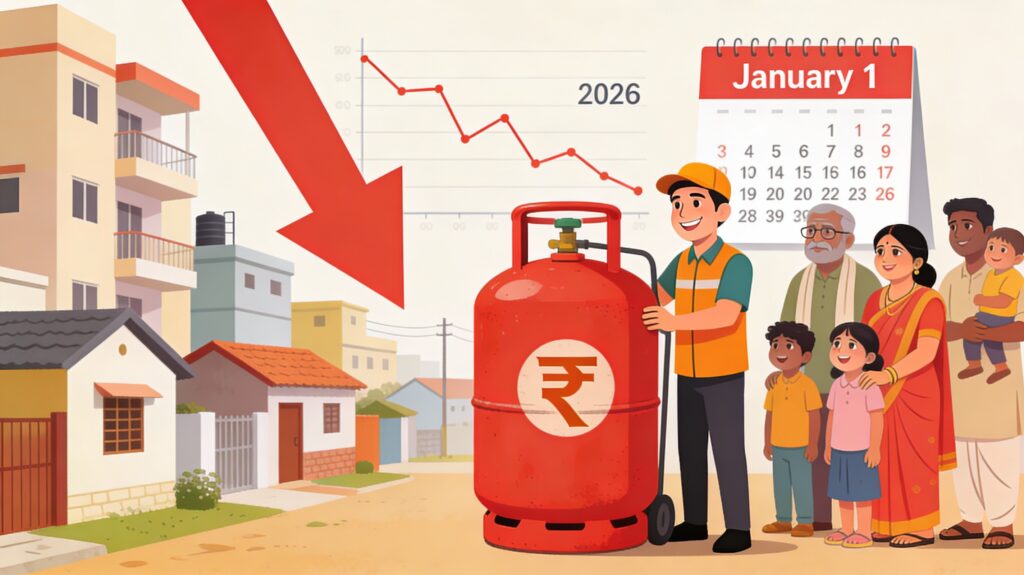
- LPG cylinders: Cooking gas subsidies under pressure; prices may rise ₹50–100 per cylinder
- Aviation sector: IndiGo, Air India facing severe jet fuel cost inflation — ticket prices will rise
- Fertiliser & food prices: Rising urea costs threaten kharif planting season; food inflation risk elevated
- Current Account Deficit: India’s oil import bill could widen the CAD by 0.8–1.2% of GDP if crisis extends 3+ months
- RBI policy: Rising inflation severely limits scope for further rate cuts; April MPC meeting outcome now deeply uncertain
🔮 What Comes Next — Three Scenarios
Scenario 1 — Short Disruption (2–4 weeks): Best Case
US-Iran diplomatic back-channels produce a negotiated pause. Iran allows partial reopening in exchange for guarantees on its oil infrastructure. Oil retreats to $75–85. Asian markets recover sharply. Probability: 25–30%.
Scenario 2 — Prolonged Disruption (2–4 months): Base Case
The crisis drags on as diplomatic solutions prove elusive. Brent crude oscillates between $90–110. Asian economies face severe energy inflation, currency depreciation, and growth downgrades. India, Pakistan, and Bangladesh experience the most acute pain. Strategic reserves provide a temporary buffer. Probability: 50–55%.
Scenario 3 — Full Escalation: Tail Risk
Iran directly targets Gulf oil infrastructure or Iran-linked forces strike Kharg Island. Gulf state oil production is physically disrupted — not just shipping. Brent spikes above $150. Global recession fears become reality. Asia faces its worst economic shock since COVID-19. Probability: 15–20%.
The Hormuz crisis is real, acute, and deeply asymmetric in its impact — Asia bears the vast majority of the world’s pain from this disruption. For Indian investors, the near-term playbook is clear: defensive sectors (FMCG, Power, Renewables, Telecom) over cyclicals; Gold and Gold-linked assets as inflation hedges; and avoidance of aviation, metals, and high-debt industrials until the geopolitical picture clarifies. India’s structural growth story — 7.4% GDP, easing rates, digital economy — remains intact. But the energy crisis is a genuine near-term headwind that will test the resilience of every portfolio in 2026.
This article is for informational and educational purposes only and does not constitute investment, legal, financial, or geopolitical advice. All data and statistics are sourced from publicly available reports including the IEA, US EIA, Kpler, Al Jazeera, CNBC, NPR, Wikipedia (2026 Strait of Hormuz Crisis entry), Congress.gov CRS Report, RBC Capital Markets, and FactCheck.org as of March 15–16, 2026. The situation is rapidly evolving — readers are advised to verify all information from primary sources before making financial decisions.