The Strait of Hormuz Crisis: How the World's Most Dangerous Waterway Is Now Costing You More at the Pump, the Airport, and the Grocery Store
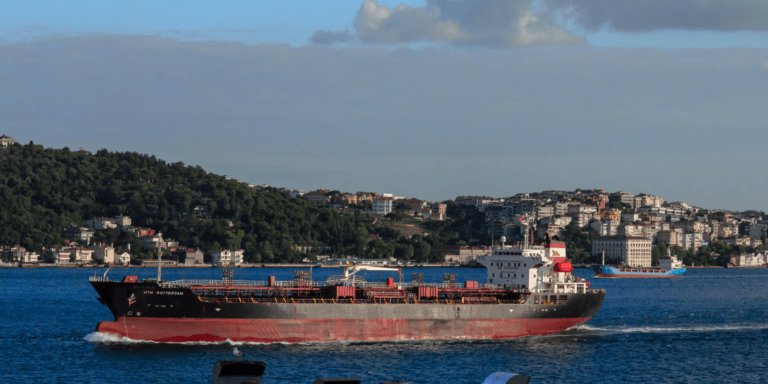
There is a narrow strip of water — just 21 miles wide at its most constricted point — that separates the Persian Gulf from the Gulf of Oman, and right now, it is quietly dictating the price of nearly everything you buy. The 2026 Strait of Hormuz crisis, triggered by Iran’s effective closure of this critical passage following escalating conflict with the United States and Israel beginning February 28, 2026, has sent shockwaves through every layer of the global economy. If your gas bill feels heavier, your airline ticket inexplicably expensive, and your grocery cart somehow more punishing, this is the reason — and understanding it is no longer optional for any informed consumer.
What Is the Strait of Hormuz?
Before analyzing the crisis, it is worth understanding exactly why this narrow waterway commands such extraordinary global leverage. The Strait of Hormuz connects the oil-rich nations of the Persian Gulf — Saudi Arabia, the UAE, Kuwait, Iraq, and Iran itself — to the open ocean and, by extension, to the world. Approximately 20% of the world’s total oil supply and a significant share of global liquefied natural gas (LNG) passes through this single chokepoint every single day. There is no pipeline alternative that can fully replace this volume, and there is no geographical workaround that does not involve weeks of additional transit time and billions in additional cost.
Goldman Sachs researchers estimated before the full closure that even a four-week halt in Hormuz flows would add roughly $14 per barrel to the global price of oil. That estimate has since been obliterated by real-world events. The Strait of Hormuz is not just an energy corridor — it is also a fertilizer highway, a plastics supply chain, a petrochemicals route, and an LNG superhighway all rolled into one narrow passage. When it closes, the world does not simply pay more for fuel. It pays more for everything that fuel and its derivatives touch — which, in a modern economy, is essentially everything.
The Oil Price Shock: Numbers That Should Alarm You
On March 8, 2026, Brent crude oil crossed the psychologically significant $100 per barrel threshold for the first time in four years. This alone would have been alarming. But the market did not stop there. Brent surged to a peak of $126 per barrel, representing a nearly 50% increase from pre-crisis levels within a matter of days — a velocity of price movement that stunned even seasoned energy analysts. Dubai crude, reflecting the specific dislocation in Persian Gulf supply, reached an unprecedented $166.80 per barrel.
J.P. Morgan warned that crude oil production from Iraq and Kuwait alone could be halted within days if the Strait remained closed, estimating potential supply losses of up to 4.7 million barrels per day from those two countries alone. The Dallas Federal Reserve, modeling the economic consequences of a full closure that removes close to 20% of global oil supplies, projected that WTI crude could average $98 per barrel in Q2 2026 and rise further to $115 per barrel if the closure extended into Q3. Freight rates for oil tankers skyrocketed by more than 90% since late February, and war risk insurance premiums surged so dramatically that some insurers withdrew coverage altogether for vessels operating in the Persian Gulf.
The ripple effects into broader financial markets were immediate. Investors fled toward traditional safe-haven assets — gold, the Japanese yen, the Swiss franc — as oil-linked uncertainty translated into generalized risk aversion across equity and bond markets. The Dallas Fed further projected that a two-quarter disruption would reduce annualized global real GDP growth by nearly 3 percentage points in Q2 2026 alone, with the impact remaining negative through the end of the year. This is not a regional tremor. It is a full-scale seismic event with a global epicenter.
Your Gas Bill: The Most Visible Wound
The fuel pump is where most ordinary people first feel a geopolitical crisis in their wallets, and the Hormuz disruption has made that pain sharp and immediate. Historically, each dollar increase in crude oil prices results in a two-to-three cent rise at the gas pump in the United States. With crude prices having risen by $30 to $50 per barrel above pre-conflict levels depending on the reference point, that translates to a retail gasoline price increase of roughly $0.60 to $1.50 per gallon — a meaningful blow to family budgets, especially in car-dependent communities where driving is non-negotiable.
For consumers in India and other import-dependent economies, the picture is compounded by currency pressure. As the rupee weakens against the dollar in response to deteriorating current account dynamics driven by surging import bills, the domestic cost of fuel rises even beyond what the raw crude price increase would suggest. In Europe, the crisis arrived with equal ferocity, with natural gas prices jumping 39% in a single trading day following the Strait’s effective closure. European households, still not fully recovered from the energy shocks of earlier years, are now facing a second consecutive cycle of energy-driven inflation from a conflict they have no direct role in.
The broader economic literature on oil shocks is unambiguous: sustained periods of high energy prices are among the most reliable precursors to global recessions. Estimates from LeanRS and comparable research firms suggest that a $10 permanent oil price increase could reduce cumulative global GDP growth by 20 to 30 basis points over the course of 2026 to 2027. The current disruption has produced price increases an order of magnitude beyond that threshold, making the stagflationary risk — the toxic combination of slowing growth and rising prices — the dominant concern for central bankers from Washington to Mumbai to Frankfurt.
The Airline Industry: A Crisis Above the Clouds
Few industries are as nakedly exposed to oil price volatility as commercial aviation, and the Hormuz crisis has hit airlines with the force of a structural reckoning. Jet fuel, also known as aviation turbine fuel (ATF), constitutes approximately 40% of airline operating costs under normal conditions. When that input nearly doubles in price, no amount of route optimization or cost discipline can fully absorb the damage.
Northwest European jet fuel hit $1,840 per metric ton on April 3, 2026 — a new record — as refineries lost access to Persian Gulf crude feedstock and global kerosene supplies tightened. US spot jet fuel prices surged to nearly $4 per gallon, prompting the US Energy Information Administration to revise its 2026 average jet fuel forecast upward by 37% above prior projections. The consequences for travelers have been swift and severe. Transcontinental US domestic fares surged from an average of $167 to $414. International routes saw increases of over 300% on the most severely impacted corridors.
Airlines responded along predictable but painful lines. United Airlines cut capacity on Asia-Pacific routes and halted Middle East services entirely. Air India implemented a phased fuel surcharge affecting every route it operates, with passengers flying domestic routes charged an additional ₹399 per booking, West Asia passengers absorbing a $10 surcharge, Southeast Asia travelers facing increases from $40 to $60, and Africa-bound passengers seeing surcharges jump from $60 to $90. On Gulf and Middle East routes departing from India, fuel surcharges now range between ₹3,000 and ₹5,000 per ticket. With oil prices staying above $90 per barrel — roughly 40% higher than what airlines had budgeted for 2026 — early booking data confirms that airfare increases are structural, not temporary.
The cascading logic is worth spelling out explicitly. Higher jet fuel costs force airlines to either raise fares or cut routes. Cutting routes reduces competition on surviving routes, which raises fares further. Meanwhile, the rerouting of aircraft away from Persian Gulf airspace — previously one of the world’s busiest aviation corridors — adds flight time, fuel burn, and crew costs to every affected journey. The passenger who books a flight from London to Sydney and notices an unexplained fare increase of several hundred dollars is experiencing the downstream economic consequence of a 21-mile strait being closed 4,000 miles away.
The Grocery Store: The Quiet Crisis Multiplying on Every Shelf
The least visible but arguably the most consequential impact of the Hormuz crisis is its assault on global food prices. Food inflation has a particular cruelty — it is regressive, hitting low-income households proportionally harder than wealthy ones, and it is stubborn, persisting long after the original shock has faded because it operates through multiple interlocking channels simultaneously.
The most immediate food price channel is transport cost. Every shipment of produce, refrigerated meat, packaged goods, and canned foods relies on diesel and gasoline for its journey from farm to processing facility to distribution warehouse to retail shelf. When fuel costs spike, freight costs spike. When freight costs spike, every item that moves along a supply chain becomes more expensive. This is not theory — the National Restaurant Association flagged food-away-from-home inflation as a top concern for 2026 even before the current crisis, and the Hormuz disruption has substantially deepened that pressure.
The second and more alarming channel is fertilizer. Nearly one-third of global fertilizer trade passes through the Strait of Hormuz every month. The FAO estimates that the crisis has stalled 3 to 4 million tonnes of fertilizer trade per month — a volume with no viable short-term substitute. Unlike oil, there are no strategic fertilizer reserves anywhere in the world, meaning supply disruptions translate almost immediately into market scarcity and price spikes. Nitrogen-based fertilizers are particularly vulnerable because they depend on natural gas as a feedstock, and natural gas is one of the primary commodities being blocked by the Strait’s closure.
Gulf countries produce approximately 20% of global phosphate fertilizers and around a quarter of global sulfur — a critical input for converting phosphate rock into plant-absorbable form. The disruption to these supply chains means farmers planting spring crops in the Northern Hemisphere are facing input cost uncertainty at precisely the moment they need to make irreversible decisions about what to plant and how much to apply. The UN’s UNCTAD has explicitly warned that the timing of this disruption — hitting at the start of a critical agricultural input season — could suppress crop yields with consequences that persist well into 2027.
Britain’s National Farmers’ Union has already flagged that produce grown in heated glasshouses, including tomatoes, cucumbers, and peppers, will be among the first categories to see noticeable price increases at retail, as energy costs directly and immediately feed into controlled-environment agriculture. The NFU was explicit that while some costs may be absorbed by farmers and intermediaries, the majority will be passed on to consumers. Gulf Cooperation Council consumers face the most acute near-term exposure, given their extreme dependence on food imports transiting through the very waterway now blocked. But the propagation of food price inflation through global commodity markets means no consumer anywhere is truly insulated.
The Fertilizer Time Bomb
A dimension of the Hormuz crisis that has received insufficient mainstream coverage is the fertilizer shock, which operates on a delayed timeline but may ultimately prove more economically damaging than the immediate oil spike. When oil and gas prices surge in response to a supply disruption, markets reprice within days and consumers adapt their behavior — driving less, deferring discretionary purchases. When fertilizer supply is disrupted during planting season, the consequences do not manifest until harvest, which can be six months to a year later. By then, the geopolitical crisis may have resolved, but the agricultural damage is already locked in.
The FAO and UNCTAD are both explicitly warning that this delayed mechanism is now in motion. Alternative sourcing locations for nitrogen-based fertilizers are already limited by existing export restrictions and the high energy costs that make production expensive everywhere. The carnegie Endowment’s research into the phosphate and sulfur supply chain disruption adds another layer: the Strait is not just choking off finished fertilizer products but also the sulfur precursors needed to manufacture them, compressing the fertilizer supply chain simultaneously from the raw materials end and the finished goods end.
For a world that was already struggling with food price inflation driven by climate disruptions, supply chain fragmentation, and the lingering aftereffects of post-pandemic logistics disorder, this fertilizer shock arrives as a compounding crisis on top of compounding crises. Carnegie’s assessment that approximately 20% of global food relies on fertilizers that either originate from or transit through the Gulf region means that a sustained Hormuz disruption could have food security consequences reaching far beyond 2026.
Who Gets Hit Hardest?
While no major economy is immune, the distribution of pain is deeply unequal. Import-dependent emerging markets — particularly in Asia and Africa — face the most severe combination of adverse factors: higher energy import bills, weakening currencies that amplify the cost of dollar-denominated commodities, limited fiscal space to provide consumer subsidies, and constrained access to alternative supply routes. The Africa Supply Chain Confederation has described the crisis as having “moved from a geopolitical story to a supply chain shock — and fast,” warning that analysts are openly discussing $150 to $200 per barrel scenarios if disruption persists into the coming weeks.
Within the developed world, lower-income households bear a disproportionate burden because food, fuel, and transport constitute a larger share of their total expenditure than for affluent households. A family spending 20% of their income on food and 15% on transportation is not experiencing the same crisis as a family for which those categories represent 5% each. The Hormuz crisis, like all commodity price shocks, is economically regressive in its distributional impact — and policymakers who treat it as a simple macroeconomic headwind, rather than an equity crisis with a geopolitical trigger, are misunderstanding its true human cost.
What Comes Next
The honest answer is that the trajectory depends almost entirely on whether a diplomatic resolution or military outcome reopens the Strait in the near term. The Dallas Federal Reserve’s modeling is instructive: a one-quarter disruption raises WTI to $98 per barrel; a two-quarter disruption pushes it to $115; and a three-quarter disruption could see prices reaching $132 per barrel before the supply-demand dynamic begins to self-correct. The global GDP growth impact compounds with each additional quarter, with the most severe scenario reducing fourth-quarter 2026 growth by 1.3 percentage points relative to baseline.
Analysts at Barclays, Goldman Sachs, and UBS have all raised their oil price forecasts for 2026 substantially, with Goldman now forecasting Q2 2026 Brent at $76 per barrel in their base case — a figure that may already be overtaken by events given that spot prices have recently traded far higher. The Stimson Center has noted that even a “soft closure” — where traffic is not completely stopped but is severely chilled by insurance withdrawal, war risk premiums, and Iranian interdiction threats — can inflict most of the economic damage of a declared blockade. The market is not waiting for a formal closure announcement. It is already pricing in the risk with every barrel, every boarding pass, and every bag of groceries.
The Geopolitical Lesson Hidden in Plain Sight
What the 2026 Strait of Hormuz crisis makes undeniable is that the modern global economy remains structurally dependent on a handful of geographic chokepoints that were identified as strategic vulnerabilities decades ago. The conversation about energy diversification, domestic production, renewables buildout, and supply chain resilience has been ongoing since at least the 1970s oil embargo — and yet here the world stands again, watching a 21-mile stretch of water determine whether families can afford to fill their tanks, catch a flight, or buy tomatoes at a reasonable price.
The crisis is not a failure of any single policy or any single government. It is the accumulated consequence of a global system that optimized for efficiency at the expense of redundancy, and that treated geopolitical risk as a manageable externality rather than a structural feature requiring serious engineering. The consumers feeling this crisis in their everyday budgets right now are not merely paying an energy surcharge. They are paying the long-overdue cost of collective strategic complacency — and until the underlying vulnerabilities are addressed, the next crisis will find the same chokepoints just as exposed, and the same supply chains just as brittle.
This article is based on verified data from Reuters, Goldman Sachs, the Dallas Federal Reserve, UNCTAD, the FAO, CSIS, Chatham House, and multiple industry sources as of April 2026. All figures cited reflect conditions at time of writing and are subject to change based on evolving geopolitical developments.