The Great Oil Heist: How India is Defying a 50% Trump Tariff to Keep Your Petrol Cheap (But at What Cost?)
Why is India quietly using China’s currency to pay for Russian oil while Washington ramps up pressure and Moscow hunts for new buyers? Discover how the yuan, secret tanker deals and a silent Beijing are reshaping India’s energy security—and what this uneasy triangle could mean for your fuel bill tomorrow.
Why is Russia Demanding ‘Enemy Currency’ for Its Oil While Washington Threatens a Trade War? The Secret Deal No One is Telling You About.
You are fuelling your car in Mumbai or Delhi, paying a price that has barely budged in months, while global energy markets are in chaos. It feels like a miracle of economic management. But behind that stable meter reading lies a high-stakes geopolitical thriller involving “ghost ships,” a $59 billion trade deficit, and a shocking twist that might unsettle every patriotic Indian: to keep our fuel cheap, we might be inadvertently strengthening the Chinese Yuan.
As of December 2025, India finds itself in the eye of a perfect storm. President Donald Trump has slapped a punitive 50% tariff on Indian imports, explicitly punishing New Delhi for buying Russian crude. Yet, instead of backing down, India’s refiners are doubling down on a “shadow trade” that bypasses the dollar entirely. But here is the catch that mainstream news often misses: The “Rupee Payment” dream has hit a wall, and the solution Russia is demanding is the one currency India desperately wants to avoid.



The Trump Ultimatum: “Stop Buying or Pay the Price”
In late 2025, the diplomatic gloves are off. The Trump administration has moved beyond warnings, imposing a crushing 25% additional tariff (bringing the total to 50%) on Indian goods. Washington’s logic is blunt: India’s purchase of Russian oil funds the Kremlin’s war machine. Trump claims Prime Minister Modi promised to halt purchases—a claim New Delhi vehemently denies, citing its primary duty to “protect the interests of the Indian consumer”.
This isn’t just rhetoric. The pressure has forced a tactical retreat. India’s Russian oil imports are projected to dip to a three-year low of ~600,000 barrels per day (bpd) in December 2025, down from November’s 1.87 million bpd high. But don’t be fooled—this isn’t a permanent stop. It’s a strategic pause while Indian refiners and Russian sellers switch to new, non-sanctioned “pop-up” trading entities to evade the latest U.S. blacklist of Rosneft and Lukoil.
The Hidden Currency Crisis: Why Your Petrol Might Be Paid for in Yuan
Here is the most surprising revelation for the Indian audience. For years, we were told that purchasing Russian oil in Rupees would internationalize our currency and break the dollar’s hegemony. The reality in late 2025 is far more complex—and uncomfortable.
While the Special Rupee Vostro Accounts (SRVA) mechanism exists, it has a fatal flaw: Russia has accumulated billions of rupees it cannot easily use. Moscow doesn’t want more rupees; it wants a currency it can use globally to buy goods. With the Dollar and Euro off-limits due to sanctions, and the Dirham under scrutiny, Russian traders are increasingly demanding payment in Chinese Yuan (RMB).
Why this is a shocker:
- The Rivalry Paradox: To secure cheap energy and defy the US, Indian refiners are forced to use the currency of their primary Asian rival, China. This strengthens the Yuan’s global standing—something New Delhi strategically opposes.
- The “Cost” of Business: Paying in Yuan simplifies transactions for Russia but adds a conversion layer for India, yet refiners are accepting this to keep the oil flowing.
- The “Shadow” Solution: While some payments still happen in Dirhams and Rupees (for investments in Indian G-Secs), the “Yuan component” is the dirty secret of the 2025 oil trade.
The “Shadow Fleet” and the $35 Barrel
How does the oil actually get here if sanctions are so tight? Enter the “Shadow Fleet”—a mysterious armada of aging tankers with obscure ownership and insurance outside the Western P&I (Protection and Indemnity) clubs.
Because Western sanctions have frightened away traditional Greek and European shippers, Russia relies on these ghost ships to deliver crude to refineries in Gujarat and Odisha. And to make the risk worth taking for India, Russia has slashed prices again. In late 2025, after new US sanctions, Russia is offering its flagship Urals crude at deep discounts—sometimes $5 to $10 below Brent, with reports of occasional distressed cargoes going even lower.
This discount is the only reason Indian fuel pumps haven’t exploded in price. It saves the Indian government (and you) billions in potential subsidies and inflation, acting as a massive shock absorber for the economy.
Alternatives to Russian Oil for India
As US sanctions and tariffs choke Russian oil supplies in late 2025, India is activating a strategic “Plan B” to secure its energy future. The pivot involves four key alternatives:
- Middle East Reliability: Iraq and Saudi Arabia have reclaimed dominance, allocating “full term volumes” to Indian refiners in December 2025 to fill the Russian void.
- American Crude: Ironically, India is buying record volumes of US WTI crude—imports jumped 51% in H1 2025—using trade with Washington to hedge against geopolitical risks.
- Venezuelan Revival: India is aggressively increasing imports of heavy Venezuelan crude, a cost-effective substitute for Russian Urals perfect for complex Indian refineries.
- New Frontiers: A 5-year deal with Guyana diversifies supply away from conflict zones.
While these sources ensure supply security, they lack Russia’s deep discounts, potentially signaling higher fuel prices for Indian consumers in 2026.
The Looming “Dead End”: January 21, 2026
If you think the current tariff war is tense, wait until January 21, 2026. This is the deadline set by the European Union for a new, stricter rule: they will reject any fuel products from refineries that processed Russian crude within 60 days of the bill of lading.
Why this matters:
Until now, India played a clever game called the “Laundromat.” We bought crude from Russia, refined it, and sold the diesel/jet fuel to Europe. Europe got its fuel, we got the profit, and technically, the fuel was “Indian.” The new EU rule aims to kill this loophole.
After January 21, Indian private refiners (who are the biggest buyers of Russian crude) might lose their lucrative European export market if they continue processing Russian oil. This could force them to dump that supply into the domestic Indian market—potentially crashing prices further (good for you?) or forcing a total halt in Russian purchases if domestic demand can’t absorb it (bad for energy security).
China’s Role in India-Russia Oil Trade
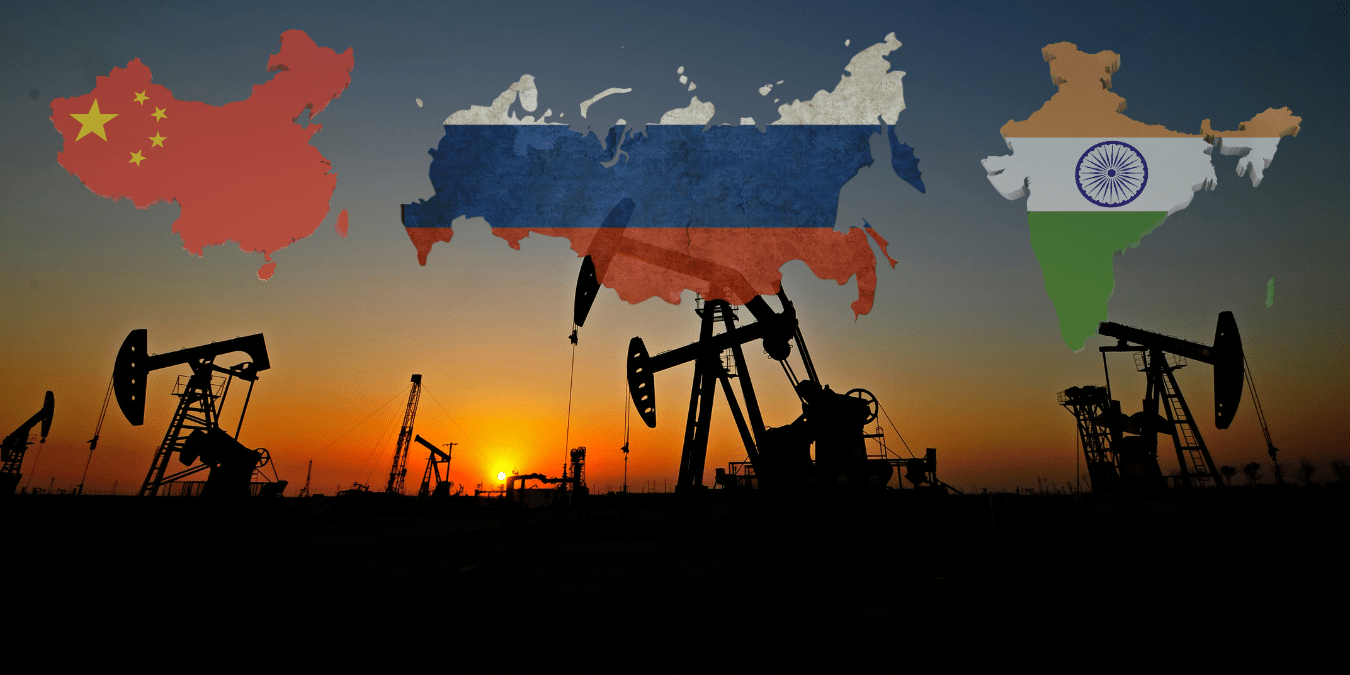
China’s role in the India-Russia oil trade has become surprisingly pivotal in 2025, driven by Western sanctions and payment complexities. Key aspects include:
- Currency Dominance: Russia is increasingly demanding payments in Chinese Yuan (RMB) from Indian refiners to bypass dollar sanctions. This forces India to use the currency of its geopolitical rival to secure discounted oil, indirectly strengthening the Yuan’s global status.
- Strategic Shift: While Indian refiners prefer Rupees or Dirhams, they have pragmatically accepted Yuan payments for some shipments to ensure supply continuity, especially as traditional payment routes face stricter scrutiny.
- Market Absorber: As Indian demand dips due to US tariffs (projected for December 2025), China steps in to absorb excess Russian crude. In August 2025, Chinese refiners snapped up 15 cargoes that India might otherwise have bought, illustrating China’s role as the alternative “buyer of last resort” for Russia.
- Logistical Collaboration: Though less publicized, the trilateral dynamic effectively creates a non-Western energy bloc, where China and India together blunt the impact of Western price caps by absorbing nearly all of Russia’s seaborne oil exports.
This triangle reveals a complex reality: to keep its energy cheap, India is navigating a trade architecture increasingly influenced by Beijing’s financial infrastructure.
Impact of Yuan Payments on Indian Rupee
The increasing use of the Chinese Yuan (RMB) for oil payments has strategic and psychological implications for the Indian Rupee (INR), though the direct economic impact is complex:
Negative Pressures:
- Undermines INR Internationalization: Paying in Yuan directly contradicts India’s long-term goal of promoting the Rupee for global trade. It signals to the market that the Rupee lacks the liquidity or acceptance of the Yuan, potentially weakening confidence in the INR as a viable alternative to the dollar.
- Exchange Rate Volatility: To pay in Yuan, Indian refiners must first sell Rupees (or Dollars) to buy Yuan on international markets. Large-scale selling of INR for RMB adds downward pressure on the Rupee exchange rate.
- Transaction Costs: Using a third-party currency like the Yuan adds a conversion layer (INR → USD/Other → RMB), increasing transaction costs for Indian importers compared to direct INR-RUB settlements.
Strategic Risks:
- Geopolitical Leverage: Reliance on the Yuan exposes India’s critical energy supply chain to China’s financial system. In a future conflict, Beijing could theoretically monitor or disrupt these payments, creating a vulnerability New Delhi is desperate to avoid.
Mitigating Factors:
- Limited Scope: While significant, Yuan payments are currently a “pragmatic compromise” for specific Russian shipments, not a wholesale replacement for the dollar across India’s entire trade basket. The Rupee remains stable domestically, and the RBI actively manages volatility.
- Rupee Settlement Efforts: India continues to push for Rupee payments where possible (e.g., for investments in government securities), keeping the INR-RUB mechanism alive for non-oil trade.
Bottom Line: The shift weakens the Rupee’s global narrative more than its immediate domestic value, but it exposes a harsh reality: the Rupee is not yet ready to replace the Dollar, and in its absence, the Yuan is the only game in town for sanctioned trade.
Actionable Takeaways: What This Means for Your Wallet
- Expect Stability (For Now): The dip in December imports is temporary. The “Shadow Fleet” and new traders are already lining up to resume flow in Q1 2026. Your petrol price is likely safe for the next 3-4 months.
- Watch the Rupee: The pressure of tariffs and the need to buy Yuan/Dirhams could put pressure on the INR exchange rate. If the Rupee weakens, imported goods (electronics, foreign travel) will get costlier, even if oil stays cheap.
- Investment Angle: The government is pushing Russia to invest its trapped rupees into Indian infrastructure and bonds. This could mean sustained liquidity in Indian markets, supporting stock prices in infrastructure and manufacturing sectors.
The Verdict: A High-Stakes Poker Game
India is playing the most dangerous game of poker in its economic history. On one side sits Donald Trump with a 50% tariff hammer; on the other sits Vladimir Putin offering the energy lifeline India’s $5 trillion economy needs to survive.
The “New India” of 2025 isn’t buckling. By navigating the Yuan trap, leveraging the shadow fleet, and absorbing the tariff hits, New Delhi is prioritizing energy security over diplomatic niceties. But as the January 2026 deadline approaches, the window for this balancing act is closing.
The burning question remains: Will the Modi government find a way to bypass the EU’s “60-day rule” and keep the Russian oil tap open, or will 2026 be the year your petrol bill finally reflects the true cost of global chaos? The answer lies in a handful of “ghost ships” currently sailing quietly around the Cape of Good Hope.