Section 195 TDS on NRI Property: How Budget 2026 Just Made It Simpler for Every Indian Homebuyer
Buying property from an NRI seller once meant becoming a tax authority overnight. Budget 2026 just eliminated the rule that quietly killed thousands of genuine deals. No TAN. Just your PAN. But one compliance mistake still costs you heavily. Here’s exactly what changed — and what hasn’t.
If you have ever tried to buy property from a Non-Resident Indian seller in India, you already know the drill. Paperwork, paperwork, and more paperwork — with the threat of a penalty hanging over your head at every stage. For years, one of the biggest pain points was a deceptively simple requirement: before you could even complete the purchase, you as the buyer had to obtain a Tax Deduction and Collection Account Number, better known as TAN.
For a salaried professional or a first-time homebuyer, getting a TAN felt like being asked to become a de facto tax authority overnight. Most people had no idea what TAN even was, let alone how to apply for one, file challans against it, and submit quarterly returns. Many genuine property deals collapsed at this stage. Many others ended up in the hands of expensive chartered accountants, adding thousands to an already stressful transaction.
Budget 2026 has changed this equation decisively. Let me walk you through exactly what has changed, why it matters, and what you still need to get right.
Why NRI Property Transactions Were So Complicated
To understand the significance of the Budget 2026 amendment, you need to first appreciate how the old system worked — and why it consistently tripped up ordinary buyers.
When a resident Indian buys immovable property from an NRI seller, the transaction does not fall under the relatively straightforward Section 194-IA that governs property purchases from resident sellers. Instead, it falls under Section 195 of the Income Tax Act, which deals with payments to non-residents. This section was designed for businesses making cross-border payments — companies paying royalties, interest, or professional fees to foreign entities. It was never really built with an individual homebuyer in mind.
Under Section 195, the buyer is required to deduct TDS at applicable rates (which could range from 20% to over 30% depending on the nature of capital gains involved), deposit it to the government, and file a TDS return using a TAN. The TAN — Tax Deduction and Collection Account Number — is a 10-digit alphanumeric identifier issued by the Income Tax Department to entities authorized to deduct and collect tax at source. Banks use TANs. Companies use TANs. Your employer uses a TAN to deduct your salary TDS.
But you, as an individual buying your first home from an NRI uncle or a seller based in Dubai, were suddenly expected to function like a corporate entity. You had to apply for a TAN, wait for it to be allotted, deposit TDS using TAN-based challans, and then file Form 27Q — a quarterly TDS return specifically for non-resident payees. Miss any of these steps, and you were liable for interest under Section 201, penalties under Section 271C, and even prosecution in extreme cases.
This is not a hypothetical concern. Over my 15 years in banking, I have seen deals fall apart and buyers receive demand notices years after a purchase simply because they were unaware of the TAN requirement or made procedural errors in the filing process.




What Budget 2026 Has Actually Changed
The amendment introduced in Budget 2026 makes three interconnected changes that together remove the structural compliance burden from individual buyers.
First: TAN is no longer required for individual buyers. This is the headline change. If you are an individual buying property from an NRI, you no longer need to apply for or maintain a TAN. This single change eliminates the most intimidating part of the compliance process for most buyers. You do not need to register as a tax deductor in the traditional sense.
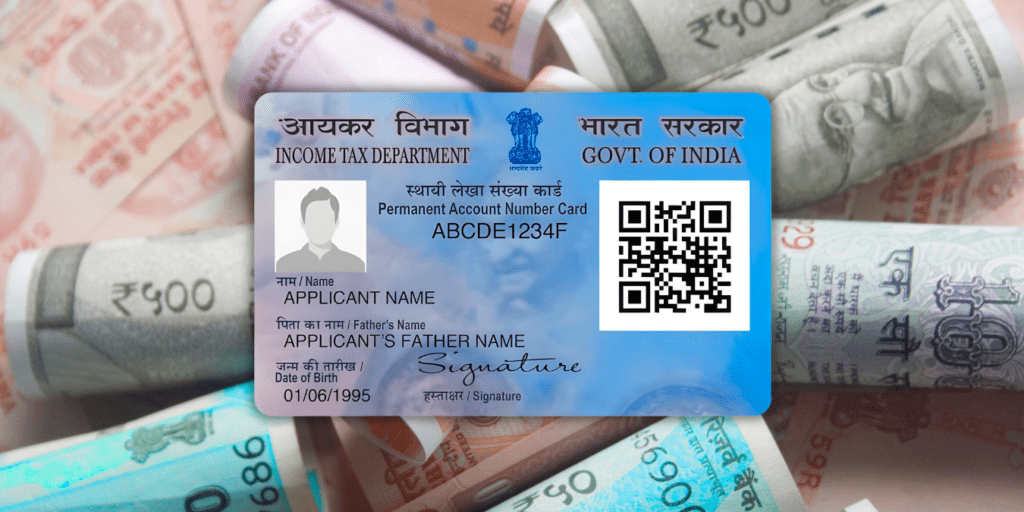
Second: PAN-based compliance replaces TAN-based compliance. Your own PAN — which every property buyer already has — is now the identifier used to process TDS deductions on NRI property transactions. This is an elegant solution because it leverages existing infrastructure. The Income Tax Department already knows your PAN, your bank knows your PAN, and the property registration system is linked to PAN. Using PAN as the anchor for compliance means no new registrations, no new accounts, and no new administrative burden.
Third: Simplified challan-cum-statement filing. The old system required a two-step process: first deposit TDS via a TAN-linked challan, then separately file Form 27Q as a quarterly return. The new PAN-based challan-cum-statement combines these steps. You deposit the TDS and file the relevant information in a single, consolidated submission. This dramatically reduces the risk of procedural defaults where the deposit was made correctly but the return filing was missed or filed with errors.
Together, these three changes transform a process that previously required professional assistance into something that a reasonably informed buyer can navigate with basic guidance.
The Ease of Doing Business Signal This Sends
From a policy perspective, this amendment is significant beyond its immediate practical impact. It signals that the government recognizes a problem that has existed for decades: tax compliance architecture designed for businesses was being imposed on individuals, and it was distorting behaviour in the property market.
NRI-owned properties in India run into millions. The Indian diaspora — particularly in the Gulf, the US, UK, Canada, and Australia — collectively holds substantial real estate in tier-1 and tier-2 Indian cities. Many of these properties are inherited, purchased decades ago, or held as investment assets. When NRIs decide to sell, the pool of willing buyers is often limited not by price or location but by compliance fear.
Domestic buyers, especially individual homebuyers, would actively avoid NRI sellers. Real estate agents would steer clients away from NRI properties not because they were bad deals, but because the compliance complexity reduced the pool of eligible buyers and complicated negotiations. This artificial friction suppressed transaction volumes and, by extension, price discovery in segments of the market where NRI ownership is concentrated.
By removing the TAN requirement, Budget 2026 effectively widens the buyer pool for NRI-owned properties. More buyers means more liquidity, better price realization for sellers, and more efficient markets. For buyers, it means access to properties that were previously more trouble than they were worth from a compliance standpoint.
What You Still Need to Get Right
Here is where I need to be direct with you, drawing on both professional experience and an honest reading of the amendment: simplification does not mean elimination of compliance. The obligation to deduct TDS on payments to NRI sellers still exists and is not optional.
TDS rates still apply. The applicable TDS rate under Section 195 depends on the nature of capital gains — whether they are short-term or long-term — and the applicable treaty provisions between India and the country of the NRI seller’s residence. Long-term capital gains on property are currently taxed at 12.5% (post the Budget 2024 amendment removing indexation for NRIs in certain cases), but surcharge and cess can push the effective rate higher. You must deduct TDS at the correct rate or face interest and penalty exposure.
Lower or nil deduction certificates still matter. NRI sellers who believe their actual tax liability is lower than the TDS rate can apply to the Assessing Officer for a Lower Deduction Certificate under Section 197. As a buyer, if the seller presents such a certificate, you must deduct at the rate specified in the certificate and not the standard rate. Ignoring this certificate or deducting at the wrong rate creates liability for you.
Documentation remains non-negotiable. The property sale agreement, FEMA compliance documentation from the seller, NRI status evidence, PAN of both parties, and TDS payment receipts must be maintained carefully. In my banking experience, many disputes and notices arise years after transactions because documentation was carelessly handled at the time of purchase.
The Form 27Q requirement may still apply in modified form. While the challan-cum-statement simplifies the process, buyers should confirm with a tax professional whether any residual reporting requirement exists under the modified framework, particularly given that this is a new amendment and the operational circulars from CBDT will provide implementation details.
The Bottom Line for Indian Property Buyers
Budget 2026’s elimination of the TAN requirement for individual buyers is one of the most practically meaningful reforms for retail property transactions in recent years. It acknowledges a genuine compliance bottleneck and removes it with a sensible, infrastructure-light solution.
If you are considering buying property from an NRI seller, this is a good time to revisit deals you may have avoided in the past. The process is simpler, the risk of inadvertent procedural default is lower, and the documentation pathway is cleaner.
That said, TDS compliance on NRI property transactions still requires attention to rates, certificates, and documentation. The reform makes compliance easier — it does not make it optional.
For a transaction of this size, a one-time consultation with a tax professional familiar with Section 195 and FEMA provisions remains worthwhile. Think of it as buying peace of mind at a fraction of the property cost.
This article is for informational purposes only and does not constitute tax or legal advice. For transaction-specific guidance, please consult a qualified chartered accountant or tax advisor.