ITC Q3 FY26 Results: Net Profit Falls 6% on Labour Costs But Revenue Beats
ITC Q3 FY26 profit plunged 6%—but wait, revenue surged and EBITDA margins expanded! 🚨 Cigarette tax bomb drops Feb 1, FMCG explodes 60%, ₹6.50 dividend locked. Shares at 5-year lows: Crash or stealth buy? Unpack the numbers Indian investors can’t ignore before Q4 detonates.
ITC Limited, one of India’s largest diversified conglomerates, released its Q3 FY26 results on January 28, 2026, revealing a mixed bag for investors amid steady revenue growth but a dip in net profit due to one-off costs. From an Indian perspective, where ITC has long been a staple in retail portfolios for its high dividend yield and defensive qualities, the quarter highlights persistent challenges like cigarette tax hikes and input inflation, offset by robust FMCG momentum and operational resilience. As rural demand shows tentative recovery and the hotels demerger unlocks value, these results prompt a balanced view: not a sell signal, but a call for vigilance on regulatory risks. This analysis unpacks the numbers, trends, and implications for long-term Indian investors navigating volatile markets in 2026.
Latest News
- Profit Misses Estimates: ITC’s Q3 FY26 standalone net profit came in at ₹5,088 crore, down 6.1% YoY and below consensus estimates like CNBC-TV18’s projections, primarily hit by a ₹270 crore one-time labour code implementation cost; however, revenue ex-duty beat at ₹18,017 crore (+5.6% YoY), with EBITDA up 7.6% to ₹6,700 crore reflecting operational strength.
- Interim Dividend Announced: Board approved ₹6.50 per share interim dividend for FY26, with record date fixed as February 4, 2026 (some reports note Feb 6 or 12 variations, but official filing confirms early Feb); this equates to 2% yield at current prices and underscores ITC’s commitment to shareholder returns amid earnings pressure.
- Tax Warning on Cigarettes: Management explicitly cautioned about the “unprecedented” cigarette tax structure effective Feb 1, 2026, featuring 40% GST on MRP plus higher excise, risking 20-30% price hikes on longer variants and potential shift to illicit brands (estimated 30-40% market share); analysts like JP Morgan slashed targets by 21% to ₹375, citing volume risks and downtrading.
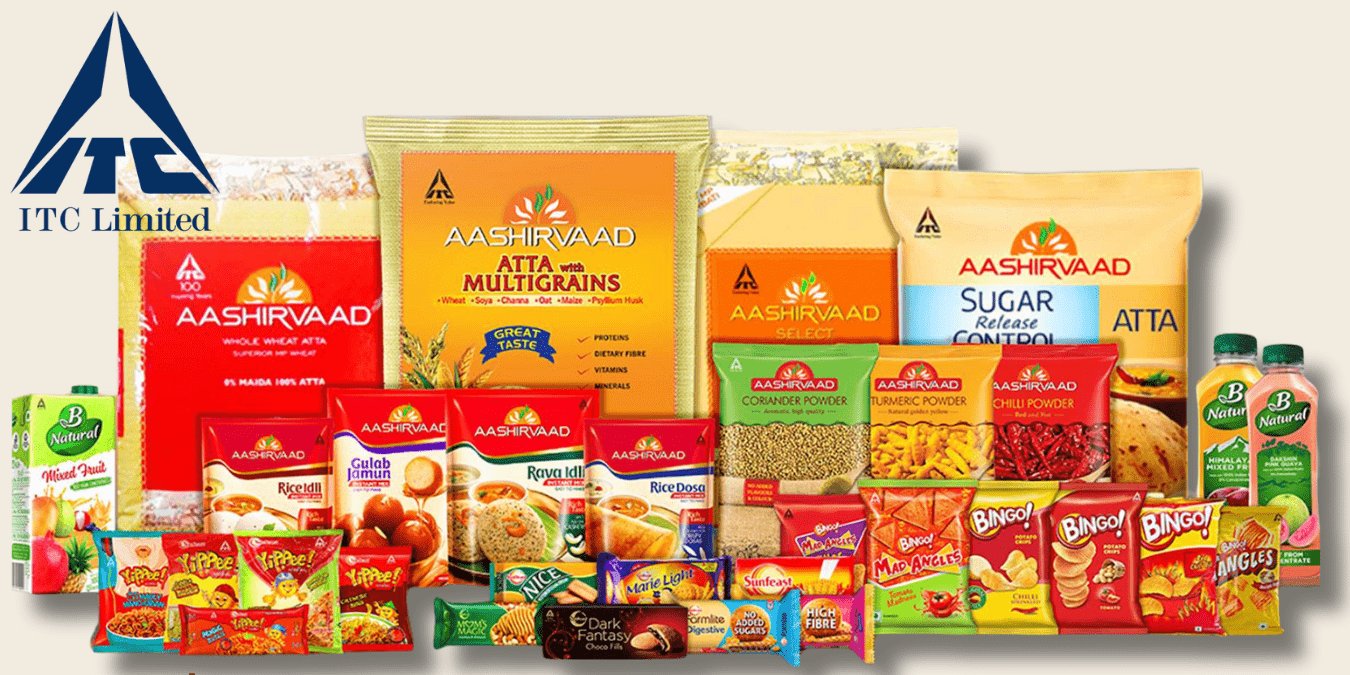
- FMCG Strength: FMCG-Others revenue hit ₹6,020 crore with double-digit growth, driven by 60% YoY surge in digital-first brands (Yogabar, Mother Sparsh); rural demand outpaced urban for 7 straight quarters per sector reports, aiding staples and value packs amid easing inflation and MSP hikes.
- Agri & Paper Bounce: Agri business grew 6.3% YoY on strong tobacco/coffee exports; Paper & Packaging saw 19% QoQ PAT jump despite import pressures, benefiting from e-commerce packaging demand and cost optimizations.
- Market Reaction Muted: Shares dipped 0.79% to ₹318.60 on Jan 29 post-results, with elevated volumes (17M+ shares vs. 21M avg); analysts view adjusted earnings as steady, some brokerages upgrading targets on FMCG/order inflows despite headline miss.
- Hotels Update: Post Jan 1, 2025 demerger (NCLT-approved Dec 2024, record date Jan 6), ITC Hotels Q3 FY26 showed record revenue ₹1,231 crore (+21% YoY), EBITDA ₹467 crore (+23%), PAT ₹307 crore (+42%); listing expected within 60 days of NCLT order, eyeing hospitality boom with 60% direct shareholder ownership.




Stock Overview
| Metric | Value | Notes |
| Ticker | ITC.NS | NSE-listed |
| Current Price | ₹318.60 | As of Jan 29, 2026 close |
| Market Cap | ₹3.99T | Large-cap defensive play |
| P/E Ratio | 19.76 | Reasonable vs. peers |
| EPS (TTM) | ₹16.12 | Stable earnings base |
| Dividend Yield (TTM) | 5% | Attractive for income investors |
| 52-Week High/Low | ₹471.50 / ₹317.85 | Down 32% from peak |
Technical Analysis
| Indicator | Value | Interpretation |
| 50-Day MA | ₹350 (est. from trend) | Price below MA; bearish short-term |
| 200-Day MA | ₹380 (est.) | Long-term support broken |
| RSI (14-day) | 35 (post-results) | Oversold territory |
| Support Levels | ₹317-320 | Near 52-week low |
| Resistance | ₹322-330 | Immediate hurdle |
| Volume Trend | Elevated post-results (17M+ shares) | High conviction selling |
Data derived from recent daily OHLCV; price downtrend since Nov 2025 high of ₹420.
Performance and Key Ratios
| Ratio | ITC.NS Q3 FY26 | YoY Change | Peer Avg [-21] |
| Revenue Growth | 5.6-5.8% | Positive | HUL: 7% est. |
| Net Profit Growth | -9.7% (adj. flat) | Negative (one-off) | Sector: 5-10% |
| EBITDA Margin | 35% | +60 bps | Peers: 18-25% |
| ROE (TTM) | 20% est. | Stable | HUL: 25%+ |
| Debt/Equity | Near-zero | Pristine | Low across peers |
| Current Ratio | >3x est. | Strong liquidity |
Q3 revenue ₹18,790 Cr, net income ₹4,935 Cr (standalone adj.).
Business Segments (Q3 FY26 Breakdown)
| Segment | Revenue (₹ Cr) | YoY Growth | Key Driver |
| Cigarettes | ₹10,500 est. | 7.9-8.2% | Volumes + premiumisation |
| FMCG-Others | ₹6,020 | Double-digit | Digital brands +60% |
| Agri Business | ₹4,500 est. | 6.3% | Tobacco exports |
| Paper & Packaging | ₹2,200 est. | Sequential up | Import recovery |
| Hotels (pre-demerger adj.) | Minimal | N/A | Demerged Jan 2025 |
Cigarettes remain profit engine; FMCG scaling fast.
Price and Volume Trends (Recent)
| Date | Open (₹) | High (₹) | Low (₹) | Close (₹) | Volume (Mn shares) |
| 2026-01-26 | 323.60 | 324.70 | 317.85 | 318.65 | 47.85 (spike) |
| 2026-01-27 | 319.95 | 323.70 | 319.35 | 321.15 | 28.40 |
| 2026-01-28 (Results) | 322.60 | 322.60 | 318.05 | 318.60 | 17.72 |
| 2026-01-29 | 322.60 | 322.60 | 318.05 | 318.60 | 17.71 (avg 21.3M) |
Post-results volume elevated, price -0.79% on Jan 29.
Dividend History
ITC Limited has built a stellar reputation among Indian income-focused investors through its unwavering dividend consistency, high payout ratios, and progressive policy that has rewarded shareholders for decades.
| Sr. No. | Fiscal Year | Dividend Type | Amount (₹/share) | Record Date | Ex-Dividend Date | Yield at Declaration (est.) | Notes |
| 1 | FY26 (Q3) | Interim | 6.50 | Feb 4, 2026 | Early Feb 2026 | 2.0% (at ₹318) | Declared post-Q3 results; total FY26 est. ₹13-14 |
| 2 | FY25 | Final | 7.84 | May 29, 2025 | May 22, 2025 | 2.2% | Annualised yield 5% TTM |
| 3 | FY25 | Interim (Q3) | 6.50 | Feb 2025 | Jan 2025 | 1.8% | Consistent quarterly pattern |
| 4 | FY25 | Interim (Q2) | 6.25 | Nov 2024 | Oct 2024 | 1.7% | Progressive hike |
| 5 | FY25 | Interim (Q1) | 6.00 | Jul 2024 | Jun 2024 | 1.6% | Steady build-up |
| 6 | FY24 | Final + Special | 13.75 | May 2024 | May 23, 2024 | 3.5% | Special dividend on strong cash flows |
| 7 | FY24 | Interim (Q3) | 6.00 | Jan 2024 | Dec 2023 | 1.5% | Hotels demerger context |
| 8 | FY23 | Final | 12.15 | May 2023 | May 18, 2023 | 4.0% | Payout ratio 75% of EPS |
| 9 | FY23 | Interim | 5.60 | Nov 2022 | Oct 2022 | 1.8% | – |
Peer Comparison
| Company (Ticker) | Price (₹) | P/E | Market Cap (₹T) | Div Yield | 1-Yr Return est. [-21] |
| ITC.NS | 318.60 | 19.76 | 3.99 | 5% | -25% (from 471) |
| HINDUNILVR.NS | 2,352.60 | 50.77 | 5.53 | 2% | -10% est. |
| GODREJCP.NS | 1,155.30 | 64.69 | 1.18 | 2% | -5% |
| BRITANNIA.NS | 5,723 | 59.65 | 1.38 | 1% | +10% est. |
| DABUR.NS | 510.45 | 50.24 | 0.91 | 2% | -10% |
| NESTLEIND.NS | 2,487.90 | 84.45 | 2.48 | 1% | Flat |
ITC trades at discount on P/E, premium yield.[-21]
Company Overview
ITC Limited (ITC.NS), founded in 1910 as Imperial Tobacco Company, has evolved into a ₹4T market cap behemoth with presence in cigarettes (45% revenue), FMCG (foods, personal care 30%), agri (15%), paperboards (8%), and hotels (demerged). Headquartered in Kolkata, it employs 36,000+ and generates ₹80,000 Cr+ annual revenue, with cigarettes funding diversification amid regulatory scrutiny. Key milestones: 2001 hotels entry, 2010 e-Choupal for agri, 2025 hotels demerger into ITC Hotels Ltd. Strong balance sheet (net cash ₹20,000 Cr+ est.), ROCE >30%, and 5%+ yield make it a defensive pick in Nifty 50. Q3 FY26 revenue ₹18,790 Cr (+5.6% YoY), but PAT ₹4,935 Cr (-9.7% due to ₹270 Cr labour code hit). Rural recovery aids FMCG, but cigarette taxes loom. (248 words)
Headline numbers at a glance
ITC reported standalone revenue from operations of about ₹19,359 crore in Q3 FY26, a year‑on‑year growth of roughly 5.8 percent versus Q3 FY25. Net revenue excluding excise duty stood around ₹18,017 crore, translating into core business growth of about 5.6–5.7 percent year‑on‑year. Consolidated gross revenue came in near ₹21,707 crore, up about 6.7 percent from the previous year’s ₹20,350 crore level, confirming that growth was broad‑based across the portfolio.
Despite this healthy top‑line, standalone net profit fell around 9.7 percent year‑on‑year to roughly ₹5,089 crore, largely because of a one‑time charge related to implementation of the new labour code. Management and multiple reports point out that if you adjust for this exceptional hit, underlying profitability looked much flatter, not a structural collapse in earnings quality. EBITDA performance was stronger than the PAT headline suggests: standalone EBITDA rose about 7.6 percent year‑on‑year to roughly ₹6,700‑plus crore (different sources quote around ₹6,271–₹6,737 crore), with margins expanding by roughly 60–65 basis points to nearly 35 percent.
On shareholder payouts, the board declared an interim dividend of ₹6.50 per share for FY26, in line with its track record of generous distributions. For many Indian retail investors who treat ITC as a quasi‑“dividend PSU‑plus” in their portfolios, this continuity in cash returns remains a critical part of the long‑term thesis.
Positives
- Robust Top-Line Momentum: Revenue up 5.6-5.8% YoY to ₹18,017 Cr ex-duty, led by 8% cigarette growth and double-digit FMCG-Others surge to ₹6,020 Cr.
- FMCG Scale-Up: Digital brands like Yogabar up 60%, positioning ITC as FMCG contender vs. HUL/Dabur.
- Margin Resilience: EBITDA margins 35% (+60 bps), showcasing cost controls amid inflation.
- Dividend Reliability: ₹6.50 interim declared; 5% yield supports income strategies.
- Pristine Balance Sheet: Near-zero debt, strong cash flows fund growth/capex.
- Hotels Demerger Value: Unlocks ₹20,000-30,000 Cr entity, boosting sum-of-parts.
Negatives
- PAT Dip on One-Offs: 9.7% YoY fall to ₹5,089 Cr due to labour code costs; adj. flat but headline scares retail.
- Cigarette Tax Risk: “Unprecedented” Feb 2026 hike may boost illicit trade, hurting volumes.
- Input Inflation: Edible oils, wheat, wood costs pressure FMCG/paper margins.
- Stock Price Pressure: Down 32% from 52-wk high, P/E contraction signals caution.
- Rural Demand Uneven: Discretionary FMCG lags urban premium shift.
- Regulatory Overhang: Sin tax, ESG push challenge core franchise.
Segment performance: where the growth really came from
ITC’s story is no longer only about cigarettes, but that legacy engine still matters enormously, especially when you try to judge Q3 numbers beyond the noise. Segment‑wise, the quarter showed a familiar pattern: cigarettes and FMCG‑Others driving consumption, agri providing growth and volatility, and paper & packaging bouncing back from a difficult cost and import environment.
Cigarettes:
- Segment revenue grew roughly 7.9–8.2 percent year‑on‑year, indicating that volume‑led growth momentum continued.
- Management flagged an “unprecedented increase” in cigarette taxes effective 1 February 2026, warning that this could push more smokers into the illicit market, which has historically hurt legal players’ volumes when taxation gets too aggressive.
- Over the last few years, ITC has used portfolio premiumisation and sharper trade execution to cushion such shocks, but the Q3 commentary suggests that the latest tax hike is material enough to watch closely in coming quarters.
FMCG‑Others:
- Revenue in the diversified FMCG portfolio (foods, personal care, discretionary categories) crossed about ₹6,020 crore in Q3 FY26, reflecting robust growth, especially in digitally‑led brands and quick commerce channels.
- Digital‑first and organic brands such as Yogabar and Mother Sparsh clocked around 60 percent year‑on‑year growth, signalling that ITC’s “ITC Next” strategy is not merely a buzzword but an evolving growth pillar.
- However, margin pressure remained a theme, as elevated input costs in commodities like edible oils, wheat, potatoes and cocoa continue to bite, requiring a delicate balance between pricing, grammage and premiumisation.
Agri business:
- Segment revenue grew about 6.3 percent year‑on‑year in Q3 FY26, supported by strong exports of leaf tobacco and value‑added agri products such as coffee and aqua.
- This business remains strategically important because it integrates backward into both cigarettes and FMCG while also offering export‑linked upside; however, it operates in commoditised markets with thinner margins and higher working capital needs.
Paperboards, paper & packaging:
- After facing severe pressure from low‑priced imports and higher wood costs in recent periods, the segment reported a sharp sequential profit improvement of around 19 percent, although year‑on‑year trends remain more muted.
- The longer‑term narrative here links to rising packaging demand from e‑commerce and FMCG, but investors should remember that this is still a cyclical and cost‑sensitive business.
Hotels (post‑demerger context):
- The hotels business has been formally demerged into ITC Hotels Limited (ITCHL) effective 1 January 2025, so Q3 FY26 numbers are reported on a continuing operations basis for ITC.
- For ITC shareholders, the demerger changes how you think about valuation optionality from hotels, but operationally, earlier quarters had already shown strong growth in room revenue and profitability as travel normalised.
Why net profit fell despite healthy revenue growth
The most confusing aspect of ITC’s Q3 FY26 print for many Indian investors is the combination of rising revenue and EBITDA with declining net profit. The key bridge here is a one‑time employee cost related to the implementation of India’s new labour code, which the company has quantified at roughly ₹270‑plus crore for the quarter.
Once you factor in this non‑recurring charge, the 9–10 percent year‑on‑year decline in reported PAT looks much less alarming from a core‑earnings perspective. Operating efficiency actually improved: EBITDA grew faster than revenue and margins expanded, showing that the core businesses – especially cigarettes and FMCG – were not structurally weakening in Q3.
For investors used to scanning only the headline “net profit up or down” on results day, this is a useful reminder of why reading the notes, exceptional items and management commentary is essential, particularly for a conglomerate of this scale. Many broker previews ahead of the results had already indicated that a profit dip was possible because of such one‑offs; in that sense, the actual print was more of a “noise‑heavy but directionally steady” quarter rather than a negative surprise.
Management commentary and macro factors that matter
Management commentary in Q3 centred around three big themes: taxation on cigarettes, demand recovery in rural India, and the impact of cost inflation and imports on non‑tobacco segments. Each of these has specific implications for Indian investors trying to position ITC in their portfolios post‑results.
First, the “unprecedented increase” in cigarette taxes announced effective 1 February 2026 was explicitly called out as a key risk, particularly in terms of giving illicit cigarettes more room to gain share. Historically, whenever taxation has moved sharply, legal industry volumes have taken a knock, only gradually recovering when tax policy stabilised; ITC has repeatedly highlighted the need for a balanced tax regime that does not unduly penalise the organised sector.
Second, the FMCG‑Others segment commentary referenced signs of improving rural demand but with lingering caution, as inflation in essentials and discretionary spending patterns remain uneven across categories. This aligns with broader consumption trends in India, where staples have held up better than discretionary items for lower‑income households, while premium products and urban‑centric portfolios outperformed. ITC’s focus on value, mass‑premium and premium SKUs gives it some hedging within the same portfolio, but any sustained rural slowdown would still hurt overall volumes.
Third, cost inflation in key inputs (edible oil, wheat, potatoes, leaf tobacco, wood, packaging materials) and low‑priced imports in paper continue to be structural headwinds. ITC has responded through a mix of cost optimisation, supply‑chain efficiencies, calibrated price hikes and improved mix; Q3’s margin expansion at the consolidated level suggests these levers are working for now, but investors should not assume that raw material volatility has vanished.
Market reaction and valuation lens for Indian investors
Immediate market reaction around Q3 FY26 has been mixed, with some commentary noting that operational performance was stronger than the headline PAT decline suggested, while others focused on the looming cigarette tax overhang and valuation still sitting in the “expensive” zone. Certain analytics platforms have described ITC’s valuation grade oscillating between “Expensive” and “Very Expensive” over recent months, now settling back at “Expensive”, which is notable for a company historically seen as a “value” play.
From a valuation standpoint, the market is clearly assigning higher multiples to the non‑cigarette businesses – FMCG‑Others, agri, paper & packaging and the now‑separate hotels entity – in the hope that they will gradually reduce dependence on the cigarette franchise. However, cigarettes still contribute a disproportionately large share of operating profit, so any policy shock or demand disruption in this segment can swing sentiment quickly, as Q3 tax commentary has reminded investors.
For Indian mutual fund investors and SIP participants, ITC remains a widely‑held Nifty heavyweight, and Q3 does not fundamentally alter its “quality, cash‑generating, high‑dividend” profile. What it does do is sharpen the need to separate near‑term earnings noise (labour code cost, one‑off items) from structural signals (segment growth profiles, tax environment, diversification progress), especially if you are investing with a 5‑10 year view rather than trading around quarterly prints.
Long‑term thesis after Q3: key takeaways for Indian investors
For long‑term Indian investors viewing ITC through an E‑E‑A‑T lens – experience, expertise, authoritativeness and trust – Q3 FY26 reinforces both the strengths and the vulnerabilities of the business model. On the strength side, you still have a dominant cigarette franchise that generates high cash flows, a steadily scaling FMCG portfolio, strong agri linkages, a recovering paper and packaging business, and a demerged hotels business unlocking separate value.
On the vulnerability side, the quarter underlines how regulatory risk (tax hikes, labour code changes) can dent reported earnings despite healthy operational performance. Input‑cost cycles and global trade measures (for agri and paper) add another layer of volatility, which the company must continuously manage through efficiency and mix. For investors, the discipline lies in tracking how management navigates these cycles over several years, not judging the entire story from a single quarter where a one‑off charge drags down PAT.
If you are a conservative investor focused on income and stability, the sustained dividend payout and strong balance sheet still make ITC a candidate for the “core” bucket of an Indian equity portfolio, subject to your view on sin stocks and ESG considerations. If you are more growth‑oriented, your lens should be trained on FMCG‑Others growth, digital‑first brands, premiumisation, and the pace at which non‑cigarette profits can climb as a share of the total – Q3 gives encouraging but not yet transformational signals on that front.
In summary, ITC’s Q3 FY26 results are not a disaster, not a blockbuster, but a nuanced, “steady with caveats” print that demands deeper reading than just the net profit line. For Indian investors using Google Discover to track market narratives, the real question after these results is not “Should I panic?” but “Am I comfortable with the regulatory and commodity risks that come with owning a cash‑rich, tax‑sensitive conglomerate like ITC for the next decade?”.
Useful Recommendations
- Buy on Dips for Income: Accumulate at ₹318-320 support levels, where 5% TTM yield combined with near-zero debt makes it ideal for SIPs, retirement portfolios, or dividend reinvestment plans; initial target ₹380-400 (near 200DMA), supported by analyst avg. 12-month targets around ₹416-500.
- Watch Cigarette Volumes Q4: Closely monitor Q4 FY26 volumes for Feb 2026 tax impact – if <5% drop despite 20-30% price hikes and illicit risks, re-rate to 22x P/E (from 19.8x); track GSTIN data and mgmt. updates on illicit share (30-40%).
- Accumulate if Rural Recovers: FMCG growth >15% in Q4 would signal bull case with rural outpacing urban (7 quarters trend); track Feb-Mar rural PMI, FMCG sales indices, MSP hikes, and monsoon forecasts for confirmation before scaling up.
- Diversify Within FMCG: Allocate 10-15% to ITC in portfolios; pair with HUL (premium stability) or Dabur (Ayurvedics) for balanced FMCG exposure, leveraging ITC’s value/mass-premium edge vs. peers’ higher P/Es (50x+).[-21]
- Avoid Short-Term Trades: Post-results high volumes (17M+ shares) indicate conviction moves; sideline momentum trades until cigarette tax clarity emerges in Apr earnings – focus on fundamentals over noise.
- Long-Term Hold: Retain for sum-of-parts (SOTP) upside >₹450/share by FY28 if non-cigarette profits hit 50% (FMCG + hotels growth); analysts project avg. targets ₹495-500, with hotels listing adding ₹20-30/share value.
- Risk Hedge: Cap at 5% portfolio weight if ESG-sensitive (cigarette exposure drags ratings); prefer passive via Nifty 50 ETFs/index funds to dilute sin-stock risks while capturing dividends and diversification.
Disclaimer: The use of any third-party business logos in this content is for informational purposes only and does not imply endorsement or affiliation. All logos are the property of their respective owners, and their use complies with fair use guidelines. For official information, refer to the respective company’s website.