Inflation Up. Jobs Slowing. Oil Spiking. War Raging. The Fed Just Held Rates Anyway — and Experts Say It Had No Choice
“Uncertainty about the economic outlook remains elevated. The implications of developments in the Middle East for the U.S. economy are uncertain.“— Official FOMC Policy Statement, March 18, 2026
Fed Votes 11–1 to Hold — What Actually Happened
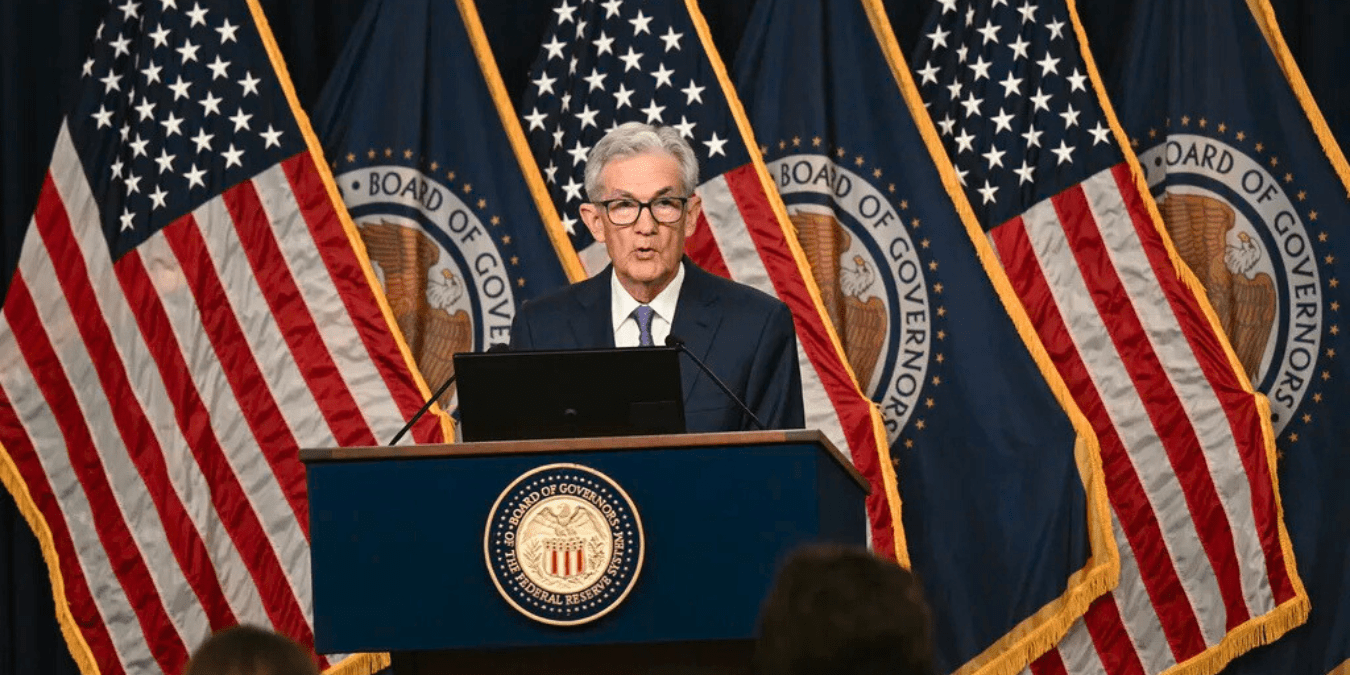
In one of the most consequential monetary policy decisions of the decade, the U.S. Federal Open Market Committee (FOMC) voted on March 18, 2026 to leave its benchmark federal funds rate unchanged at 3.5%–3.75%. It was the second consecutive meeting at which the Fed hit pause — and the backdrop could hardly be more turbulent.
The decision was nearly unanimous. Only Stephen Miran — a 2025 Trump appointee — dissented, voting for an immediate rate cut. The other 11 members held firm, citing extreme uncertainty created by the ongoing US–Israel military campaign against Iran, which has disrupted Persian Gulf oil flows and sent energy prices sharply higher in just the past two-and-a-half weeks.
Even before the war erupted, the inflation picture was already uncomfortable. The Fed’s preferred gauge — the Personal Consumption Expenditures (PCE) index — stood at 2.8% in January 2026. Core PCE (excluding food and energy) hit 3.1% — well above the 2% target. Powell noted that “between a half and three-quarters” of that core figure is driven by the Trump administration’s tariff policy.
The Iran War: A Stagflationary Bomb
Economists are reaching for a term that evokes one of the darkest chapters in US history: stagflation. The Iran conflict has created what Oxford Economics chief US economist Michael Pearce described as a classic stagflationary shock — simultaneously weakening growth and stoking inflation, two forces that pull monetary policy in opposite directions.
The conflict has blocked nearly all oil from leaving the Persian Gulf, driving gasoline and diesel prices sharply higher. A sustained spike in diesel costs raises the price of transporting virtually every good that moves by truck or rail — a ripple effect that feeds into grocery bills, manufactured goods, and services across the entire American economy.
Powell pushed back on the stagflation label: “I would reserve the term stagflation for a much more serious set of circumstances. That is not the situation we’re in.” He pointed to a still-healthy unemployment rate of 4.4% in February and a GDP growth projection of 2.4% for 2026 — revised upward from December’s forecast.
The Dot Plot — How the Fed’s Outlook Changed
The Fed published its first Summary of Economic Projections (SEP) for 2026, including the closely-watched “dot plot” — a map of each official’s interest rate expectations. Despite the geopolitical fog, the median projection still pencils in one rate cut in 2026 and another in 2027, before the long-run rate settles near 3.1%.
📊 Fed Economic Projections: December 2025 vs. March 2026
Source: U.S. Federal Reserve Summary of Economic Projections (SEP), March 18, 2026
| Indicator | Dec 2025 | Mar 2026 | Change |
|---|---|---|---|
| GDP Growth (2026) | ~2.1% | 2.4% | ▲ Revised Up |
| GDP Growth (2027) | 2.0% | 2.3% | ▲ +0.3pp |
| PCE Inflation (2026) | ~2.5% | 2.7% | ▲ Revised Up |
| Core PCE (2026) | ~2.5% | 2.7% | ▲ Revised Up |
| Rate Cuts in 2026 | 1 cut | 1 cut | — Unchanged |
| Officials Expecting No 2026 Cut | 6 of 19 | 7 of 19 | ▲ More hawkish |
| Long-run Funds Rate | ~3.1% | ~3.1% | — Unchanged |
The Fed raised its inflation forecasts while also nudging up GDP growth — an apparent contradiction that reflects deep uncertainty about whether the energy shock will be temporary (raising prices without killing demand) or prolonged (damaging both growth and triggering a sustained inflation surge). Powell stated plainly: “The rate forecast is conditional on the performance of the economy, so if we don’t see that progress, then you won’t see the rate cut.”
Trump vs. Powell: The Battle for the Fed
Wednesday’s decision played out against one of the most politically charged central banking environments in modern US history. President Trump has been unrelenting in demanding rate cuts, reportedly criticising Powell this week for not calling a special emergency meeting to ease rates — even as inflation runs above target and an oil shock is building.
More dramatically, the U.S. Justice Department — specifically U.S. Attorney Jeanine Pirro in Washington — has subpoenaed Powell for evidence related to the Fed’s multibillion-dollar headquarters renovation. Powell has resisted, publicly accusing the administration of using the subpoena as leverage to pressure the central bank into cutting rates.
How We Got Here — Key Milestones
What It Means for India — Risks & Opportunities
For Indian investors and consumers, the Fed’s hold combined with a global oil shock creates a complex set of headwinds and — in some cases — tailwinds. The interest rate differential between India and the US has narrowed since the RBI cut rates in February 2026, making Indian assets relatively less attractive to foreign portfolio investors (FPIs).
📉 Risks for India
- ▼ FPI outflows from Indian equities and bond markets as US rates stay elevated
- ▼ Rupee depreciation pressure — raising import costs sharply
- ▼ Crude oil import bill surges; India imports ~85% of its oil needs
- ▼ Retail fuel, LPG, and transport costs rise, feeding domestic CPI inflation
- ▼ RBI likely to pause or delay further rate cuts to defend the Rupee
📈 Potential Upsides
- ▲ Gold demand surges as safe-haven buying intensifies — India benefits as the world’s largest consumer
- ▲ IT and software export earnings rise if Rupee depreciates vs USD
- ▲ Indian defence and energy sector stocks may benefit from global disruption
- ▲ Sharp equity rebound likely if conflict resolves faster than expected
The Reserve Bank of India, which cut rates by 25 basis points in February 2026, had been expected to cut again in April. That expectation is now far less certain. With the Rupee under pressure, crude prices spiking, and the Fed on hold, the RBI may be forced to prioritise currency and inflation stability over growth support.
Will the Fed Cut in 2026? What Wall Street Thinks
Before the Iran war erupted, markets had priced in two rate cuts in 2026 with a small chance of a third. That consensus has collapsed. Most analysts now believe the earliest a cut could come is the June 16–17 FOMC meeting — and only if the conflict winds down and energy prices stabilise.
JPMorgan economists put the uncomfortable timing plainly: “There’s never a good time for an adverse supply shock, but ideally the starting point would be low and stable inflation. That will not be the case in this episode.”
The Fed’s remaining 2026 scheduled meetings are: June 16–17 · July 28–29 · September 15–16 · November 3–4 · December 15–16.
Frequently Asked Questions
📬 Stay Ahead of Every Rate Move
Breaking market insights, RBI policy updates, and personal finance strategies — free, every weekday.
Subscribe to DailyFinancial.in →