IEA Chief Warns "April Will Be Far Worse Than March" — Here's What a Deepening Oil Shock Means for Global Growth in 2026
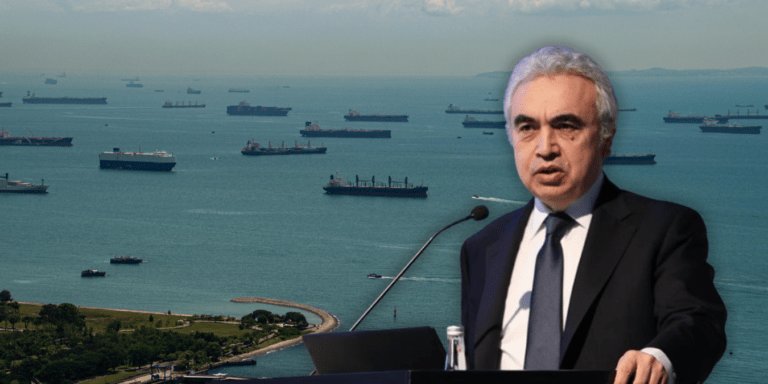
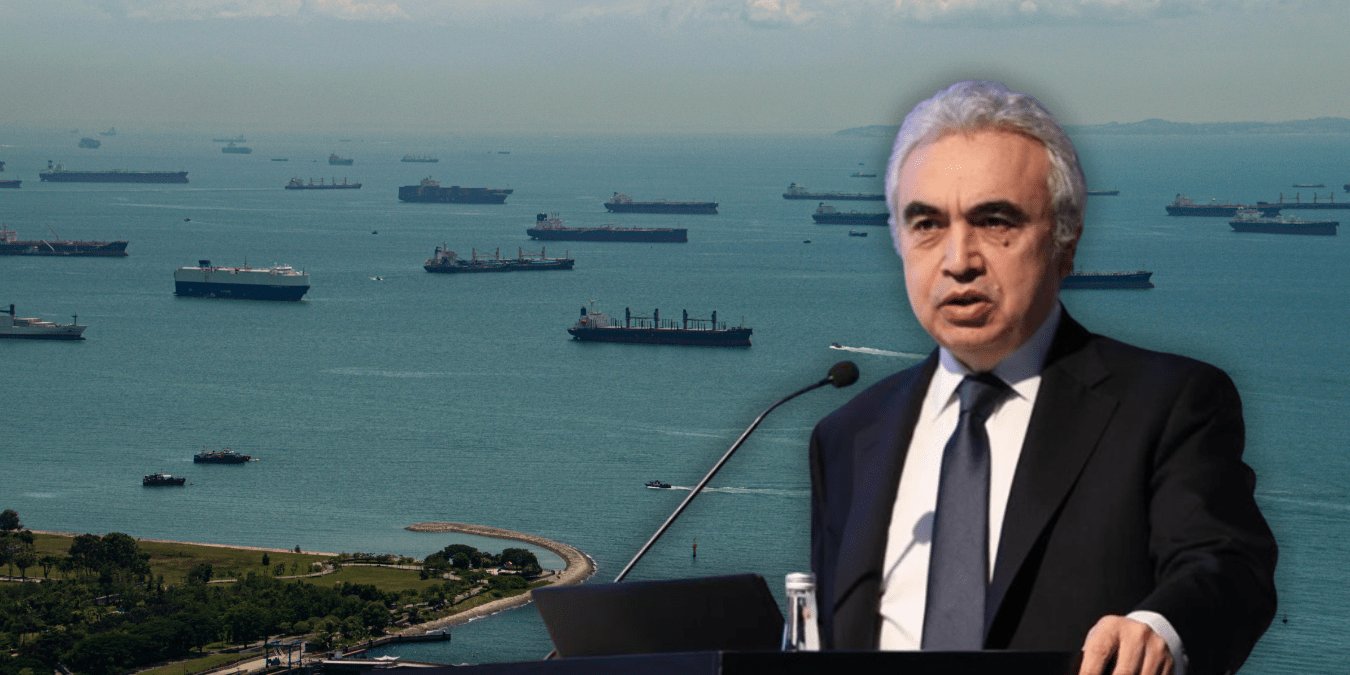
The words landed like a thunderclap across global energy markets. Fatih Birol, Executive Director of the International Energy Agency (IEA), delivered one of the starkest warnings in recent economic history during the “In Good Company” podcast hosted by Norges Bank Investment Management CEO Nicolai Tangen: “April is going to be far worse than March.” Those seven words encapsulate a geopolitical and economic inflection point that analysts, policymakers, and investors can no longer afford to ignore. With global oil supply chains fractured by the ongoing U.S.-Iran conflict and the near-complete closure of the Strait of Hormuz, the world is now navigating what Birol himself has called the biggest energy disruption in history — one that dwarfs even the oil shocks of 1973 and 1979.
What Birol Actually Said — and Why It Matters
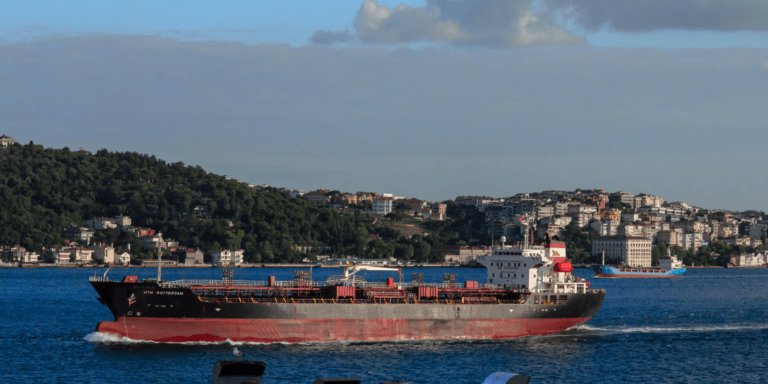
Understanding the gravity of the IEA chief’s warning requires unpacking the precise mechanism he described. March’s oil supply, while already severely disrupted, had one critical buffer: tankers and cargo vessels that had entered the Strait of Hormuz and loaded their cargo before hostilities between the United States, Israel, and Iran escalated into full-scale conflict. Those vessels were still sailing to port through March, delivering crude oil, liquefied natural gas (LNG), and refined products to buyers across Europe, Asia, and beyond. Birol was unambiguous about what happens next: “In April, there is nothing.”
The implication is staggering. Birol stated that the oil supply shortfall in April will be double that of March, and crucially, this doubling effect will not be limited to crude oil alone — it will extend to LNG and a wide range of energy commodities. What makes this moment particularly alarming is that the April crunch arrives not because of a new event, but because a pre-existing pipeline of supply has now been fully exhausted. The crisis is not intensifying; it is finally being felt in full. The biggest problem, according to Birol, is the acute shortage of jet fuel and diesel — the two fuels that power global trade, logistics, and aviation. When diesel becomes scarce, freight stops moving. When jet fuel runs out, passenger and cargo aviation faces operational paralysis.
The Strait of Hormuz: A Chokepoint That Holds the World Hostage
No stretch of water on Earth carries more strategic weight than the Strait of Hormuz, a narrow passage between Iran and Oman that serves as the exit valve for Persian Gulf energy exports. Under normal circumstances, this chokepoint handles approximately 20 percent of the world’s entire oil supply, or around 20 million barrels per day. Since the U.S.-Israeli military campaign against Iran commenced, tanker traffic through the Strait has collapsed by more than 90 percent, insurance costs for vessels attempting passage have surged to prohibitive levels, and global supply chains have been thrown into near-chaos overnight.
The current disruption is estimated at 12 million barrels per day — a figure that makes the 1973 Arab Oil Embargo and the 1979 Iranian Revolution look modest in comparison. Those earlier crises disrupted roughly 4–5 million barrels per day at their peak. What the world faces in 2026 is a supply hemorrhage nearly three times larger, compressed into a geopolitical scenario with no immediate diplomatic resolution in sight. Oil prices for West Texas Intermediate (WTI) futures have already crossed the $100 per barrel psychological threshold, settling above $102 in late March — their highest level since July 2022 — and analysts warn the trajectory points upward, not down. Brent crude, the international benchmark, recorded one of its largest percentage monthly gains in March, with projections from energy analysts suggesting a spike toward $140 per barrel if the Houthi militants in Yemen escalate their involvement and begin targeting Saudi crude flows through alternative export routes.
The IEA’s Historic Response: 400 Million Barrels and Why It Isn’t Enough
Faced with the most severe supply crisis in the agency’s fifty-year history, the IEA took extraordinary action on March 11, when all 32 member countries unanimously agreed to release 400 million barrels of oil from strategic reserves — the largest coordinated stockpile release ever executed. To place this in context, the IEA released 182 million barrels in 2022 following Russia’s invasion of Ukraine. The 2026 release is more than double that figure and involves contributions from the United States (which is providing the bulk of supply), the United Kingdom (13.5 million barrels), South Korea (22.46 million barrels), Japan, Germany, Austria, and others.
Yet the market’s response to this historic intervention has been sobering. Despite the announcement of 400 million barrels — a number that would take months to fully deploy — oil prices failed to fall in any sustained manner. The market has essentially priced the emergency reserve release as insufficient relative to the scale and expected duration of the supply disruption. IEA members currently hold over 1.2 billion barrels of publicly held emergency oil reserves, with an additional 600 million barrels of government-mandated industry stocks — but with a shortfall running at 12 million barrels per day, and April threatening to be twice as severe as March, even this vast arsenal faces pressure from every direction. Strategic reserves are a bridge, not a solution. They buy time; they do not replace the irreplaceable flow of Persian Gulf crude.
Inflation, Growth, and the Macro-Economic Shockwave
When the IEA chief speaks of this crisis leading to inflation and hindering economic growth, he is describing a chain reaction that begins with energy costs and metastasizes into every corner of the global economy. Energy is not simply a commodity — it is the foundational input cost for agriculture, manufacturing, transportation, heating, and data infrastructure. When energy prices double, everything downstream becomes more expensive, often with a lag that central banks struggle to contain through conventional monetary tools.
Across advanced economies, headline inflation is now forecast to rise from 2.5 percent in 2025 to 3.5 percent in 2026 as energy-driven price pressures build through the year. The Eurozone, already grappling with sluggish industrial output, faces disproportionate exposure because European nations are major importers of Middle Eastern LNG and refined products. India, one of the world’s fastest-growing major economies, is projected to see inflation rebound to 5.1 percent as higher global energy costs feed through domestic prices, partially erasing the disinflationary progress achieved through falling food prices in late 2025. Even China, which had been flirting with deflation at -0.1 percent inflation, is now projected to see its inflation rate climb to 1.3 percent — a sign that energy cost pressures can pierce even the most insulated economies.
For the IEA, which had already revised down its global oil demand growth forecast for 2026 to 640,000 barrels per day in its March oil market report — down sharply from an earlier forecast of 850,000 barrels per day — the April deterioration threatens to push demand forecasts even lower as economic activity contracts under the weight of supply-driven stagflation. Global oil supply growth expectations have been slashed from a projected 2.4 million barrels per day to just 1.1 million barrels per day for 2026 — a revision that reflects both the Hormuz closure and investor pullback from new energy infrastructure projects.
Emerging Markets: The Most Vulnerable Economies
If advanced economies face a difficult 2026, emerging markets face an outright crisis-in-making. The architecture of global capital flows, currency dynamics, and external debt burdens makes energy-importing developing nations particularly vulnerable to a supply-driven oil shock of this magnitude. Analysts at ING have calculated that a 10 percent increase in oil prices worsens current account balances for emerging markets by 40–60 basis points, and prolonged price hikes compound these deficits in ways that can trigger broader financial instability. Nations identified as acutely exposed include Thailand, South Korea, Vietnam, Taiwan, and the Philippines — all energy-dependent manufacturing and trade economies that run large import bills for crude and petroleum products.
Goldman Sachs has modeled that a supply-induced surge in Brent crude from $70 to $85 per barrel — a scenario that now appears conservative given prices already above $100 — could add approximately 0.7 percentage points to inflation in emerging Asia and reduce economic growth by around 0.5 percentage points, while widening current account deficits across nearly all regional economies, especially in Thailand, Singapore, and South Korea. At oil prices above $100, those projections almost certainly need to be scaled significantly upward.
Citigroup has issued a particularly dire warning for countries with thin foreign exchange reserves. Nations including Argentina, Sri Lanka, Pakistan, and Turkey face elevated risks of capital flight and currency depreciation as higher energy import costs drain their reserves, force painful currency adjustments, and make it harder to service external debt obligations. Energy rationing — the scenario where governments simply cannot afford or source enough oil to meet demand — is no longer a theoretical worst-case. The IEA’s own Birol has acknowledged that energy rationing could soon become a reality for many countries. For populations already stretched by post-pandemic cost-of-living pressures, that prospect carries profound humanitarian implications.
The Historical Context: Why This Shock Is Different
Every energy shock of the modern era has carried its own set of distinguishing characteristics. The 1973 Arab Oil Embargo was a deliberate political weapon wielded by OPEC producers. The 1979 Iranian Revolution disrupted supply through political upheaval in a single producing nation. The 2022 Russian supply disruption following the Ukraine invasion reshaped European energy architecture over 18 months. What distinguishes the 2026 oil shock from every predecessor is its geographic concentration at a single irreplaceable chokepoint and its sheer scale — a disruption of 12 million barrels per day dwarfs all prior crises combined.
Past shocks were largely absorbed through a combination of demand destruction, supply substitution, strategic reserve releases, and diplomatic resolution. In 2026, all four of these mechanisms are constrained simultaneously. Demand destruction — where high prices cause consumers and businesses to reduce consumption — will happen eventually, but it takes time and inflicts economic pain in the process. Supply substitution is limited because no viable alternative route or combination of routes can rapidly replace 20 million barrels per day of Hormuz traffic. Saudi Arabia’s East-West pipeline, which runs overland to the Red Sea port of Yanbu, provides some relief, handling roughly 5 million barrels of daily exports as a bypass route — but this itself has become a potential target for Houthi militants operating out of Yemen. Strategic reserve releases, as the market’s reaction to the 400 million barrel announcement demonstrated, are insufficient to close a gap of this magnitude. And diplomatic resolution requires political will that, as of April 2026, has not emerged.
What the $140 Scenario Would Mean for the Global Economy
The $140 per barrel threshold, identified by energy analysts as the outcome if Houthi forces begin targeting Saudi crude infrastructure and Red Sea shipping, represents a scenario where the 2026 oil shock transforms from a serious economic headwind into a potential global recession trigger. Historical precedent is instructive: every major oil price spike since the 1970s has been followed by an economic recession within 12–18 months, and the 2026 shock is beginning from a position of already-elevated global debt levels, residual inflationary pressures from the post-COVID period, and geopolitical fragmentation that limits multilateral policy coordination.
At $140 oil, the arithmetic for central banks becomes nearly impossible. Raising interest rates to combat energy-driven inflation risks crushing already-fragile economic growth. Keeping rates low risks allowing inflation expectations to become unanchored — exactly the scenario Citigroup warned about in its analysis of emerging market vulnerability. The Federal Reserve, the European Central Bank, and central banks across Asia would face what economists call a stagflation trap: inflation too high to cut rates, growth too weak to raise them. Advanced economy inflation could conceivably approach 4–5 percent, reversing years of monetary policy effort. Emerging market inflation could breach double digits in the most exposed economies, as currency depreciation compounds the cost of dollar-denominated oil imports.
The Path Forward: Alternatives, Diplomacy, and Structural Adaptation
Despite the severity of the current situation, the global energy system is not without adaptive capacity. The race to bypass the Strait of Hormuz has already catalyzed a $900 billion scramble to develop alternative pipelines, export terminals, and shipping routes — a structural investment response that, while too slow to resolve the April crisis, could meaningfully reshape global energy geography over the next decade. Gulf producers are accelerating plans to maximize the capacity of overland pipeline systems and Red Sea export infrastructure, though building that capacity at the required scale takes years, not months.
Diplomatic channels remain active even as military operations continue. President Trump’s publicly stated conditions for a Hormuz resolution — the immediate opening of the strait for commercial traffic — represent a defined endpoint that markets are closely watching, even as the timeline for achieving it remains deeply uncertain. The IEA, for its part, has signaled readiness to authorize further releases from strategic reserves beyond the initial 400 million barrels if market conditions deteriorate further, drawing on the IEA member nations’ collective pool of over 1.8 billion barrels in publicly held and government-mandated stocks. Whether that buffer proves adequate will depend heavily on the duration and geographic scope of the conflict.
Implications for India and South Asia
For India specifically — the world’s third-largest oil importer and a nation whose economic growth trajectory depends critically on affordable energy — the 2026 oil shock arrives at a pivotal moment. The projected 5.1 percent inflation rebound reflects not just higher crude prices but the compounding effect of a weaker rupee that makes dollar-denominated oil imports even more expensive in local currency terms. India’s robust strategic petroleum reserve and its ability to diversify sourcing through Russian crude (which has provided a significant discount buffer since 2022) offer partial insulation, but neither factor fully offsets a sustained shock of this magnitude. For South Asian nations with thinner reserve buffers — Pakistan in particular, already identified by Citigroup as a high-risk capital flight candidate — the coming months represent a genuine test of macroeconomic resilience.
The energy crisis of 2026 is, at its core, a reminder that the global economy’s apparent resilience over the past decade was built on foundations of affordable, reliably flowing energy. When that foundation shakes, every structure built on top of it shakes with it — from corporate earnings and currency valuations to household purchasing power and government fiscal positions. IEA Chief Fatih Birol’s warning that April will be far worse than March is not pessimism for its own sake; it is a data-grounded assessment from the world’s foremost energy authority, backed by the observable mechanics of supply chains now running dry. The world would do well to take it seriously — and to act with the urgency that this unprecedented moment demands.