Global Equities Just Had Their Worst March Since 2022 — And Bonds Fell Too. Is There Anywhere Left to Hide Your Money Right Now?
Markets have a way of humbling even the most experienced investors, and March 2026 delivered exactly that kind of reckoning. The S&P 500 posted its worst monthly performance since September 2022, losing nearly 5% in a single month, while Emerging Markets crashed a brutal 13%. What made this month uniquely unsettling wasn’t just the scale of the equity selloff — it was the simultaneous collapse of the so-called “safe” side of portfolios. Bonds, traditionally the cushion that softens equity blows, fell too. Investors found themselves staring at a rare and deeply uncomfortable truth: the traditional 60/40 portfolio — 60% equities, 40% bonds — had nowhere to hide.
To understand what’s happening and what, if anything, you can do about it, you need to look beyond the headlines and into the structural forces reshaping global capital markets.
What Actually Happened in March 2026
The damage across equity markets was sweeping and almost indiscriminate. The S&P 500 and Nasdaq both dropped by nearly 5%, and every major index finished the month in the red. Sector performance offered almost no refuge — all but one sector fell by more than 3%. The lone exception was Energy, which advanced 10.3% following U.S. military strikes on Iran in late February. International markets weren’t spared either, with Emerging Markets experiencing their steepest monthly selloff of the current cycle, down 13%.
The catalyst was a familiar but intensifying cocktail: geopolitical shock from the U.S.-Iran conflict, a spike in crude oil prices, and persistent anxiety over the global trade architecture that President Donald Trump has been aggressively reshaping. But the more alarming story was playing out in the bond market. When equities crashed during this period, investors initially rushed into Treasuries — a textbook flight-to-safety response. The 10-year Treasury yield briefly fell to 3.86%. But that reprieve was short-lived. In a sharp and historically significant reversal, bond yields surged as selling accelerated. The 30-year U.S. Treasury yield recorded its biggest three-day jump since 1982. Simultaneously, Japanese 30-year government bond yields hit 21-year highs, and Britain’s 30-year yields climbed to their highest since 1998. Bonds weren’t a lifeboat — they were taking on water too.
Why Bonds Failed as a Safe Haven
The breakdown of the traditional bond-as-shelter narrative isn’t a new story in 2026, but it is becoming a more urgent one. The U.S. federal government has issued a staggering $2.3 trillion in new debt annually since 2020, while regulatory constraints have limited bond dealers’ balance sheets, worsening market liquidity. This structural overhang has made long-duration Treasuries especially volatile, not just during routine market turbulence, but precisely during the moments when investors most need them to perform.
Beyond supply dynamics, the deeper problem is a crisis of confidence. The Associated Press described the recent bond selloff as a “freak” event, with experts pointing to a loss of investor trust in the United States as a safe, stable repository for capital. Foreign investors, who collectively hold around 33% of all U.S. Treasuries, appear to be quietly reducing their exposure. When rising inflation expectations driven by tariffs combine with mounting fiscal sustainability concerns and a politicized central bank environment, bonds don’t just underperform — they actively betray the portfolios they’re supposed to protect.
The New Hierarchy of Safe Havens
When traditional safe havens fail simultaneously, investors don’t stand still. They reassess, adapt, and rotate. The market movements of early 2026 have effectively written a new hierarchy of capital preservation assets — one worth understanding carefully before making any allocation decisions.
Gold: The Most Proven Refuge
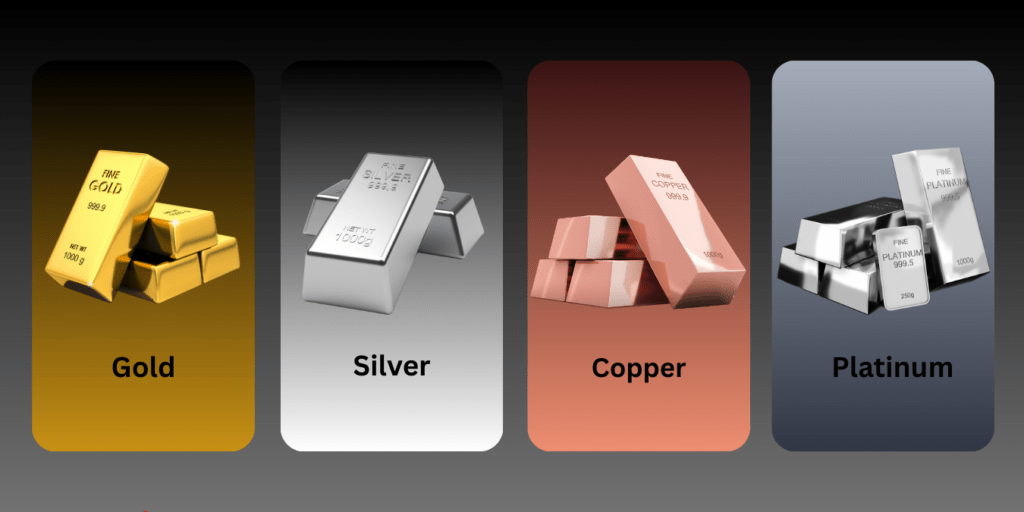
Gold has cemented its position as the premier safe haven of this era. The precious metal witnessed a remarkable 64% price increase in 2025 alone — its best annual gain since 1979 — driven by safe-haven demand, central bank purchases, and record inflows into gold-backed ETFs. Entering 2026, spot gold surged past $5,100 per ounce, with Commerzbank raising its 2026 forecast to $5,200 per troy ounce. Even when gold pulled back 13% in March amid a broader commodities correction, analysts were quick to note that its structural safe-haven status remained firmly intact. In India specifically, gold futures on the MCX have hit lifetime highs above ₹1.75 lakh per 10 grams, reflecting a global consensus that gold is the most reliable store of value in an era of fiscal excess and geopolitical disorder.
The Swiss Franc: The Currency Safe Haven of Choice
If gold is the premier commodity refuge, the Swiss franc is the premier currency refuge. Morgan Stanley has explicitly recommended buying the Swiss franc as the “standout safe haven,” describing it as the asset most likely to hold its value across the widest set of circumstances. The Swiss National Bank’s defensive interest rate policy, Switzerland’s robust fiscal position, and the franc’s historical insensitivity to geopolitical shocks make it particularly attractive right now. UBS notes that the franc is expected to remain a “rock of stability” in 2026, supported by global uncertainty and high sovereign debt levels elsewhere. USD/CHF has been hovering near the critical 0.8000 level as safe-haven demand continues to provide a structural bid. For investors with international portfolios or those hedging currency risk, Swiss franc-denominated assets deserve a meaningful allocation.
German Bunds: Reliable, But Facing Competition
German government bonds (Bunds) have historically been Europe’s answer to U.S. Treasuries as a flight-to-quality destination. That status remains largely intact, but it is being challenged. During recent market ructions, Bunds’ price gains were outpaced by both gold and the Swiss franc. With the ECB no longer acting as a major buyer in the bond market, Germany increasingly depends on foreign investors outside the eurozone for roughly 40% of its bond demand. This makes Bund pricing more sensitive to global risk sentiment than it once was. Still, as Rufaro Chiriseri of RBC Wealth Management notes, Bunds “will still have a haven space” — they simply now compete more vigorously with alternative safe-haven assets. For conservative European-focused investors, Bunds remain a credible portfolio anchor, particularly short-dated ones.
Short-Duration Fixed Income and TIPS
Not all bonds are created equal in a volatile rate environment. Short-dated U.S. Treasuries remain the best diversifier for pure growth risk, even if they underperform during inflationary shocks. Treasury Inflation-Protected Securities (TIPS) offer a more nuanced solution: their principal value adjusts upward with inflation, providing a direct hedge against the stagflationary environment that economists increasingly warn about. Short-term inflation-protected Treasuries are considered a cost-effective hedge in an environment where inflation looks “clingy” and may even rise further. Money market funds, particularly in India where instruments like the Tata Money Market Fund and HDFC Money Market Fund have delivered consistent 1-year returns of around 6.6-7.2%, offer liquidity with stability — a combination that is genuinely rare right now.
Defensive Equities: The Overlooked Answer
Here is where many investors make a critical error during sell-offs: they treat all equities as equally dangerous. They aren’t. Defensive sectors — utilities, consumer staples, healthcare, and infrastructure — are trading at multi-decade valuation lows relative to the S&P 500 and European indices. While AI-driven growth stocks and mega-cap technology names were decimated in this selloff (Meta fell 15.86%, NVIDIA dropped 15.36%, Amazon lost 12.57%, and Alphabet declined 11.41% during the broader March 2025 downturn ), defensive businesses with predictable cash flows continued to generate income and offer relative stability.
Dividend stocks are currently experiencing what Morningstar describes as a “HALO trade” boost, with both high-dividend and dividend-growth stocks outperforming amid the broader market selloff. Pharmaceutical giants like AbbVie and Merck exemplify the defensive equity thesis — their products are in demand across all economic cycles, making them structurally resilient when growth stocks struggle. Duke Energy, for instance, projects long-term earnings growth of 5-7% through 2029 alongside a roughly 4% dividend yield, for a total return potential of 9-11% with minimal valuation risk. These are not exciting numbers in a bull market. They are extraordinarily valuable numbers in the one we’re actually in.
How to Think About Portfolio Positioning Right Now
The fundamental lesson of March 2026 is that the era of passive, set-and-forget 60/40 investing is over — at least temporarily. Navigating the current environment requires what investment professionals call a “multi-risk” framework: simultaneously managing risks from high inflation, potential stagflation, slowing growth, and shifting market leadership. Here is a practical way to think about positioning:
- Reduce long-duration bond exposure until fiscal sustainability concerns in the U.S. stabilize; long-duration Treasuries are liabilities, not assets, in the current environment
- Increase gold allocation to at least 10-15% of a diversified portfolio as a hedge against both currency debasement and geopolitical tail risk
- Add Swiss franc-denominated assets or CHF exposure as the most structurally sound currency safe haven available in 2026
- Rotate into defensive equities — utilities, consumer staples, healthcare, and dividend payers — which are historically cheap relative to the broader market
- Hold short-duration fixed income and TIPS rather than cash equivalents that erode in real terms; in India, money market funds offer a compelling 7%+ return with minimal risk
- Consider real assets and commodity-linked equities as a stagflation hedge, since supply-side shocks — especially in energy and agriculture — tend to benefit commodity producers when broader markets suffer
- Maintain geographic diversification including international developed markets, which the MSCI EAFE showed up nearly 7% year-to-date as recently as March 2025 even as U.S. equities sold off sharply
The Stagflation Specter
Hovering above all of this is a word that markets dread almost as much as recession: stagflation. CNBC noted in March 2026 that the U.S. economy is experiencing a genuine shock from the Iran conflict combined with tariff-induced price pressures. When inflation stays elevated while growth slows, both equities and bonds typically struggle simultaneously — which is precisely what we have been witnessing. In stagflationary periods, commodities historically outperform because supply-side shocks drive prices higher, while growth stocks struggle due to higher discount rates and weakening consumer demand. Value stocks, particularly those in industrials, consumer staples, and financial services with strong balance sheets and low debt, tend to show greater resilience than the high-multiple tech names that dominated the previous bull market.
Wellington Management’s 2026 macro outlook characterizes the most likely scenario as an “inflationary upturn” — not an outright recession, but an environment requiring investors to be significantly more adaptive than the prior decade of low-inflation growth rewarded them for being. The firms and strategies that will emerge from this period strongest are those maintaining genuine diversification across uncorrelated assets, not those chasing the last cycle’s winners.
The Bottom Line for Investors
There is no single risk-free hiding place in the current environment — that much is true and worth saying plainly. The simultaneous selloff in equities and bonds has exposed the fragility of conventional portfolio construction and forced a necessary rethinking. But the absence of a perfect safe haven does not mean there is nowhere intelligent to allocate capital. Gold, the Swiss franc, short-duration inflation-protected fixed income, defensive dividend equities, and selective commodity exposure are all performing their expected roles with varying degrees of success. The investors who will navigate 2026 most effectively are not those who panic-sell into cash and await a mythical “all-clear” signal. They are those who methodically rebalance toward assets with real intrinsic value, genuine inflation protection, and income that compounds regardless of what the headlines say tomorrow. As every seasoned market practitioner knows, the best time to rethink your portfolio’s resilience is before the next shock — not after it has already arrived.