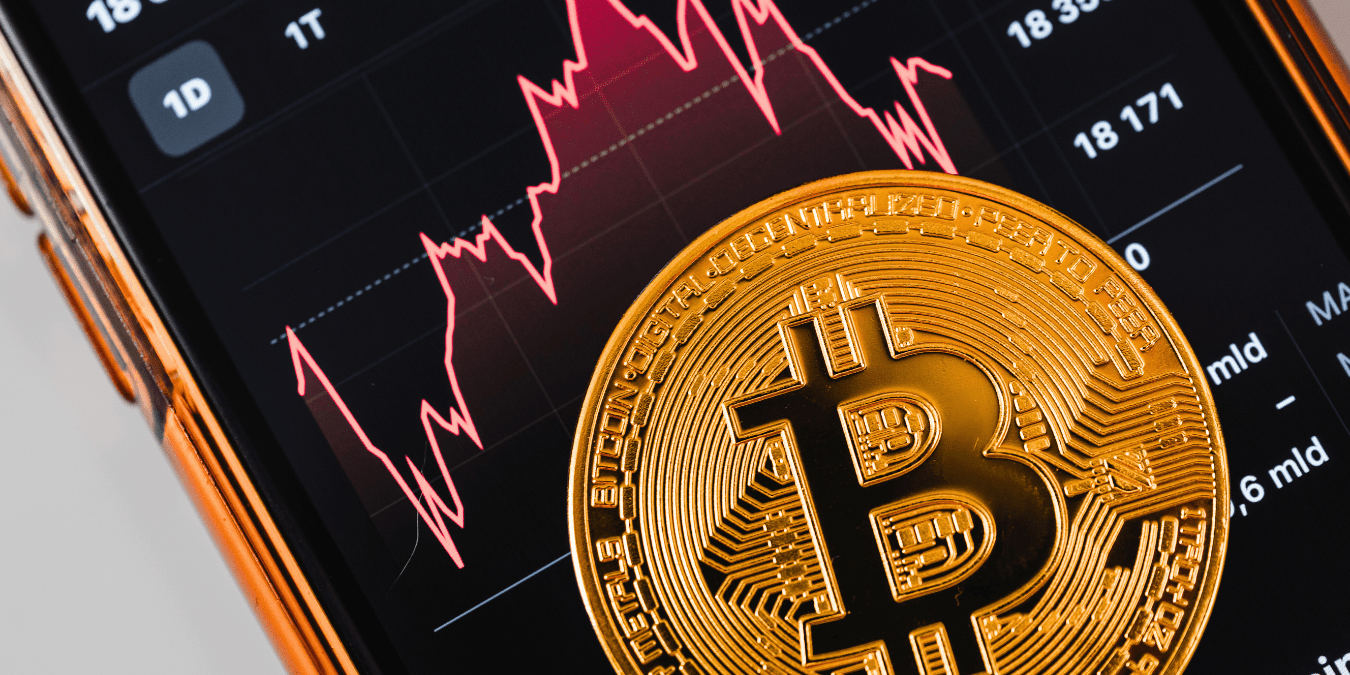
Geopolitical Shock: Bitcoin Tumbles Under $64K Following US-Israel Military Strike on Iran
Bitcoin just crashed below $64,000 — and a military strike triggered it. But here’s what nobody’s telling you: the real shock isn’t the drop. It’s what happens next. History reveals a pattern most investors miss entirely. Are you positioned for it — or about to make a costly mistake?
The cryptocurrency market never sleeps — and neither does geopolitics. In the early hours of a tense October morning, news broke that the United States and Israel had launched a coordinated military strike on Iran. Within minutes, financial markets around the world reacted — and Bitcoin was no exception. The world’s largest cryptocurrency by market capitalisation plunged sharply below the $64,000 mark, triggering panic selling across digital asset exchanges and reigniting the age-old debate: is Bitcoin a safe-haven asset, or just another high-risk speculative play?
As someone who has closely followed financial markets, banking systems, and emerging asset classes for years, let me break down exactly what happened, why it happened, and — most importantly — what it means for your portfolio.
What Happened: The Strike and the Market’s Immediate Reaction
On October 26, 2024, Israeli forces launched a series of targeted military strikes on Iranian territory, reportedly coordinated with strategic intelligence from the United States. The strikes targeted military installations and were widely interpreted as a significant escalation in the ongoing Middle East conflict that has been simmering throughout 2024.
Global markets responded instantly. Crude oil prices surged. Gold, the traditional safe-haven asset, rallied sharply. And Bitcoin — which many in the crypto community had been positioning as “digital gold” — did the exact opposite. It fell.
Bitcoin dropped from approximately $67,500 to below $64,000 in under two hours of trading, representing a decline of over 5% in a matter of hours. Total crypto market capitalisation shed roughly $80–100 billion in the same window. Ethereum, Solana, and most altcoins followed Bitcoin’s downward spiral, amplifying losses across the board.
Why Did Bitcoin Fall? Understanding the Mechanics
This is the question every investor needs to understand. Why does a decentralised, borderless, government-independent asset fall when geopolitical tensions rise?
1. Risk-Off Sentiment Takes Over
The primary driver is psychology. When major geopolitical events occur — wars, strikes, sanctions — institutional investors and traders immediately shift into “risk-off” mode. This means they liquidate high-risk, volatile assets and move capital into perceived safe havens like gold, US Treasury bonds, and the Japanese Yen.
Bitcoin, despite its narrative as “digital gold,” is still classified by most institutional desks as a risk asset — similar to tech stocks. When fear spikes, it gets sold first.
2. Leveraged Positions Get Liquidated
The crypto derivatives market is massive. At any given time, billions of dollars in leveraged long positions are open on exchanges like Binance, OKX, and BitMEX. When prices drop suddenly, stop-losses trigger automatically, and margin calls force liquidations — compounding the sell-off in a cascade effect.
According to data from Coinglass, over $200 million in crypto futures positions were liquidated within hours of the Iran strike news breaking — the majority of them long positions (bets that prices would rise).
3. Correlation With Risk Assets Remains High
Academic research and historical data from 2020–2024 consistently show that during acute geopolitical or macroeconomic shocks, Bitcoin’s correlation with the Nasdaq 100 and S&P 500 spikes significantly. During the early days of the Russia-Ukraine war in February 2022, Bitcoin dropped 15% in 48 hours. The pattern repeated here.
4. Thin Liquidity in Off-Hours
Major geopolitical events often unfold outside standard US market hours. When liquidity is thinner — fewer market makers, fewer buyers — even moderate selling pressure can produce exaggerated price moves. The Bitcoin market, operating 24/7, is especially vulnerable to this dynamic.



The “Digital Gold” Myth — Examined Honestly
One of the most persistent narratives in crypto circles is that Bitcoin is “digital gold” — a store of value that appreciates during times of crisis and uncertainty. The Iran strike has once again exposed the fragility of this claim, at least in the short term.
Gold rallied over 1.5% on the same day Bitcoin fell 5%. This divergence is important.
However, context matters. Gold has 5,000 years of cultural trust behind it. Central banks hold it. It has zero technological risk. Bitcoin, by contrast, is only 15 years old. It is still in its price discovery phase, still attracting — and losing — speculative capital, and still subject to regulatory uncertainty across major economies including the US, EU, and India.
The “digital gold” thesis is not necessarily wrong — it is simply premature. Bitcoin’s correlation with risk assets tends to be higher during market crises and lower during stable periods of economic growth. Over a 4–5 year timeframe, Bitcoin has dramatically outperformed gold as a store of value and inflation hedge. But in the short term, during acute crises, it behaves like a risk asset — and investors must price that behaviour into their risk models.
What the Iran Conflict Means for Crypto Markets Going Forward
The Middle East situation is fluid and complex. Here are the scenarios investors should be monitoring:
Scenario 1: Conflict De-escalates Quickly
If diplomatic channels cool tensions and no further military action follows, risk appetite typically rebounds within days to weeks. In this scenario, Bitcoin historically recovers its pre-shock levels and often pushes higher as the “buy the dip” crowd steps in. Bitcoin’s recovery after the initial Russia-Ukraine shock in 2022 took approximately 2–3 weeks before resuming its prior trend.
Scenario 2: Escalation Into Broader Regional Conflict
If Iran retaliates — particularly against US assets, oil infrastructure, or allied nations — we could see sustained risk-off conditions. Oil above $100/barrel would reignite global inflation fears, potentially delaying Federal Reserve rate cuts, which would put additional pressure on all risk assets including crypto. In this scenario, Bitcoin could test the $58,000–$60,000 support zone.
Scenario 3: Full-Scale War Involving Major Powers
This is a tail-risk scenario that markets are not currently pricing. A broader conflagration involving the US, Israel, Iran, and potentially Iran’s proxies (Hezbollah, Houthi forces) could trigger a global liquidity crisis similar to March 2020. In that event, even gold and traditional safe havens come under pressure initially as investors sell everything to raise cash. Bitcoin would likely see its sharpest declines in this scenario before any eventual recovery.
Historical Precedent: How Crypto Has Reacted to Geopolitical Shocks
History is instructive here. Let’s look at key events:
Russia Invades Ukraine (February 2022): Bitcoin fell 15% in the first 48 hours before recovering. Interestingly, Ukrainian citizens and Russian citizens both turned to crypto to preserve wealth and move money across borders — highlighting crypto’s utility as a censorship-resistant financial tool during conflict.
Hamas Attack on Israel (October 7, 2023): Bitcoin initially dropped 5–7% before stabilising. Within 30 days, it had fully recovered and was trading higher — driven partly by renewed anticipation of the Bitcoin ETF approval.
COVID-19 Market Crash (March 2020): Bitcoin fell over 50% in 48 hours alongside all global markets in the most extreme liquidity crunch since the 2008 financial crisis.
The pattern is consistent: short-term pain, medium-term recovery — provided the geopolitical shock does not trigger a prolonged global recession.
What Should Indian Investors Do Right Now?
India’s crypto investor base has grown substantially. With platforms like CoinDCX, WazirX, and Mudrex seeing millions of registered users, there are real-money implications for Indian retail investors. Here is a grounded, experience-based perspective:
Don’t panic sell. Selling at the bottom of a fear-driven spike is one of the most common and costly mistakes retail investors make. If your investment thesis for Bitcoin has not changed, the underlying reasons to hold it have not changed either.
Do review your risk exposure. If Bitcoin represents more than 5–10% of your total investment portfolio, this is a good moment to reassess whether your allocation matches your actual risk tolerance.
Consider a staged averaging strategy. If you are bullish on Bitcoin over a 2–3 year horizon, systematic buying during dips — particularly around strong technical support levels like $60,000–$62,000 — has historically been a sound strategy.
Watch the macroeconomic picture. The Federal Reserve’s rate path remains the single most important macro driver for Bitcoin in 2024–2025. If the Iran conflict delays rate cuts, that is a headwind. If markets price in a faster return to safety, that could accelerate rate cut expectations and be a tailwind for all risk assets.
Remember Indian tax implications. Under India’s current crypto taxation framework, a 30% flat tax applies to gains with no offset for losses between different virtual digital assets. This makes frequent panic trading particularly punishing from a tax efficiency standpoint.
The Bigger Picture: Bitcoin’s Long-Term Fundamentals Remain Intact
Stepping back from the immediate news cycle, Bitcoin’s structural story has not changed. The fourth Bitcoin halving took place in April 2024, reducing the daily new supply of Bitcoin to approximately 450 BTC per day. Historically, the 12–18 months following a halving have been among Bitcoin’s strongest performance periods.
Institutional adoption continues to grow. The approval of spot Bitcoin ETFs in the US in January 2024 brought billions in fresh capital from traditional finance into the asset class. BlackRock, Fidelity, and other asset management giants now hold Bitcoin on behalf of their clients — a reality that was unimaginable just three years ago.
These structural tailwinds do not disappear because of a single geopolitical event, however significant.
Final Thoughts
Bitcoin falling below $64,000 following the US-Israel military strike on Iran is a sobering reminder that no asset — not even a decentralised one — exists in a vacuum outside of global events and investor psychology. In the short term, fear sells everything. In the medium term, fundamentals reassert themselves.
For serious investors, the right response to moments like this is not panic — it is analysis. Understanding why prices moved, what scenarios lie ahead, and how to position accordingly separates informed investors from the reactive crowd.
The geopolitical chessboard is complex and uncertain. But uncertainty, in financial markets, has always been the price of opportunity.
Disclaimer: This article is for educational and informational purposes only. It does not constitute financial or investment advice. Cryptocurrency investments are subject to high market risk. Please conduct your own research or consult a SEBI-registered financial advisor before making investment decisions.