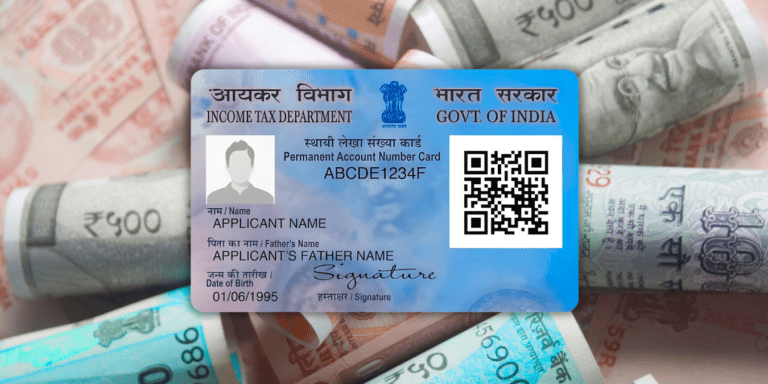
Crypto tax reporting just got tougher: Rs 200 daily penalty for Section 509 failures
Budget 2026: Miss a transaction report, and exchanges pay Rs 200 per day starting April! But wait—who’s really in the crosshairs? Investors, beware: offshore trades could vanish overnight. Discover the shocking fines, hidden loopholes, and what this means for YOUR wallet before it’s too late…
From April 2026, India is drawing a clear red line on crypto reporting: a Rs 200 per day penalty will kick in if prescribed entities fail to report crypto transactions on time, along with a separate Rs 50,000 penalty for inaccurate statements that are not corrected. For anyone serious about the future of digital assets in India—whether you’re a retail trader, an exchange operator, a tax professional, or a Web3 founder—this change is a signal that “casual” compliance is over and systematic reporting is now non‑negotiable.
What exactly is this Rs 200 per day penalty?
The new penalty arises from amendments proposed in the Finance Bill, 2026, which tighten the reporting framework for crypto‑asset transactions under Section 509 of the Income-tax Act, 2025. Till now, the law mandated certain “reporting entities” to furnish statements about crypto transactions, but there was no specific penalty section dealing only with crypto reporting failures—this was seen as a gap in enforcement.
The Bill proposes to substitute Section 446 with a new provision that explicitly covers crypto‑asset reporting defaults. Under this:
- A penalty of Rs 200 per day can be levied for each day of delay in filing the required statement of crypto transactions under Section 509(1).
- A separate, flat penalty of Rs 50,000 can be imposed if the statement contains inaccurate information and the inaccuracy is not corrected as per Section 509(4), or if due‑diligence obligations under Section 509(5) are not followed.
This provision is prospective and is slated to take effect from 1 April 2026, giving the ecosystem a short but crucial window to prepare.




Who will actually pay this penalty?
It is important to clarify that this penalty framework targets reporting entities, not individual retail investors directly. These entities are expected to include:
- Crypto exchanges and trading platforms operating in or serving Indian users.
- Marketplaces and intermediaries that facilitate crypto‑asset transactions (spot, derivatives, or other structured products).
- Any other “prescribed reporting entities” notified by rules under Section 509, similar to how banks, mutual funds, and other financial players file SFT/other information reports.
For a typical Indian investor, this does not mean you will get a Rs 200 per day fine for not filing your ITR or not disclosing a single trade—those issues are governed by other parts of the Income‑tax Act and existing VDA tax rules. Instead, the new penalty pushes platforms to send complete and accurate data of your transactions to the tax department, making it much harder for undeclared crypto activity to go unnoticed.
Why has the government become this strict on crypto reporting?
This move is not happening in isolation; it sits on top of a larger policy stance India has taken since 2022:
- Crypto gains are already taxed at 30%, with 1% TDS on many transactions, and no set‑off of losses between VDAs.
- Authorities have gradually brought exchanges under the FIU‑IND anti‑money laundering framework, leading to registration, monitoring, and even action against non‑compliant platforms.
- A surge in offshore trading volumes—with estimates suggesting trillions of dollars worth of trades by Indian users moving to foreign exchanges—has raised concerns on revenue loss and regulatory blind spots.
In this backdrop, the Rs 200 per day penalty serves three clear policy objectives:
- Enforcement of Section 509: It operationalises the reporting requirement by adding a tangible cost for non‑compliance.
- Data accuracy and traceability: The Rs 50,000 penalty for inaccurate details is meant to discourage sloppy KYC, wrong PAN mapping, or incomplete trade logs.
- Bringing crypto closer to mainstream financial standards: Commentators note that the government wants crypto reporting to resemble the level of discipline seen in banking, securities, and other regulated markets.
In other words, the message is: you are free to build and trade, but do it in full daylight with proper disclosures.
How will this change life for Indian crypto users?
Even though the legal obligation targets platforms, the indirect impact on users will be significant. You can expect:
- Stricter KYC and account verification: Exchanges will likely tighten onboarding, PAN linking, address proofs, and periodic checks to ensure that any data they send to the tax department is fully defensible.
- More detailed reports of your activity: Platforms may offer better transaction histories, P&L summaries, and tax reports—not only as a service, but to ensure they can generate accurate statements for authorities.
- Lower room for “off‑the‑radar” trading: Anonymous or lightly‑verified accounts will become riskier for exchanges to maintain because inaccurate or incomplete reporting could trigger the Rs 50,000 penalty.
An everyday example: if you execute hundreds of trades in spot and futures over a year, your exchange will now be under much stronger pressure to store, reconcile, and report each leg correctly, including your identity and PAN. This, in turn, makes it easier for the tax department to cross‑match your ITR with third‑party data and flag mismatches or non‑reporting.
What should exchanges and platforms be doing before April 2026?
From a compliance and operations standpoint, the Rs 200 per day penalty changes how serious crypto businesses must be about back‑end processes in India. Key action areas include:
- Building robust reporting workflows: Systems must be able to aggregate user transactions across spot, P2P, derivatives, staking, and other products into a unified, reportable format under Section 509.
- Strengthening data quality controls: Data validation, de‑duplication, reconciliation with on‑chain records where relevant, and regular audits will be vital to avoid the Rs 50,000 inaccurate‑reporting penalty.
- Aligning with FIU‑IND and AML norms: As several experts have pointed out, this penalty regime complements existing AML rules and pushes exchanges to function more like full‑fledged financial institutions than casual tech platforms.
- Legal and tax risk management: In‑house and external advisors will be needed to interpret evolving rules, design SOPs, and prepare documentation that can stand scrutiny during assessments or enquiries.
For serious players who plan to stay and grow in India, this is an opportunity to institutionalise processes and build long‑term trust with regulators and users.
How can Indian investors stay on the right side of this shift?
Even though the Rs 200 per day penalty does not apply to you personally as a trader, your behaviour can still create risk if it pushes platforms into grey zones. Here are prudent habits to adopt:
- Trade on compliant, well‑regulated platforms: Exchanges that take tax reporting and FIU‑IND norms seriously are less likely to face disruptions that might affect your access or withdrawals.
- Keep your own records: Maintain spreadsheets or app‑based logs of buys, sells, transfers, and income (staking yields, airdrops, etc.) so that your ITR accurately reflects your activity.
- Match your ITR with platform data: When platforms start offering more formal tax and transaction reports, use those to reconcile your filings, reducing the chance of red flags.
- Avoid assumptions about “small amounts”: With systematic reporting in place, even smaller trades can be traceable; assuming that “they will not notice” is increasingly unrealistic.
From an standpoint, this is the time for Indian investors to treat crypto not as a casual side bet but as a regulated financial exposure that deserves the same discipline as equities or mutual funds.
Does this mean a crackdown on crypto in India?
The answer is more nuanced than a simple “yes” or “no”. On one hand, the tax burden remains heavy, with no relaxation on 30% tax or 1% TDS in the latest Budget. On the other hand, the introduction of structured penalties for reporting failures—rather than bans or blanket restrictions—suggests the government expects crypto to continue as part of the financial landscape, but under tight supervision.
Industry voices have interpreted the new penalties as:
- A move to increase accountability and transparency, not necessarily to kill innovation.
- An attempt to make digital asset reporting more aligned with traditional finance, which, in the long run, may even help institutional participation and investor confidence.
In practical terms, Indian founders, exchanges, and service providers now operate in an environment where regulatory expectations are rising but are at least becoming more clearly articulated through provisions like Section 509 and the new Section 446. Those who combine innovation with strong compliance will likely be better positioned than those relying on regulatory arbitrage.
Final Thought
The Rs 200 per day penalty for non-reporting of crypto transactions from April 2026 marks a pivotal shift for India’s digital asset ecosystem—pushing platforms toward ironclad compliance while urging investors to embrace transparency as a non-negotiable norm. In the long game, this won’t stifle innovation but will likely separate serious players from the rest, fostering a more mature, regulated market that aligns crypto with India’s broader financial discipline. Stay informed, trade smart, and prioritize records over risks—because in the blockchain era, every transaction tells a story the taxman can now easily read.