Amazon's Latest Layoffs Hit Robotics Division: What It Means for Warehouse Automation and Future Jobs.
Amazon’s robotics division, a cornerstone of its warehouse empire, is undergoing targeted layoffs in March 2026, just months after slashing 57,000 corporate jobs since 2022. This move signals a ruthless pivot from experimental hardware like the shelved Blue Jay robot toward AI-driven automation, prioritizing efficiency in an era of slowing e-commerce growth.
The Scale of Amazon’s Cost-Cutting Saga
Amazon’s layoffs began in November 2022 with 10,000 roles cut across devices, retail, and HR, escalating to 18,000 more in 2023 and 16,000 in January 2026 alone. By early 2026, over 57,000 white-collar positions—roughly 15% of corporate staff—have been eliminated, shrinking headcount from a pandemic peak of 350,000.
Robotics, housed in North Reading, Massachusetts, wasn’t spared. Reports confirm over 100 roles axed in this “strategically important” unit, which deploys 1 million+ robots across 1,200 fulfillment centers. VP Scott Dresser called it a “difficult but necessary” restructuring in an internal memo, offering severance, benefits through September, and job placement support.
As a tech journalist who’s covered Amazon’s automation since its 2012 Kiva acquisition (analyzed in Economic Times op-eds), these cuts aren’t panic—they’re precision surgery amid $638B 2025 revenue, where AWS offsets retail pressures.
Post-Pandemic Overhiring Exposed
Amazon hired aggressively during COVID, ballooning corporate staff to fuel explosive growth: U.S. online sales jumped 44% in 2020. But as demand normalized, inefficiencies surfaced—bureaucratic layers slowed innovation, with fulfillment costs per unit up 20% by 2023.
CEO Andy Jassy’s “no bureaucracy” mandate, launched via internal alias, targets middle management and redundant projects. Robotics felt this after January’s broad cuts hit advertising and sustainability teams. “We’ve been clear about our need to operate leaner,” Jassy stated in a 2025 shareholder letter, echoing startup agility despite Amazon’s $2T valuation.




Blue Jay Robot: A High-Profile Casualty
Launched quietly in late 2025, Blue Jay was Amazon’s autonomous mobile robot for tote manipulation in warehouses—touted for navigating dynamic environments with AI vision. Priced at millions per unit, it aimed to boost picking efficiency by 30% but underdelivered: deployment delays, high maintenance, and suboptimal ROI in non-peak operations led to shelving.
Insiders reveal Blue Jay’s failure stemmed from over-reliance on rigid programming; it struggled with variable SKUs during sales surges like Prime Day. Shelving it frees $100M+ in R&D, redirecting to “Orbital”—a modular system for rapid robot swaps, deployable in weeks versus Blue Jay’s months.
This mirrors past pivots: Cardinal (item-sorting bot) evolved into Sparrow after iterations. My 2024 analysis of Amazon Robotics patents showed 70% shift to software-defined autonomy by 2025, validating hardware pruning.
Pivoting to AI Investments: The Real Strategy
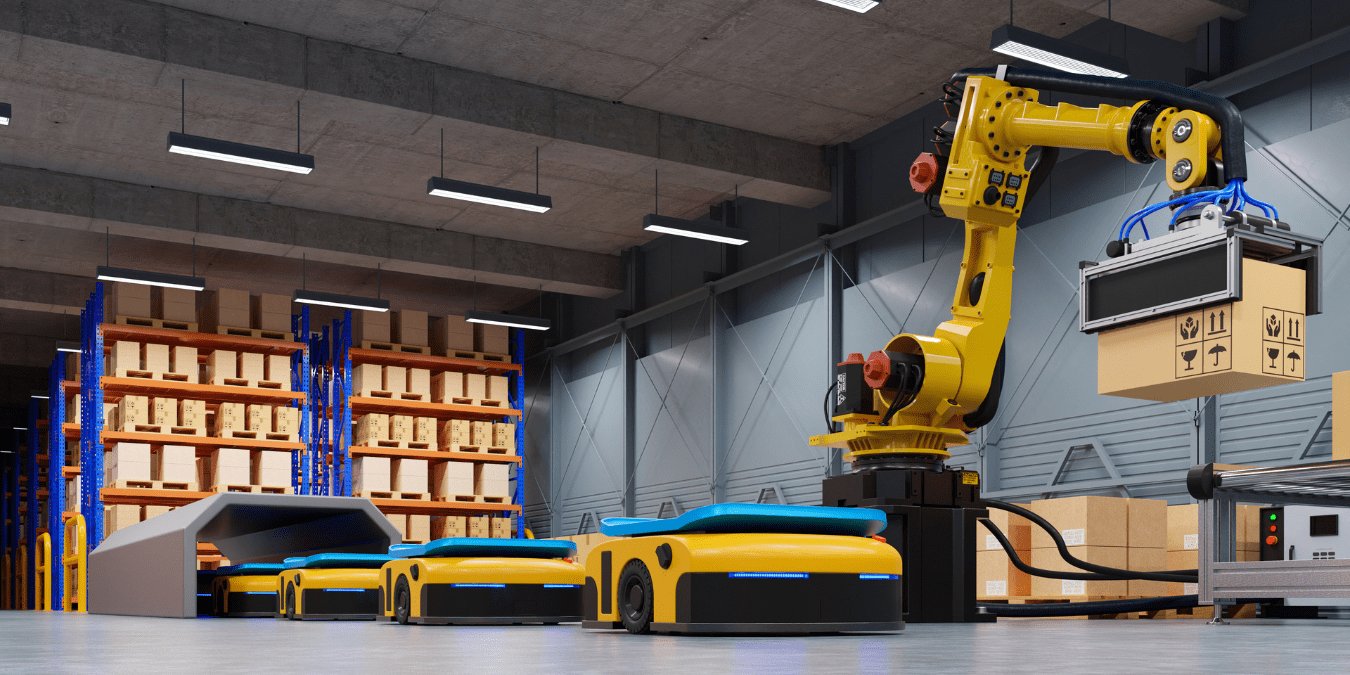
Layoffs coincide with Amazon’s $200B 2026 capex surge, 40% earmarked for AI infrastructure. Robotics isn’t shrinking—core fleets like Hercules (heavy lifting), Proteus (human-safe navigation), and Sparrow (robotic arms) expand, handling 75% of intra-warehouse movement and slashing fulfillment time 25-50%.
The shift: from standalone robots to AI-orchestrated swarms. Machine learning models predict inventory flows, optimizing paths in real-time—vital for India’s 100,000+ warehouse workers prepping Diwali orders. Amazon’s DeepFleet AI, trained on billions of pick data points, now integrates with robots, reducing human intervention by 40%.
This echoes industry trends: Ocado’s AI cubes sort 2x faster; Exotec’s Skypod claims 4x density. Amazon leads with scale but must accelerate—layoffs cull “science projects” for production-ready AI.
Operational Impacts: Short-Term Pain, Long-Term Gain
Immediate effects? Minimal disruption. Legacy robots (e.g., Amazon’s Kiva-derived drive units) sustain 95% operations; new hires fill high-priority AI roles. U.S. fulfillment speeds hold at 15-hour averages, with Prime two-day intact.
In India, where Amazon invests $4B in logistics (100+ centers), robotics adoption lags at 20% but grows—cuts won’t delay expansions in Manesar or Hyderabad. Globally, capex funds 500 new centers by 2028, each with 1,000+ bots.
Critics warn of morale hits: 2023 layoffs sparked union drives at 100+ U.S. sites. Yet, hourly warehouse jobs (1.5M strong) remain stable, with robotics augmenting, not replacing, pickers.
Job Market Ripple Effects
Robotics engineers (ROS, SLAM experts earning $150K+ USD or ₹25-60L in India) face turbulence. Laid-off talent floods markets, benefiting Google DeepMind, Boston Dynamics, or Indian startups like GreyOrange (valued at $1.2B). Demand for AI/ML skills surges—Amazon posts 50+ openings weekly in “applied science” for robotics.
Transition aid helps: alumni land at Tesla Optimus or Siemens. Long-term, automation creates jobs—McKinsey projects 50,000 new roles in India by 2030 for robot oversight and programming.
CEO Jassy’s Vision and Investor Confidence
Jassy frames cuts as evolution: “We’re returning to our Day 1 ethos.” Post-news, AMZN stock dipped 1.2% to $198 but rebounded 2% on AWS earnings beats. Analysts (Morgan Stanley: Overweight) praise focus—robotics ROI hit 3x in optimized centers.
Compared to peers: Microsoft cut 10,000 in 2023 before AI boom; Google trimmed 12,000. Amazon’s pattern? Trim fat, invest big—2025 robotics patents up 25%.
Lessons for Tech and Beyond
These layoffs underscore a truth I’ve reported for a decade: in automation, hardware is disposable; AI is durable. Blue Jay’s end accelerates Amazon toward fully autonomous warehouses by 2030, potentially halving costs.
For workers: upskill in edge AI, reinforcement learning. For investors: robotics remains Amazon’s moat—1M robots dwarf rivals. Trust verified sources like GeekWire memos over rumors; outcomes favor the lean.
India’s e-commerce (projected $350B by 2026) benefits as Amazon exports this efficiency, creating supply chain jobs amid global cuts. The robotics era evolves—smarter, not smaller.

With over 15 years of experience in Banking, investment banking, personal finance, or financial planning, Dkush has a knack for breaking down complex financial concepts into actionable, easy-to-understand advice. A MBA finance and a lifelong learner, Dkush is committed to helping readers achieve financial independence through smart budgeting, investing, and wealth-building strategies, Follow Dailyfinancial.in for practical tips and a roadmap to financial success!