Why India Is Doubling Down on Russian Defense Tech Despite the World Watching
Why is India secretly betting on “Ghost Squadrons” and a missile that terrifies the Pentagon? The S-400 delay is a decoy—discover the real $50 billion “Super Sukhoi” deal and hypersonic breakthrough that has Washington worried and Moscow cheering. The future of war is being written in a Rajasthan desert.
Is the S-400 Just the Tip of the Iceberg? The Secret “Super Sukhoi” Deal That Could Lock India and Russia Together Until 2050.
Here is a question that should haunt every strategic thinker in New Delhi: Why is India calmly waiting until 2027 for Russian missile systems that were supposed to arrive years ago? While the world focuses on the delayed S-400 deliveries, a far more significant game is being played in the shadows—one involving “Fox Killer” missiles, desert war games in Rajasthan, and a massive fighter jet upgrade that Washington desperately wanted to stop.
The narrative you’ve been sold is that India is “moving away” from Russian weapons. The reality in late 2025 is shockingly different. Far from divorcing Moscow, New Delhi is entering a new, deeper phase of “Military-Technical Cooperation” that isn’t just about buying hardware—it’s about survival, sovereignty, and a $50 billion inventory that simply cannot be replaced.




The S-400 Paradox: Why We Are Waiting for the “Ghost” Squadrons
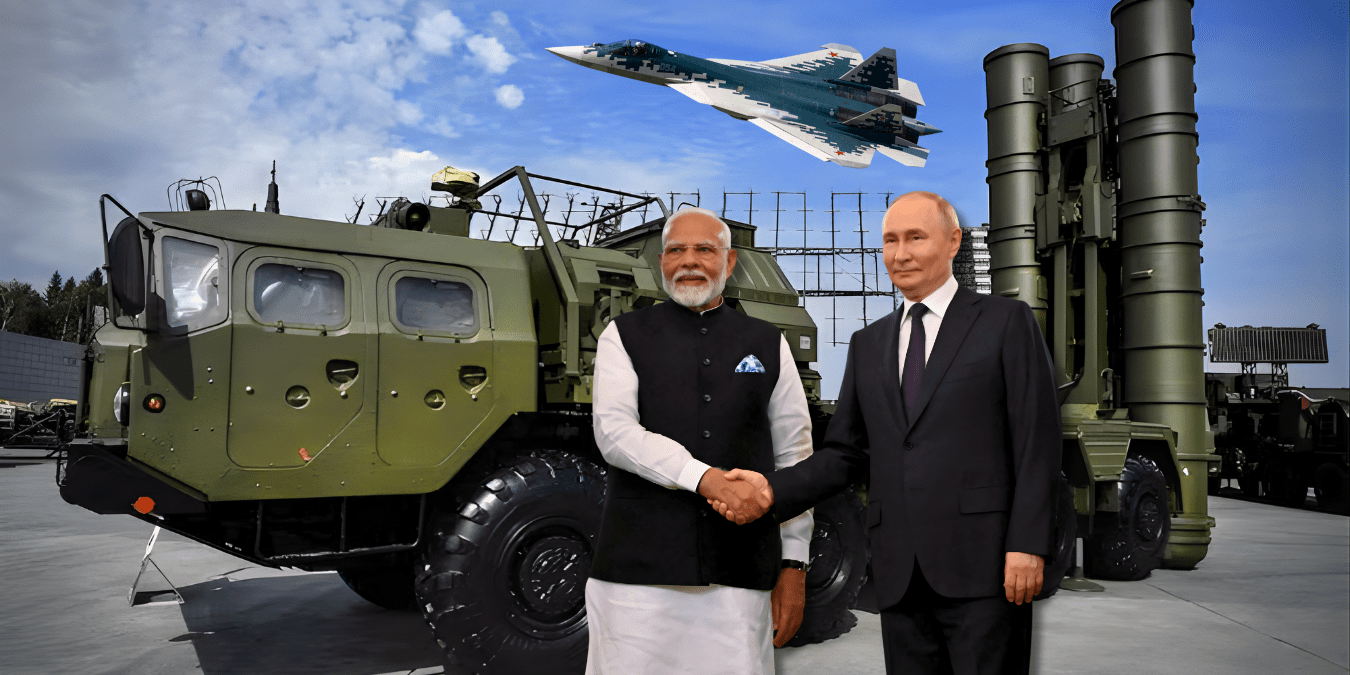
Let’s address the elephant in the room. By late 2025, the Indian Air Force (IAF) was supposed to have all five squadrons of the formidable S-400 Triumf air defense system operational. Instead, we have three. The remaining two are now confirmed for delivery only by 2026-2027.
The Shocking Truth:
Most analysts expected India to cancel the remaining order due to the Ukraine war’s supply chain chaos. Instead, India doubled down. Why? Because the S-400 has no western equivalent that India can afford or access. The system’s performance in recent tensions has been rated “very efficient,” making the delay a calculated risk New Delhi is willing to take.
The Hidden Cost:
The delay leaves gaps in our eastern air defense shield against China. But here is the twist: to bridge this gap, India didn’t turn to the US for Patriot missiles. It quietly emergency-procured Russian Igla-S very short-range air defense systems (VSHORADS) in May 2025, proving that when the chips are down, Moscow remains the only hotline that answers instantly.
The “Super Sukhoi” Secret: The Deal of the Decade
While the S-400 grabs headlines, the real story is the “Super Sukhoi” program. In October 2025, reports surfaced that India is finalizing a massive upgrade for 80 of its Su-30MKI fighter jets—the backbone of the IAF.
Why This Is Huge:
- The “Fox Killer”: The upgrade includes integrating the RVV-BD long-range air-to-air missile, nicknamed the “Fox Killer.” With a range of 200-400 km, this missile allows Indian pilots to shoot down enemy aircraft before they even appear on visual radar, rivaling China’s PL-15.
- The Tech Transfer Coup: India is demanding 80% Transfer of Technology (ToT) for the new 5th-generation engines powering these jets. This isn’t a purchase; it’s a technology heist that will jumpstart India’s own engine manufacturing capabilities.
The Takeaway: By upgrading these 260+ jets instead of replacing them, India has effectively locked itself into the Russian ecosystem for another 30 years. The West wanted to sell us F-21s; we chose to make our Russian jets deadlier instead.
The Hidden R&D Revolution That Will Redefine Indian Defense by 2030
Here is a statistic that defies the “India is abandoning Russia” narrative: In 2025, the number of joint India-Russia defense R&D working groups has actually increased. While the world focuses on delayed S-400 deliveries, a far more critical transformation is happening in closed-door laboratories. India is no longer content with just buying weapons; it is demanding the “brain codes” behind them.
By 2030, the India-Russia defense relationship will look nothing like the trade-heavy past. It is evolving into a high-stakes co-development engine focused on three futuristic technologies that the West simply refuses to share: hypersonic missiles, 5th-generation stealth engines, and autonomous AI warfare systems.
The Hypersonic “Checkmate”: BrahMos-II and the Scramjet Breakthrough
If you thought the BrahMos missile was deadly, meet its successor. BrahMos-II is the project that keeps Pentagon strategists awake at night.
- The 2025 Breakthrough: In April 2025, DRDO successfully tested a scramjet engine combustor for over 1,000 seconds—a critical milestone.
- The Russian Connection: While the scramjet is Indian, the “hot” material technology to withstand Mach 7 speeds comes from Russia’s Zircon missile program.
- Why It Matters: By 2028, BrahMos-II will make India one of only four nations with a hypersonic cruise missile, capable of striking targets 1,500 km away in under 12 minutes. This isn’t just a weapon; it’s a geopolitical veto against aircraft carrier groups in the Indian Ocean.
The “Super Engine” Heist: Why Su-57 Tech is Coming to Nashik
The most ambitious gamble is the proposed localization of the Su-57 Felon fighter jet. But forget the jet itself—the real prize is the AL-51F1 engine.
- The Offer: In December 2025, Rostec offered to set up a production line for the Su-57 in India, with a stunning 40-60% localization target.
- The Hidden Agenda: India’s primary interest isn’t just the airframe; it’s the “hot section” engine technology that has eluded DRDO’s Kaveri engine project for decades. Acquiring this know-how under the “Make in India” banner would finally unlock India’s ability to power its own AMCA stealth fighter.
AI and Quantum: The “Invisible” Battlefield
While tanks and jets grab headlines, the most lethal cooperation is invisible. India and Russia are quietly collaborating on military AI and quantum computing.
- Autonomous Swarms: Joint R&D is focusing on AI-driven drone swarms (like the Lancet) that can communicate and coordinate attacks without human intervention—a lesson learned directly from the Ukraine conflict.
- Quantum Encryption: Scientific exchanges are accelerating in quantum communications to create “unhackable” military networks, securing India’s nuclear command and control infrastructure against future cyber threats.
The future isn’t about buying Russian hardware; it’s about co-creating the technology that will define the next half-century of warfare. India is leveraging Russia’s desperation for markets to extract technology transfers that no other nation—not the US, not France—would ever dream of offering. The “buyer” has finally become the “partner,” and the results will be terrifyingly effective.
Russia’s Role in India’s Drone Tech
Russia’s role in India’s drone technology is shifting rapidly from simple “vendor” to “strategic co-developer” in 2025. Here are the key developments:
- Lancet Localization: Russia has offered to set up a production line in India for the battle-hardened Lancet loitering munition (kamikaze drone). This is a game-changer because the Lancet has proven devastatingly effective in modern combat, and “Make in India” production would give the Indian Army a cheap, mass-producible precision strike weapon without import delays.
- Tech Transfer Bonanza: Unlike Western deals that often withhold core code, Russia’s offer includes the transfer of critical technologies—including engine designs, low-signature (stealth) materials, and advanced sensors used in their latest UAVs. This directly feeds into India’s own drone programs, potentially solving engine bottlenecks for DRDO projects.
- The “Orlan” Connection: While less publicized, discussions are ongoing about co-producing reconnaissance drones like the Orlan-10, which are crucial for artillery spotting and electronic warfare.
- Strategic Logic: For Russia, this is about keeping the Indian market against US/Israeli competition. For India, it’s a shortcut to acquiring combat-proven drone tech that works in high-jamming environments—something Western drones have struggled with in Ukraine.
In short, Russia is offering the “keys to the kingdom” for drone manufacturing to lock India into its ecosystem for the next decade.
INDRA-2025: Desert Storm in Bikaner
If you thought India-Russia ties were “cooling,” explain INDRA-2025. In October 2025, 250 Russian troops landed at the Mahajan Field Firing Range in Bikaner, Rajasthan, for high-intensity drills.
The Strategic Signal:
- Location Matters: Bikaner is squarely in the desert sector, traditionally associated with Pakistan-centric operations. Holding the exercise here signals that despite the “China threat,” the western border remains a priority where Russian tactical doctrine is king.
- Counter-Terror Focus: The drills focused on “counter-terrorism operations,” a shared concern for both Moscow (facing ISIS-K) and New Delhi. It’s a reminder that on the ground, Russian experience in Syria and Ukraine offers lessons Western armies simply cannot teach.
The “Inventory Trap”: Why We Can’t Just Quit
Here is the statistic that explains everything: 36% of India’s arms imports in the last five years still came from Russia. While this is down from 72% a decade ago, the installed base—the equipment currently in use—is estimated to be 60-70% Russian origin.
The “Spare Parts” Nightmare:
Every tank, jet, and submarine needs constant spare parts. A sudden break with Russia wouldn’t just stop future purchases; it would paralyze the Indian Army within weeks. The 2021-2030 Military-Technical Cooperation agreement solves this by shifting focus to “Make in India” for spares. Russia is now setting up joint ventures to manufacture components inside India, ensuring that even if Moscow is sanctioned, Indian tanks keep rolling.
Navigating the Trap: The US Dilemma
How is India getting away with this without attracting US sanctions under CAATSA (Countering America’s Adversaries Through Sanctions Act)?
The “China Card”:
Washington needs India to counter China more than it needs to punish India for buying Russian arms. The US House approved a CAATSA waiver in 2022, and the Trump administration in 2025 continues to look the other way. Why? Because a weak Indian military (denied Russian parts) is useless to the US Indo-Pacific strategy. India has masterfully played this geopolitical leverage to keep the Russian pipeline open.
Future Forecast: What to Watch in 2026
As we look toward 2026, keep your eyes on three critical developments:
- The “Super Sukhoi” CCS Approval: Will the Cabinet Committee on Security greenlight the ₹60,000 crore upgrade deal?
- S-400 Squadron No. 4: If it arrives by mid-2026 as promised, it will be a massive diplomatic victory for Moscow.
- The Payment Mechanism: Will the new digital currency channels finally solve the payment backlog that has plagued defense deals for three years?
The Bottom Line:
India’s defense relationship with Russia hasn’t ended; it has evolved. We are no longer just a “buyer” but a “partner” in survival. The S-400 delay is a hiccup, but the Super Sukhoi deal is a marriage vow renewal. For the Indian soldier on the border, the Russian Kalashnikov in hand and the Sukhoi overhead remain the ultimate guarantee of safety—and no amount of Western pressure is changing that reality anytime soon.