Why Bengaluru’s Auto Drivers Are the First Indians to Feel the Heat of the West Asia Oil Crisis in 2026
Why Bengaluru's Auto Drivers Are the First Indians to Feel the Heat of the West Asia Oil Crisis in 2026
Breaking: Where India Stands Right Now (March 10, 2026)
$119.50Brent Crude — Intraday High (March 10) |
₹60Domestic LPG Hike (March 7, 2026) |
25 DaysNew LPG Refill Booking Gap (up from 21) |
62%India’s LPG — Met via Imports |
85-90%LPG Imports via Strait of Hormuz |
74 DaysIndia’s Current Oil Reserve Buffer |
The Crisis Nobody Saw Coming — Until It Hit the Autorickshaw Lane
On a routine Monday morning in March 2026, Raju — a 42-year-old autorickshaw driver from Hebbal in North Bengaluru — pulled up to his usual LPG filling station, only to find a handwritten board: ‘No Commercial Cylinder Supply Today.’ He called his dealer. Same answer. He called a friend in Koramangala. Same story. What had changed overnight? A war 4,000 kilometres away.
The US-Israel strikes on Iran, and Tehran’s retaliatory move to choke the Strait of Hormuz — the narrow waterway through which nearly 85 to 90 per cent of India’s LPG imports flow — had set off a chain reaction that ended at Raju’s fuel nozzle. He is not alone. Across Bengaluru, an estimated 2 lakh LPG-powered autorickshaws are now caught in the crossfire of a geopolitical conflict they have no say in — but will pay the price for.
This is the story of how a war in West Asia became a livelihood crisis on the streets of Bengaluru, and why India’s auto drivers are uniquely vulnerable to the global oil shock of 2026.
Why Bengaluru’s Autos Run on LPG — And Why That Makes Them Vulnerable
A City That Bet Big on Green Fuel
Bengaluru made a deliberate policy push over the past decade to transition its autorickshaw fleet from petrol to LPG, citing lower emissions, reduced running costs, and better air quality. The Karnataka government and BBMP actively incentivised the switch. Today, the majority of the city’s autorickshaw fleet runs on LPG — a cleaner fuel choice that has now become an unexpected liability.
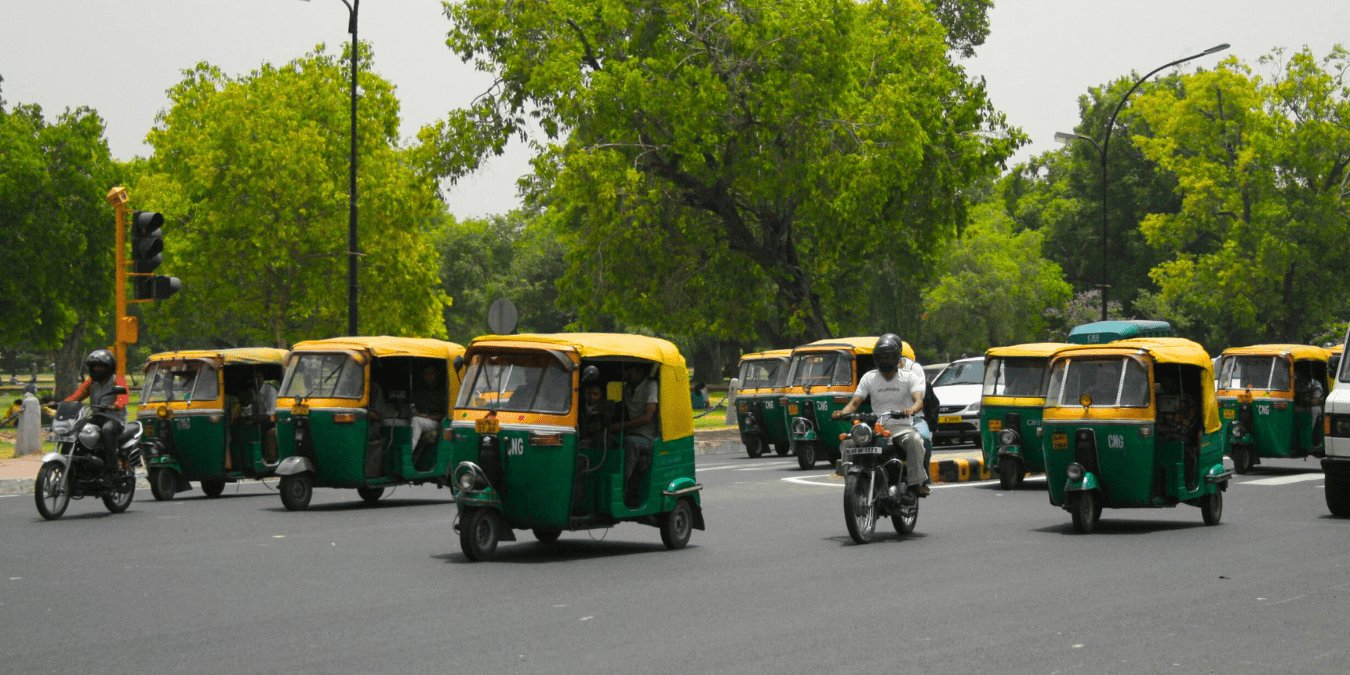
Unlike petrol or diesel auto drivers in cities like Delhi (which converted to CNG) or Hyderabad, Bengaluru’s LPG auto drivers depend on commercial LPG cylinders — the exact supply chain that the government suspended first when the crisis hit. Domestic LPG (household cooking gas) was prioritised for households. Hospitals and schools got the next queue. Hotels, restaurants, and commercial vehicles — including autos — were left at the end of the line.
The Hormuz Bottleneck Explained
The Strait of Hormuz is a 33-kilometre-wide shipping channel between Iran and Oman. It is the world’s most critical oil chokepoint. Nearly one-fifth of global oil trade passes through it daily, including crude oil from Saudi Arabia, Kuwait, the UAE, Iraq — and critically for India — LPG tankers from these countries. India consumed approximately 31.3 million tonnes of LPG annually, of which 62 per cent is met through imports. Of those imports, 85 to 90 per cent transit the Strait of Hormuz.
|
What Happened to the Strait of Hormuz? Following US-Israel military strikes on Iran in early March 2026, Iran effectively closed or severely disrupted shipping through the Strait of Hormuz in retaliation. Global crude benchmarks responded instantly — Brent crude surged to $119.50 per barrel intraday on March 10, 2026, its biggest single-day move since mid-2022. India, which imports over 85 per cent of its crude oil needs, is directly in the blast radius of any Hormuz disruption. |
The Domino Effect: From Tehran to Bengaluru’s Auto Stands
Understanding how a missile strike in West Asia translates into empty LPG cylinders in Bengaluru requires tracing the entire supply chain — from the Persian Gulf to the city’s auto fuel pumps.
|
Stage |
What Happened |
Impact on Bengaluru Autos |
|
1. Military Strikes on Iran |
US-Israel strikes on Iranian facilities; Iran retaliates by disrupting Strait of Hormuz |
Global LPG tanker routes blocked or diverted |
|
2. Crude & LPG Price Surge |
Brent crude crosses $100/barrel; LPG spot prices surge on international markets |
Import cost for India’s OMCs spikes sharply |
|
3. Domestic Price Hike |
Domestic LPG up ₹60; commercial cylinder up ₹114.50 (effective March 7, 2026) |
Auto operating costs rise immediately |
|
4. Commercial Supply Suspension |
Govt prioritises household LPG; commercial supply halted for hotels, restaurants, transport |
LPG auto stations face zero stock |
|
5. Panic Buying |
Households rush to book cylinders early; dealers overwhelmed; 2–8 day delivery delays |
Even domestic-cylinder workarounds dry up |
|
6. Fare vs Cost Squeeze |
Auto fares regulated by KSTRTC/state; drivers cannot unilaterally hike fares to offset costs |
Income shrinks, costs balloon — drivers stranded |
The Numbers That Tell the Real Story
LPG Price Trajectory in 2026
|
City |
Domestic LPG (14.2 kg) Before |
After March 7 Hike |
Commercial Cylinder (19 kg) Rise |
|
Delhi |
₹853.00 |
₹913.00 (+₹60) |
+₹114.50 |
|
Mumbai |
₹852.50 |
₹912.50 (+₹60) |
+₹114.50 |
|
Bengaluru |
₹855.50 |
₹915.50 (+₹60) |
+₹114.50 |
|
Kolkata |
₹879.00 |
₹939.00 (+₹60) |
+₹114.50 |
|
Chennai |
₹868.50 |
₹928.50 (+₹60) |
+₹114.50 |
This is the highest domestic LPG price in India since August 2023. For a Bengaluru auto driver who fills up two to three commercial cylinders a week, the weekly fuel bill has jumped overnight — with no corresponding increase in fare revenue permitted.
Commercial LPG Rates Have Surged Even More Sharply
Commercial LPG cylinder rates have risen by ₹302.50 since January 2026 alone — driven by the build-up of tensions even before the current escalation. For auto drivers running LPG-powered vehicles, this compounding hike represents a severe blow to daily earnings. A driver who previously spent ₹600 per week on fuel is now spending closer to ₹900 to ₹1,000 — with no mechanism to recover that cost through higher fares.
On the Ground: What Bengaluru’s Auto Drivers Are Actually Facing
Across auto stands in Hebbal, Marathahalli, JP Nagar, and Majestic, the story is similar — fear, uncertainty, and a scramble for alternatives.
|
Voice from the Auto Stand — Marathahalli, March 9, 2026 “We are running LPG because the government told us it was green and cheaper. Now the same government has stopped commercial LPG supply and nobody is telling us when it will resume. If I switch back to petrol, I need to convert the vehicle — that costs ₹8,000 to ₹12,000. Where do I get that money today?” — A veteran auto driver with 18 years of experience on Bengaluru roads. |
Three Scenarios Playing Out Right Now
- Drivers with access to black-market domestic cylinders are paying a significant premium — as high as ₹200 above MRP — to keep their autos running. This is illegal but widespread amid the panic.
- Drivers who have stopped operating are losing ₹800 to ₹1,200 per day in fare income while waiting for commercial supply to resume — with no compensation, no insurance payout, and no government relief announced yet.
- Some drivers with older petrol-capable engines are reverting temporarily, absorbing the cost of conversion or running on petrol at higher per-kilometre fuel costs.
|
Why Auto Drivers Cannot Simply ‘Absorb’ the Hike • Auto fares in Bengaluru are regulated by the state government — drivers cannot legally raise fares unilaterally. • LPG-converted autos typically cannot run on petrol or CNG without a costly mechanical conversion. • Most auto drivers operate on tight daily margins — earning ₹700 to ₹1,200 net per day after fuel, vehicle EMI, and insurance. • There is no formal income protection scheme for self-employed auto drivers during fuel supply disruptions. • Passenger demand may also drop as ride-hailing apps like Ola and Rapido redirect bookings to CNG or petrol autos that are still running. |
Government Response: What Has Been Done — And What Hasn’t
Steps the Government Has Taken
The Central Government moved quickly on several fronts once the commercial LPG crunch became visible:
- The Essential Commodities Act, 1955 was invoked to direct all oil refineries and OMCs to maximise LPG production and divert propane and butane streams away from petrochemical use.
- Refineries were ordered to halt petrochemical conversion of LPG feedstock and redirect 100 per cent of output to the domestic LPG pool.
- The Ministry of Petroleum and Natural Gas constituted a committee of three Executive Directors from IOC, HPCL, and BPCL to review commercial LPG supply requests on merit.
- The LPG refill booking period was extended from 21 days to 25 days to reduce hoarding and ensure equitable distribution.
- India signed a 2.2 million tonne LPG supply contract from the US Gulf Coast to diversify away from Hormuz-dependent routes.
- Union Minister Hardeep Singh Puri publicly confirmed: India holds 74 days of oil reserves and energy supplies are flowing through non-Hormuz routes.
What the Government Has NOT Done — Yet
|
Gaps That Need Urgent Attention • No specific relief or subsidy announced for LPG autorickshaw drivers affected by commercial supply suspension. • No timeline given for when commercial LPG supply to transport will be restored. • No emergency fare revision process initiated by the Karnataka state transport authority. • No income support or insurance mechanism for self-employed drivers during the disruption. • No clarity on whether LPG auto drivers qualify for priority commercial supply alongside hospitals and schools. |
Why Bengaluru Feels It First: The City’s Unique Vulnerability
Not all Indian cities are equally exposed to this crisis. Bengaluru’s situation is structurally more acute than most for three interconnected reasons.
1. Highest Share of LPG Autos Among Major Indian Cities
While Delhi converted its auto fleet to CNG nearly two decades ago, and cities like Chennai still have a significant petrol-auto population, Bengaluru became a pioneer of the LPG autorickshaw model. The city bet on LPG as the cleanest available alternative to petrol for three-wheelers, given the absence of a city-wide CNG pipeline network. That structural choice now means the city’s auto fleet is uniquely dependent on a fuel supply chain that has been directly disrupted.
2. No CNG Alternative Within Easy Reach
Delhi auto drivers facing a similar crisis could theoretically pivot — CNG infrastructure is extensive. Bengaluru does not have a comparable CNG network. City Gas Distribution (CGD) infrastructure in Bengaluru remains underdeveloped compared to northern cities. Until that changes, LPG auto drivers have nowhere to turn when commercial supply dries up.
3. Karnataka’s Supply Chain Is More Import-Dependent
Karnataka does not have major domestic oil or gas production. It is entirely dependent on supply from national refineries and import terminals — primarily Chennai and Mangaluru ports. With 62 per cent of India’s total LPG coming from imports, and the Hormuz route now compromised, the southern supply chain faces longer delays in rerouting and diversification compared to states closer to western port infrastructure.
What Can Auto Drivers and Passengers Do Right Now?
|
For LPG Auto Drivers — Your Immediate Options • Register a formal complaint with your local IOCL/HPCL/BPCL distributor citing essential transport use — some distributors are prioritising commercial supply for public transport. • Contact your regional auto drivers’ union or association to collectively petition the Karnataka Transport Department for an emergency fare revision. • Explore whether your vehicle qualifies for CNG conversion under BBMP or Karnataka state transport schemes — check at ksrtc.in or the local RTO. • Document every day of lost income carefully — this data will be critical for any future government compensation or loan restructuring claim. • Do not resort to using domestic LPG cylinders in commercial auto filling equipment — it is illegal, unsafe, and could invalidate your vehicle insurance. |
|
For Passengers Using Bengaluru Autos • Expect some surge in auto fares as drivers try to offset higher fuel costs — be patient and empathetic to the situation. • Consider switching temporarily to metro, BMTC bus, or ride-hailing electric vehicles (EVs) where available. • If an auto driver overcharges significantly beyond the current regulated rate, report it at the helpline: 155300 (Bengaluru traffic police). • Support local auto drivers by tipping during this period — their livelihood is genuinely at risk. |
What Happens Next: Three Scenarios for Bengaluru’s Auto Drivers
|
Scenario |
Trigger |
Expected Outcome for Bengaluru Autos |
|
Scenario A: Hormuz Reopens Within 2–3 Weeks |
Ceasefire, negotiation, or Iran standing down on shipping disruptions |
Commercial LPG supply restored within 3–4 weeks. Prices may ease slightly. Short-term pain, no structural damage. |
|
Scenario B: Conflict Drags On for 2–3 Months |
Prolonged US-Iran tensions; partial Hormuz disruption continues |
India’s alternative supply routes (US Gulf Coast, Russia, Australia) kick in — but at higher cost. LPG prices rise further. Government may announce relief for transport sector. |
|
Scenario C: Full Hormuz Closure for 6+ Months |
Major escalation, direct India-Gulf trade disruption |
Structural fuel crisis. Government forced to fast-track CNG infrastructure in southern cities. LPG auto model becomes economically unviable. Mass conversion or retirement of LPG fleet likely. |
Energy security experts at the Petroleum Planning & Analysis Cell (PPAC) have noted that India is actively diversifying its LPG import portfolio — with a recently signed 2.2 million tonne contract from the US Gulf Coast and exploratory talks with Russia, Canada, and Australia. However, these alternative routes take weeks to months to operationalise at scale.
The Human Cost of an Oil War Nobody Voted For
There is something deeply unjust about a geopolitical conflict thousands of kilometres away reaching into the earnings of a Bengaluru auto driver who has never heard of the Strait of Hormuz. But that is precisely the nature of India’s energy vulnerability — and of the globalised world we live in.
Bengaluru’s auto drivers are not the first Indians to feel economic pain from rising oil prices. But they are among the most exposed, the least protected, and the fastest to feel the impact — because their fuel of choice, LPG, sits at the exact intersection of India’s import dependency and the Hormuz bottleneck.
The short-term crisis will likely pass. Supply routes will diversify, reserves will hold, and the government’s Essential Commodities Act interventions will eventually stabilise the market. But the structural question this crisis has brutally exposed remains unanswered: Why does Bengaluru — India’s technology capital, home to global IT giants and startup unicorns — still not have a city-wide CNG pipeline network to insulate its 2 lakh auto drivers from the next West Asia war?
That is the question Karnataka’s transport policymakers owe an answer to — before the next crisis arrives.
Frequently Asked Questions
|
Why are Bengaluru autos affected when Delhi autos are not? |
Delhi’s auto fleet runs on CNG, which has a domestic pipeline network not dependent on Hormuz imports. Bengaluru’s fleet runs on LPG, which India imports predominantly through the Strait of Hormuz — now disrupted by the Iran conflict. |
|
Is there an actual LPG shortage in India right now? |
The government states there is no shortage of domestic LPG for households. India holds 74 days of oil reserves. However, commercial LPG (used by hotels, restaurants, and LPG autos) has been suspended in priority order — those sectors are experiencing a real supply crunch. |
|
Can Bengaluru auto drivers switch to CNG? |
Not easily. CNG infrastructure in Bengaluru is very limited compared to Delhi. Vehicle conversion costs ₹8,000 to ₹12,000 and requires a modified engine. Without government subsidy, most auto drivers cannot afford this transition right now. |
|
Will auto fares in Bengaluru increase? |
Official auto fares are regulated by the Karnataka state government. Any fare revision requires a formal order from the state transport authority. Drivers are currently lobbying for an emergency revision, but no order has been issued as of March 10, 2026. |
|
What is India doing to secure LPG supply beyond Hormuz? |
India has signed a 2.2 million tonne LPG supply contract from the US Gulf Coast and is in talks with Russia, Canada, and Australia to diversify import sources. Domestic refineries have also been directed to maximise LPG output by diverting petrochemical feedstocks. |
|
How long will this crisis last? |
Experts say if the Strait of Hormuz reopens within two to three weeks, the commercial LPG supply disruption could ease within a month. If the conflict prolongs, India’s alternate supply routes will take two to three months to operationalise at sufficient scale. |
|
Disclaimer & Sources This article is for informational purposes only and does not constitute financial or investment advice. Fuel price data and policy details are accurate as of 10 March 2026 and subject to change. Sources: Ministry of Petroleum & Natural Gas (MoPNG) | Petroleum Planning & Analysis Cell (PPAC) | Business Today | The Tribune India | Zee News | Firstpost | The Logical Indian | The Quint | India TV News | People’s Daily Online | Press Trust of India (PTI) |