When the Strait of Hormuz Closes, Cities Pay the Price First — A New Study Reveals the Hidden Urban Toll of the World's Biggest Energy Crisis
The world has been watching oil prices and geopolitical headlines since the Strait of Hormuz effectively closed in early March 2026. But what the ticker tapes and trading desks have missed is the deeper, slower-burning crisis — one that doesn’t announce itself in barrel prices but in bread prices, blackouts, and broken supply chains that squeeze city dwellers first and hardest. A new wave of analysis from leading institutions — from the Complexity Science Hub Vienna to the United Nations Conference on Trade and Development (UNCTAD) — is beginning to reveal a truth that energy economists have long suspected but rarely quantified: when the world’s most important maritime chokepoint goes dark, it is not oil refineries or trading floors that feel the pain first. It is the grocery aisles, bus depots, hospital pharmacies, and rental apartments of the world’s fastest-growing cities.
What the Strait Actually Controls
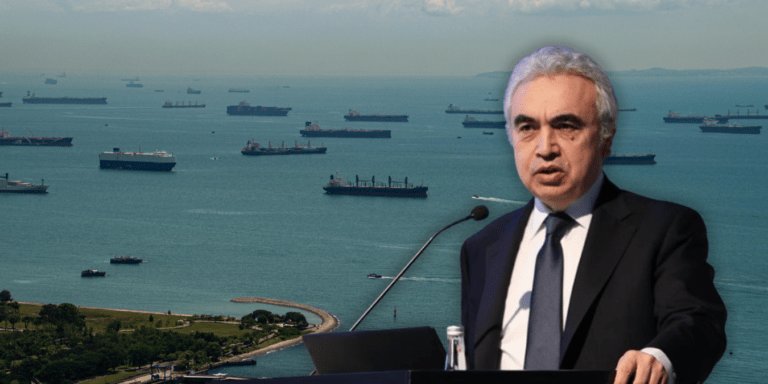
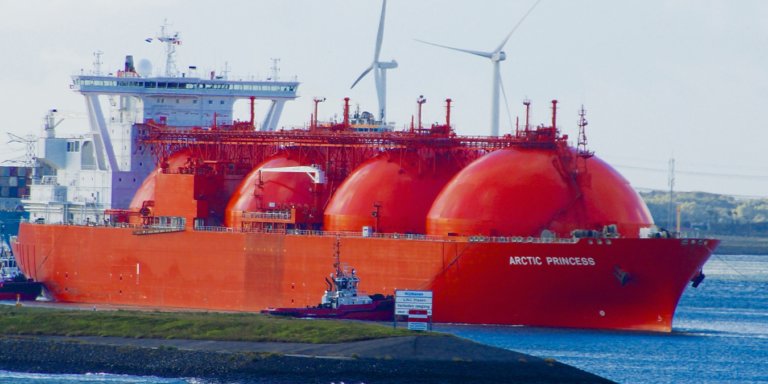
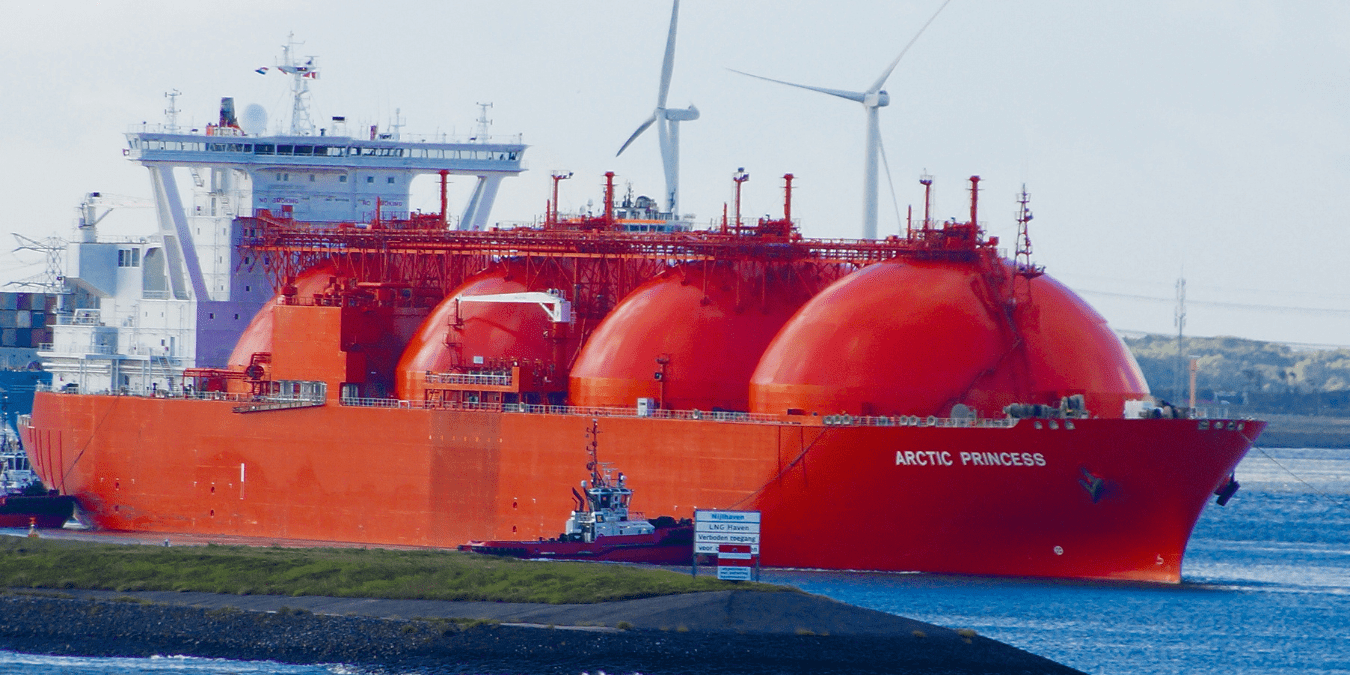
To understand the urban toll, you first have to understand the geography of dependency. The Strait of Hormuz is a 33-kilometre-wide corridor between Iran and Oman — barely wider than the English Channel at its narrowest point — and it handles approximately 20 percent of all global oil shipments and roughly one-quarter of all liquefied natural gas (LNG) trade every single day. According to the U.S. Energy Information Administration, oil flow through the strait averaged 20 million barrels per day in 2024. Al Jazeera reported that more than $500 billion in oil and gas flows through the waterway annually. Oxford Economics noted that around one-fifth of global oil and LNG transits the strait each day, worth over $1.3 billion including Iranian exports.
When the U.S.-Israel military operation against Iran began on February 28, 2026, and Iran responded by effectively halting tanker traffic through the strait by early March, the International Energy Agency characterized it as the “largest supply disruption” in modern energy history. Brent Crude surged past $120 per barrel. QatarEnergy declared force majeure on all LNG exports. IEA member countries coordinated a release of 412 million barrels from emergency reserves. But those numbers — dramatic as they are — still understate what the closure means for the daily lives of ordinary urban residents around the world.
The Three-Wave Urban Shock Model
Researchers at Georgia Tech’s Stewart School of Industrial and Systems Engineering published one of the most granular analyses of how Hormuz disruptions transmit through supply chains to end consumers. Their framework describes a sequential, three-wave process. The first wave is immediate and visible: fuel prices at city pumps spike within 72 hours. Diesel prices — the lifeblood of urban logistics, food delivery, and public transit — surged 18 to 25 percent within the first week of the closure, according to an analysis from Discovery Alert. Jet fuel tightened, and gas station “sold out” signs appeared in Hanoi, Vietnam, within days of the disruption.
The second wave arrives quietly but is far more structurally damaging. Because oil and gas underpin production, transportation, and logistics across every industrial sector, higher energy costs begin to migrate through supply chains over weeks and months. Naphtha — the petrochemical feedstock derived from crude oil that is used to produce plastics, packaging, solvents, textiles, and pharmaceutical packaging — is critically exposed. Roughly 85 percent of Middle Eastern polyethylene exports move through the Hormuz strait. When those flows stop, the cost of packaging a medicine bottle, a food container, or a consumer electronics box rises for every manufacturer from Mumbai to Manchester.
The third wave is the one that hits urban residents most visibly in their wallets: food price inflation. Natural gas from Gulf countries is the essential raw material for producing ammonia and urea, the world’s most widely used nitrogen fertilizers. When gas supply through Hormuz is disrupted, fertilizer production slows and becomes expensive, driving up the cost of growing wheat, cereals, vegetables, and oilseeds. Roughly 30 percent of global fertilizer trade transits the Hormuz chokepoint. A full closure of the strait, model simulations show, could raise global energy prices by over 5 percent and food prices by nearly 3 percent — even before panic buying or financial speculation amplifies the shock. In real-world markets, commodity prices during geopolitical crises historically overshoot these baseline projections significantly.
Cities as Amplifiers, Not Just Recipients
There is a structural reason why cities absorb energy shocks more severely than rural areas, and it is rooted in density, dependency, and the economics of urban food systems. Urban populations do not grow their own food. They are almost entirely dependent on supply chains — trucks, cold storage, distribution hubs, supermarkets — all of which are directly exposed to diesel and energy cost increases. When diesel surges by 20 percent in week one and agricultural input costs spike by 30 to 45 percent within two weeks, the combined pressure on urban food prices can reach levels that a city dweller’s budget simply cannot absorb.
The Atlantic Council’s Energy Source blog documented that the closure’s ripple effects are already moving into agricultural supply chains for plastics and food in the U.S. and globally. The Federal Reserve’s anti-inflation credibility is under renewed pressure because of this multi-wave shock, and if consumer inflation expectations become unanchored, urban households face not just higher prices but higher borrowing costs — a double blow for renters and first-time homebuyers. In Kansas, 30-year mortgage rates surpassed 6 percent within weeks of the closure intensifying. That is the Hormuz effect reaching a Midwestern American city far from any ocean.
In Asia’s manufacturing megacities, the exposure is even more direct. China ordered its refineries to stop exporting fuel in response to tightening domestic supply, creating shortages that cascaded upward into shipping costs for U.S. imports of consumer electronics and pharmaceuticals. Key manufacturing hubs across Asia — including China, India, Taiwan, and Japan — all rely on energy shipments through the strait. Oil prices had already increased by almost 30 percent since the beginning of the conflict, a sharper increase than global markets experienced at the onset of the Russia-Ukraine conflict in 2022.
The Developing City’s Asymmetric Burden
If wealthy cities in North America and Europe experience this crisis as a painful squeeze, cities in the developing world are experiencing it as a structural catastrophe. The study published in Business Today, drawing on model simulations, found that the economic damage from a full Hormuz closure is dramatically uneven — and it falls hardest on energy-importing developing countries. Zambia faces the highest welfare loss at approximately 5.49 percent, followed by Sri Lanka at 3.47 percent, Syria at 2.86 percent, and Congo at 2.38 percent. India, with its enormous urban population, faces a welfare decline of around 1.78 percent in the short run. The United States, by contrast, faces relatively small welfare losses.
This asymmetry is not accidental. Developing-country cities depend on imported fuel, imported fertilizer, and have limited domestic alternatives when global supply chains are disrupted. In sub-Saharan Africa, the Atlantic Council noted that people in the continent’s largest economies spend nearly 50 percent of their income on food. For urban residents in Lagos, Nairobi, or Dhaka, a 3 percent rise in food prices as a headline global average translates into a local market shock that can double in magnitude — because those cities rely disproportionately on imported grains, cooking oils, and fertilizer-intensive produce. The Atlantic Council documented that countries such as Kenya, Tanzania, and Mozambique, which rely on Hormuz-transiting fertilizer trade, face dramatically reduced crop yields as a direct consequence. South Sudan and Somalia, with large food-insecure populations and large food import bills, are seeing humanitarian logistics slowed by rerouted shipping.
The UN has already issued warnings that align with this picture. The conflict could lead to 3.7 million job losses and push around four million more people into poverty, particularly in vulnerable countries. Four million people across the Gulf itself could be pushed into poverty. UNCTAD, in its March 2026 assessment, confirmed that Hormuz disruptions are deepening global economic strain across trade, prices, and finance — with transit having been at a near halt for over a month.
The Food Chain Breakdown in Urban Markets
The most undercovered dimension of this crisis — and the one that new research is only beginning to document — is the specific pathway through which energy disruptions become food crises in cities. The journey from a closed strait to an empty supermarket shelf is not intuitive, but it is systematic. Food Navigator traced the direct commodity exposure: Iran’s closure is sharply driving global energy prices higher, pushing soybean oil prices upward through energy correlation, blocking wheat and corn flows into the affected region, and disrupting dairy and seafood imports that rely on halted shipments. Energy shocks are raising transport costs and disrupting the Asia-Europe food supply chain that feeds hundreds of millions of urban consumers.
The ammonia-urea-fertilizer-crop chain is particularly insidious in its urban impact because it operates on a seasonal delay. Fertilizer buyers work on yearly contracts. Refineries cannot quickly switch crude sources. As a result, the first few months after any closure see the sharpest price spikes in energy-intensive sectors, but the agricultural damage — reduced planting, lower yields — does not fully materialize in consumer food prices until the next crop season. This means that urban residents who believe the immediate crisis has stabilized are, in fact, still absorbing the true food-price shock months later. The Business Today analysis is explicit on this point: even if trade flows adjust, the damage to food production could last for an entire crop season.
Why There Are No Easy Exits
One of the most consequential findings from the Georgia Tech research team is their conclusion about structural substitutability — or rather, the lack of it. “Choke point vulnerability arises when a large portion of flow depends on a route that is hard to substitute,” said Mathieu Dahan, associate professor in the Stewart School. “Hormuz has no scalable alternatives with sufficient capacity.” Saudi Arabia and the UAE have alternative pipeline routes, but they are limited in capacity and cannot replicate the volume that transits the strait. ABN AMRO’s oil market analysis confirmed that the effective closure of the strait caused a shortfall of over 20 million barrels per day of crude oil and refined products from the Gulf region — a gap that no combination of strategic reserves, alternative routes, and demand reduction can fully cover in the short term.
The IEA’s coordinated release of 412 million barrels of strategic reserves provides some cushion, but Bloomberg analysis noted starkly: if the strait stays closed, the world will have to significantly reduce its oil and gas consumption — but not before prices spike to a level that inflicts serious economic damage on households worldwide. That spike is most acutely felt in cities, where consumption of energy-dependent goods and services — commuting, heating, packaged food, medical supplies, plastic goods — is highest per capita.
The Long Urban Tail of the Crisis
Beyond the immediate wave of price shocks, researchers warn of a longer structural realignment that will disproportionately reshape urban economies. Energy-intensive manufacturing industries — aluminium smelting, cement production, glass manufacturing, chemical processing — are already reducing capacity or deferring production in high-cost regions. The Middle East accounted for roughly 21 percent of U.S. unwrought aluminum imports in 2025. When smelters shut down or reduce output, the downstream consequences ripple into construction, packaging, and consumer goods in every city that relies on those materials.
Georgia Tech’s Alan Erera noted that strait disruptions raise costs across manufacturing and distribution, and those decisions — particularly in energy-intensive industries — are difficult and slow to reverse. An aluminium smelter that shuts down in the Gulf due to constrained gas supply does not restart overnight when a shipping lane reopens. The urban construction projects, the beverage industry, the automotive supply chains that depend on that aluminium will feel higher input costs for months or years after the crisis formally ends. This is the hidden urban toll that does not appear in oil price charts.
The Atlantic Council’s broader analysis documented that the most concerning long-run implication of the Hormuz closure is the restriction on fertilizer access, for which natural gas is the primary feedstock. Roughly 30 percent of global fertilizer trade transits the chokepoint, and the structural dependency that has been built up over decades means that diversification of supply — whether of energy, fertilizers, or agricultural inputs — is a years-long project, not a months-long adjustment. The Stimson Center’s analysis of global markets and the Hormuz closure added another dimension: a soft closure of the strait can inflict much of the same damage as a declared blockade, meaning that even partial resolution of the current crisis leaves cities exposed to prolonged cost pressures.
What Cities and Governments Must Reckon With
The evidence assembled across these studies points to a set of policy and planning failures that urban governments, national energy ministries, and international institutions must urgently reconsider. The first is the chronic under-investment in strategic food and energy reserves at the city level. Strategic petroleum reserves exist at the national level in IEA member countries, but urban food buffer stocks — the kind that can absorb a 3-month agricultural supply disruption without triggering retail panic — are virtually non-existent in most cities in the developing world.
The second is the structural exposure of urban food systems to global fertilizer supply chains. The Down to Earth analysis published in March 2026 highlighted that annual trade flows worth approximately $1.2 trillion from five Gulf countries — Iran, the UAE, Qatar, Kuwait, and Bahrain — could be affected by a prolonged Hormuz closure. The agricultural inputs within that trade figure are what translate, eventually, into the price of bread in Lagos or the cost of dal in Lucknow. Urban planners and food security agencies have treated this as an abstraction; the 2026 crisis has made it concrete and urgent.
The third reckoning is about energy transition speed. The Atlantic Council documented that the Hormuz crisis is accelerating policy shifts toward renewable energy and domestic energy production across multiple countries. Cities that had made serious investments in solar generation, electric public transit, and energy-efficient buildings are proving measurably more resilient to the current oil shock. Cities that had deferred those investments — often citing cost — are now paying a far higher price in energy inflation, reduced mobility, and industrial slowdown.
The Study’s Most Uncomfortable Conclusion
The most uncomfortable finding from the emerging body of research on the 2026 Hormuz closure is not the scale of the energy shock — it is the predictability of it. The Georgia Tech team, the Complexity Science Hub Vienna, UNCTAD, the UN Food and Agriculture Organization, and Oxford Economics had all modeled scenarios remarkably close to what is now unfolding. The chokepoint was known. The dependency was documented. The cascade from energy to fertilizer to food to urban poverty was mapped in academic literature years before a single tanker was stopped in the strait.
What was missing was not intelligence or analysis. What was missing was the political will and institutional capacity to treat a narrow stretch of water between Iran and Oman as a genuine urban infrastructure risk — on par with failing bridges, ageing power grids, or deteriorating water systems — and to invest accordingly in redundancy, resilience, and alternatives. The cities that are paying the highest price today are the ones whose governments treated Hormuz as someone else’s problem. The study’s verdict, delivered through price data, welfare loss calculations, and supply chain modeling, is clear: in the geography of global energy risk, there are no bystander cities. When the strait closes, the bill arrives everywhere — but it is addressed, first and most painfully, to those who can least afford to pay it.
This article draws on research from Georgia Tech’s Stewart School of Industrial and Systems Engineering, the Complexity Science Hub Vienna, UNCTAD, the Atlantic Council, Oxford Economics, the U.S. Energy Information Administration, ABN AMRO Research, and the United Nations. All data cited reflects analysis published between February and April 2026.