The Man Who Pulled Noodles — and Pulled Back the Curtain on China's Global Spy Machine
A 24-Year Insider Just Told the World How the CCP Watches, Controls, and Punishes Its Citizens — Everywhere on Earth
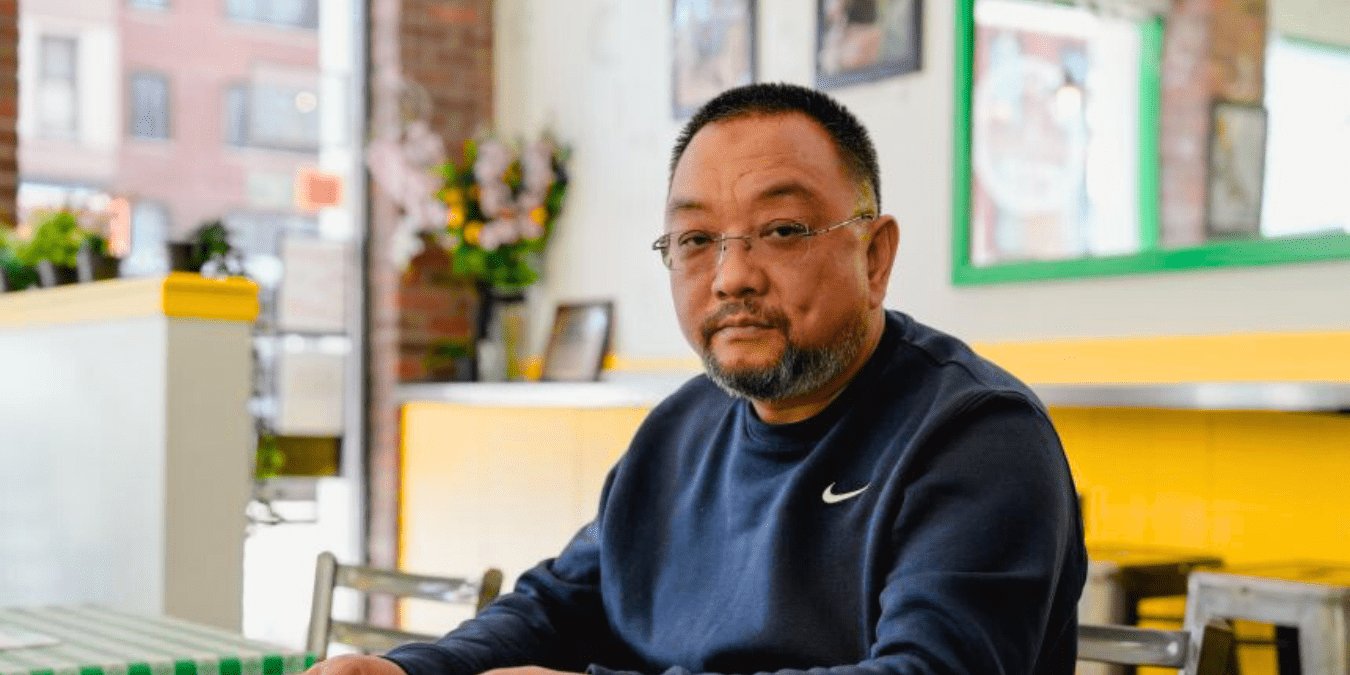
Every morning, Ma Ruilin arrives at his small Chinese restaurant in New York City, wraps his hands around a smooth rope of dough, and pulls it into noodles. It is quiet, methodical work — the kind that gives a man time to think.
And Ma Ruilin has a great deal to think about.
Just a few years ago, he wasn’t pulling noodles in a Manhattan kitchen. He was attending Chinese Communist Party briefings in Lanzhou, capital of Gansu province. He was compiling surveillance databases. He was closing mosques and expelling imams. He was deploying informant networks inside religious communities and sending intelligence up a chain of command that sent innocent people to prison camps.
For 24 years, Ma Ruilin was a servant — and a builder — of one of the most sophisticated surveillance and repression machines in human history.
Then he walked away from it.
And on February 27, 2026, in more than three hours of interviews with CNN, Ma revealed his role in designing and implementing programs that suppressed China’s religious minorities — and detailed the expansion in scope and scale of China’s United Front Work Department (UFWD), a shadowy branch of the Communist Party where he worked.
Ma Ruilin is a 50-year-old Hui Muslim who formerly served as a Deputy Secretary of the Gansu Provincial Communist Party Committee of the UFWD. He is now one of the rarest things on earth: a genuine, named, on-camera whistleblower from deep inside the Chinese Communist Party.
What he revealed is not simply a personal story of escape. It is a precise, insider map of a global surveillance architecture that does not stop at China’s borders — one operating right now in New York, London, Sydney, Toronto, and cities across the entire democratic world.
Who Is Ma Ruilin — And Why Does His Voice Matter So Much?
Ma Ruilin is not a defector in the dramatic Cold War sense. He is something rarer and arguably more important: a mid-level party bureaucrat who spent nearly a quarter century inside the operational machinery of Chinese political control, built parts of it with his own hands, and decided the world deserved to understand exactly how it works.
From his small hometown in Lintan county, tucked between the snow-covered mountains on the edge of the Tibetan Plateau, Ma Ruilin grew up dreaming of escaping the long, brutal winters. He moved to Lanzhou for his university studies, then spent 24 years rising through the ranks of the party system, finally becoming a deputy secretary of the Gansu Provincial Communist Party Committee of the United Front Work Department.
CNN has confirmed Ma’s identity as a former mid-ranking Chinese official after reviewing documents, photographs, and phone records — however, CNN cannot independently verify his claims.
Why speak at all? Because the personal cost is devastating. Ma has family members who remain inside China, now facing pressure and potential consequences because of his decision. This is not theoretical — it is one of the central, deliberate weapons of the surveillance system he is exposing.
When asked why he chose to speak, his answer was haunting: “The system has always been evil. If you don’t leave, you’ll keep doing evil there.”
The Machine Behind the Man: Understanding the UFWD
Created during the era of revolutionary leader Mao Zedong, the United Front has since morphed under present-day leader Xi Jinping into a vast propaganda and influence machine designed to pressure citizens at home and overseas to support Chinese Communist Party (CCP) policies.
Both Mao and Xi have described united front strategy as one of China’s “magic weapons.” Since 2012, Xi has dramatically expanded the UFWD’s scope, budget, and authority. The department is heavily entwined with the public and state security apparatus, creating “one chessboard, all together, one whole,” Ma said.
This is critical: the UFWD is not a standalone bureaucracy. It is organically fused with China’s intelligence services and the entire party-state. There is no meaningful separation between political monitoring, religious suppression, and overseas intelligence gathering. They are one organism.
Experts say in recent years, the UFWD’s tactics have evolved to become increasingly aggressive. “The United Front has been weaponized,” said Laura Harth, a director at human rights organisation Safeguard Defenders, adding that suppression tactics are the “other side of the coin” to influence campaigns.
Ma did not read about this organisation in reports. He operated inside it for nearly a quarter century, designing and running its programmes.




Inside the Surveillance Web: What Ma Did for 24 Years
He said his department was involved in closing down mosques, removing domes, expelling imams, hiring informants, and installing surveillance cameras at mosques in Gansu — and the information they gathered led to innocent people being sent to prison camps or jail.
This matches what independent investigators found nationally. Surveillance cameras have been installed in mosques and Hui individuals are encouraged to report on the religious activities of others. Imams are required to demonstrate loyalty to the state, attend monthly ideological training, and pass annual tests to retain their licences, with unlicensed mosques being shut down.
The turning point in Ma’s conscience came in 2014. Ma said he started to pay more attention around 2014, when China began a brutal crackdown of ethnic Uyghurs and other Muslim minorities in the western Xinjiang region — a policy the US government has described as genocide. The US and the UN estimate that up to two million people were detained in a giant network of internment camps, which China described as voluntary “vocational training centres.”
The Chinese government has imprisoned more than one million Uyghurs since 2017 and subjected those not detained to intense surveillance, religious restrictions, forced labour, family separations, and forced sterilisations. The United States declared in 2021 China’s actions constitute genocide, while a UN report later determined they could amount to crimes against humanity.
One detail in Ma’s testimony stands alone in its darkness. Starting in 2018, Ma said Xinjiang officials were also sent on visits to Rwanda to study “a real genocide,” referencing the 1994 massacres that killed hundreds of thousands. He said the trips were designed to reduce their guilt when they saw how “benevolent” the Party is in comparison — but also to give them new ideas. “It teaches you how to use even more brutal methods to torment people,” he said.
Chinese Communist Party officials. Travelling to Rwanda. Not to atone. To benchmark.
The Surveillance That Never Stops at the Border
Here is what makes Ma’s testimony a global warning, not merely a Chinese story.
Ma Ruilin personally escorted Chinese Muslims on their Hajj pilgrimages to Mecca in Saudi Arabia multiple times. He was not there as a fellow pilgrim. He was there as a UFWD monitor. On the holiest ground in Islam, in a foreign sovereign country, the surveillance mission did not pause for prayer.
“There is definitely (UFWD) work in the United States — this is beyond doubt,” Ma said, adding that he once saw an internal document showing that some UFWD informants were arrested in the US.
This matches exactly what the FBI has been fighting for years. “This is a campaign by the Chinese government to silence dissent on US soil,” Roman Rozhavsky, Assistant Director of the FBI’s Counterintelligence and Espionage Division said. “It’s been very aggressive and widespread.” Rozhavsky said “hundreds” of Chinese operatives are working inside the US — a “gross breach of US sovereignty” — and many more working remotely from China.
Six Weapons Used Against Overseas Chinese Communities
Ma’s testimony, combined with verified FBI investigations and reports from Freedom House and Safeguard Defenders, reveals six core tactics used globally:
1. Infiltrating Student Groups and Community Associations
The UFWD has tentacles across some student organisations along with community groups in the US known as “hometown associations.” Beijing insists these are cultural. The FBI says they may also serve as recruiting grounds for transnational repression. According to Ma, sometimes the department recruits people with money or benefits, adding that there are many ways to win over someone and corrupt them.
2. Family Leverage — Relatives as Hostages
This weapon requires no physical presence abroad. If a Hong Kong activist in Toronto publishes a protest video, their parent in Shenzhen may receive a security visit within days. Chinese police are reported to have forced family members to call their relatives abroad on WeChat in order to warn them against engaging in human rights activities. For overseas Chinese with family inside China — which is virtually all of them — this threat is permanent and invisible.
3. WeChat as Surveillance Infrastructure
One of China’s newest avenues for deploying repressive tactics overseas has been via the WeChat platform, a messaging, social media, and financial services app that is ubiquitous among Chinese users around the world, and through which the party-state can monitor and control discussion among the diaspora. Most overseas Chinese maintain WeChat because cutting it off means cutting off contact with family. The CCP has built its surveillance model around that dependency.
4. Covert “Overseas Police Stations”
In 2022, Safeguard Defenders documented more than 50 unofficial Chinese police service stations secretly operating in democratic cities across Europe, North America, and Asia — presented as administrative service centres but functioning as pressure and monitoring outposts. Multiple Western governments launched investigations and ordered closures.
5. Organised Physical Intimidation
Anti-CCP protesters also had violent confrontations with pro-Beijing groups near the 2023 APEC summit in San Francisco, which was attended by Xi. These are not spontaneous gatherings — they are coordinated through UFWD-connected networks. Lin Hai, a Chinese national in New York, described being beaten by pro-Beijing protesters in 2019, saying: “I never expected to be threatened or beaten on American soil.”
6. The “Five Poisons” — China’s International Enemies List
People connected to the UFWD have been accused of harassing and intimidating activists and critics, largely from groups China defines as the “Five Poisons” — advocates for independence or greater freedom for Taiwan, Hong Kong, Tibet, Xinjiang, and followers of the banned spiritual movement Falun Gong. If you publicly support, fund, or platform any of these groups — anywhere on earth — you are potentially on an active UFWD watchlist.
The Documented Proof: This Is Not Just One Man’s Story
Ma’s testimony is corroborated by a vast body of independent evidence. Freedom House has established that China conducts the most sophisticated, global, and comprehensive campaign of transnational repression in the world — efforts by the Chinese Communist Party to pressure and control the overseas population of Chinese and members of minority communities.
The Chinese government intensified its repression across the country in 2025, with President Xi Jinping mobilising the government to impose strict ideological conformity and loyalty to him and the Chinese Communist Party. As diaspora communities grow vocal against government abuses, Beijing has intensified efforts to silence them, harassing their families and friends in China, and imprisoning those who return.
A 2025 investigation of China’s global repression of government critics published by the International Consortium of Investigative Journalists, drawing on interviews with 105 dissidents and activists spanning 23 countries, found that 60 of those interviewed believed they had been surveilled by Chinese agents. Twenty-seven interviewees said they were victims of online smear campaigns, while 19 experienced hacking attempts. Half of the targeted dissidents reported that their family members in China faced harassment and interrogation by police and security officials.
On February 11, 2026, a Hong Kong court convicted Kwok Yin-sang, the father of US-based democracy activist Anna Kwok, under the National Security Law, marking the first such conviction targeting a family member of an exiled activist. The message to every overseas dissident was unmistakable: we can reach those you love, even if we cannot reach you.
Why Ma’s Voice Is Historically Significant
Whistleblowers from inside the CCP are vanishingly rare. Party membership confers enormous advantages — promotions, housing, business connections, children’s educational placements — all contingent on total loyalty. Defection means losing everything, and it means putting everyone who loves you at risk.
What makes Ma’s testimony uniquely powerful is not simply that he left — it is that he is speaking publicly, under his real name, with full understanding of the consequences. Ma Ruilin regrets the work he performed on behalf of the Chinese government.
But more than regret, he bears witness. And his witness is specific, operational, and devastating. “The CCP has a systematic plan of genocide against minorities — and step by step, they are implementing it — Uyghurs, Mongols, Tibetans, and Hui,” Ma said.
This is not a foreign observer’s characterisation. This is the admission of a man who, by his own account, was part of the implementation.
What This Means for the World
The system Ma Ruilin has described does not stop at China’s borders. It operates inside student associations and community groups on university campuses worldwide. It hides inside messaging apps on hundreds of millions of phones. It uses the families of dissidents as leverage without ever crossing a border. In September 2025, several media and civil society reports documented how the CCP is using digital technologies to monitor and control Uyghurs and other minorities, as well as to target Uyghurs and dissidents living abroad.
For every country with a Chinese diaspora — which is virtually every country on earth — Ma’s testimony is both a warning and an explanation. The surveillance state he helped build in Gansu is not a provincial programme. It is a global infrastructure. And it is still running.
Ma Ruilin left. He is talking. The only question left is whether the rest of the world is paying close enough attention.
Disclaimer: This article is for informational and educational purposes only. All specific claims attributed to Ma Ruilin are sourced from CNN’s verified exclusive interview with Ivan Watson, published February 27, 2026. CNN confirmed Ma’s identity but notes it cannot independently verify all claims. Supporting context is drawn from Freedom House, Human Rights Watch, the Australian Strategic Policy Institute, Safeguard Defenders, the International Consortium of Investigative Journalists, the Council on Foreign Relations, the US Holocaust Memorial Museum, and the Brookings Institution. China’s government disputes these characterisations.
Primary Sources: CNN (Ivan Watson, February 27, 2026) · FBI Counterintelligence Division (Roman Rozhavsky) · Safeguard Defenders (Laura Harth) · Freedom House · Human Rights Watch World Report 2026 · ICIJ 2025 · Council on Foreign Relations · Brookings Institution