How a War in Iran Is Now Taxing Every American Business and Consumer — The Hidden Costs in Diesel, Jet Fuel, and Supply Chains
You do not have to own a gas-powered vehicle, operate a trucking fleet, or run an import business to feel the financial bite of the war in Iran. The conflict, sparked by U.S.-Israeli strikes on Iran in late February 2026, has quietly inserted itself into the price of every box of cereal on your grocery shelf, every airline ticket you book, and every package delivered to your door — and the damage is widening by the week.
The Chokepoint That Changed Everything
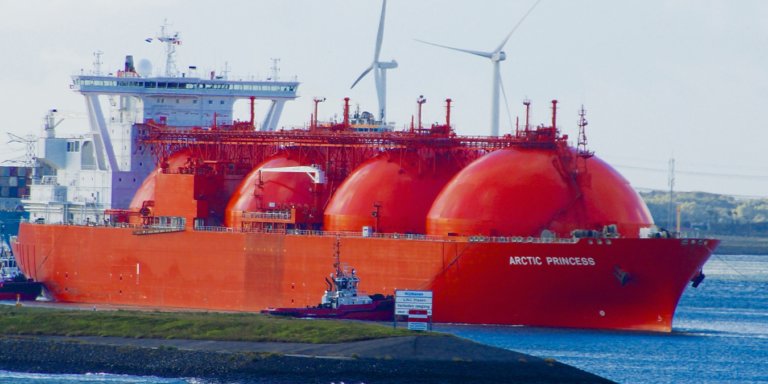
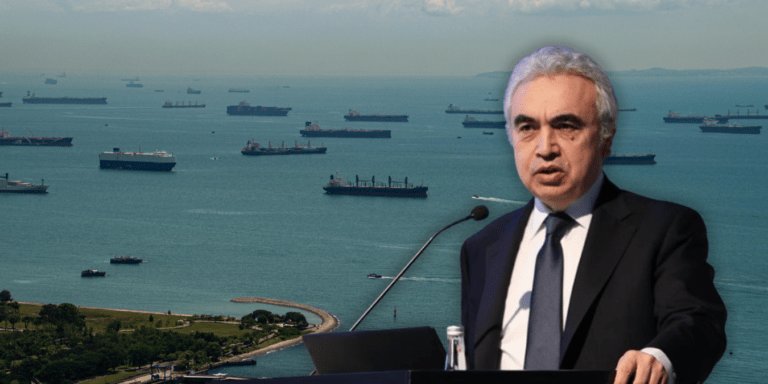
At the geographic heart of this economic crisis sits the Strait of Hormuz, a narrow stretch of water between Iran and Oman no wider than 21 miles at its narrowest point. Before the war began, roughly 138 vessels passed through the strait each day, carrying approximately 20% of the world’s entire petroleum supply to global markets. Since March 28, 2026, that traffic has collapsed to just 20 vessels per day — a reduction of more than 85%. This is not merely a Middle Eastern problem. Because the oil market operates as a single interconnected global system, any significant supply shortfall immediately ripples into prices across every market on earth, including the United States.
The closure has not required a formal military blockade to be economically devastating. As the Stimson Center has noted, what is occurring is effectively a “soft closure” — shipowners facing drone and missile risks, electronic interference, soaring insurance premiums, and uncertain passage conditions have simply stopped sailing before any official ban was ever declared. All five major container shipping lines have suspended Hormuz transits entirely. The result is commercially identical to a hard blockade: goods simply are not moving through.
The financial drain on the global economy from this single waterway’s closure exceeds $735 million per week and $3.15 billion per month in oil revenues alone. But the broader economic damage — measured in supply chain disruptions, spiking fuel costs, rising insurance premiums, and cascading inflation — is orders of magnitude larger, and American businesses and consumers are absorbing far more of it than most news coverage has conveyed.
Diesel: The Silent Tax on Every American Transaction
Of all the fuel categories disrupted by the Iran war, diesel is the one that touches virtually every American regardless of their personal driving habits. Diesel powers the 18-wheelers that stock supermarket shelves, the freight trains that move manufactured goods, the construction equipment building new homes, the farm machinery harvesting crops, and the generators keeping critical infrastructure running during outages. It is, in the most literal sense, the circulatory fluid of the American economy.
Before the conflict escalated, the national average price of diesel in the United States was approximately $3.80 per gallon. By March 23, 2026, that figure had surged to $5.375 per gallon — nearly $1.81 higher than a year ago and 30.4 cents higher than the previous week alone. In California, the average had already surpassed $6.87 per gallon. As of late March, diesel prices across the U.S. stood more than 40% above pre-conflict levels, and the U.S.-Israeli war on Iran has sent diesel costs up 50% according to Reuters reporting.
Jason Miller, the Eli Broad endowed professor of supply chain management at Michigan State University, has broken down exactly where this pain lands. For freight priced on contract, shippers absorb those higher diesel costs through elevated freight rates — meaning the businesses receiving goods pay more, and ultimately pass that cost to consumers. For freight priced on the spot market, carriers themselves absorb the pain, often making little to no profit, which accelerates trucking company failures and tightens available capacity further. Either way, the consumer ends up holding the bill at checkout.
For small trucking operators and owner-operators — who make up the backbone of American last-mile delivery — the math has become existential. Trucking companies exposed to spot-market pricing face particularly severe financial challenges because fuel surcharge protections that larger carriers use are often unavailable to smaller operators. Companies are now slowing speeds to improve fuel economy, cutting empty miles, and declining unprofitable freight loads outright. When capacity shrinks in trucking, delivery times lengthen, and the cost to ship anything rises — from a pallet of electronics to a case of bottled water.
Jet Fuel: The Airline Crisis Americans Haven’t Fully Priced In
While the diesel story has received some attention, the jet fuel crisis unfolding from the Iran war may ultimately prove more disruptive to the average American’s budget. Jet fuel is the refined petroleum product most vulnerable to supply interruptions because it requires specialized storage infrastructure and is historically maintained at some of the lowest inventory levels of any fuel type.
In Asia’s key trading hub of Singapore, jet fuel prices rocketed 72% to a record $225.44 per barrel in early March 2026. TotalEnergies CEO Patrick Pouyanné reported that jet fuel prices had surged to $200 per barrel at their peak. This is not simply a problem for airlines in distant markets — the global aviation fuel market is integrated, and price shocks in Asia and the Middle East transmit into U.S. airline operating costs within weeks.
There is a structural reason jet fuel shortages could be worse than the headline crude oil numbers suggest. Much of the oil that previously flowed through the Strait of Hormuz is classified as “sour crude” — a grade specifically valued for its higher yield of middle distillates, including jet kerosene and diesel. Even if global refiners successfully source alternative crude from Africa or South America, these substitute crudes tend to be lighter grades that produce an excess of gasoline and naphtha while falling significantly short on jet fuel and diesel production. This means even a partial reopening of the strait would not immediately resolve the middle-distillates shortage — a gap that takes months, not weeks, to close.
Shell’s CEO Wael Sawan described the situation as a “chain reaction of shortages” extending across major Asian economies and expected to reach Europe by April 2026. China has halted oil product exports entirely, and Thailand has begun rationing gasoline. These actions by large consuming nations further tighten global supply, putting upward pressure on prices in markets that remain open — including the United States.
The Supply Chain Shock Hitting Small Businesses Hardest
The Iran war’s impact on American businesses extends far beyond what happens at the gas pump. The near-complete closure of the Strait of Hormuz has created what trade professionals are calling a “perfect storm” — shipping delays, escalating freight costs, dwindling capacity, and increasingly cautious consumers, all hitting simultaneously.
A shoe designer importing footwear from Vietnam, for instance, now pays approximately $7,000 per shipping container — double the pre-war cost of $3,500. That increase is driven not by any direct shipment through the Strait of Hormuz, but by the global rerouting congestion and surging marine insurance premiums that have radiated outward from the conflict. Shipping lead times for Vietnam-to-U.S. cargo have extended by three to four weeks. All five major ocean carriers — including Hapag-Lloyd and CMA CGM — as well as parcel delivery giants UPS and FedEx have deployed higher fuel surcharges in recent weeks.
An electronics retailer in Chicago, facing free-delivery commitments to customers, has not yet received the fuel bill for March — but he is already bracing for the impact, knowing it will reshape the economics of every shipment his company sends. A pistachio farmer in the U.S. saw approximately $5 million worth of product stranded at sea when the Strait of Hormuz effectively closed. A landscaper in Kansas City began hoarding fertilizer as prices surged, knowing that Gulf-sourced fertilizers account for a critical share of U.S. agricultural inputs.
The Thomson Reuters analysis of the conflict is particularly sobering for corporate risk teams: supply chain disruptions propagate on a two-to-four-week lag, meaning that the full economic pain from tankers anchored in late March 2026 had not yet arrived in American warehouses and store shelves as of early April. Businesses that failed to immediately audit their Gulf supply chain exposure, secure alternative freight capacity, and prepare for escalating cyber threats from Iran and its allies were being warned they would fare significantly worse than those that acted in the first days of the conflict.
Food, Fertilizer, and the Coming Grocery Shock
Perhaps the most underreported dimension of the Iran war’s economic impact on American consumers is its impending effect on food prices. The connection runs through multiple pathways, each compounding the others in ways that will take months to fully materialize at the supermarket checkout.
The most direct pathway runs through fertilizer. The Gulf region is a major global supplier of nitrogen-based fertilizers, and the closure of the Strait of Hormuz has restricted fertilizer shipments arriving in the U.S. ahead of the spring planting season. Delays in fertilizer availability do not simply raise input costs for farmers — they can reduce crop yields in the following harvest cycle, meaning higher food prices could persist well into 2027. A Kansas City landscaper interviewed by the Associated Press reported that two of his suppliers notified him immediately after the war began to expect price increases and advised him to order ahead of those rises.
The second pathway runs through petrochemicals. Oil and its derivative products are integral components of plastic packaging, pharmaceuticals, and synthetic agricultural inputs. Current shortages in Gulf petrochemical supply are expected to translate into higher consumer prices across a wide range of packaged goods — with a lag of several months as existing inventory is depleted. Helium, sourced significantly from Gulf production, is also facing potential shortage conditions — a development that could disrupt semiconductor manufacturing, impacting car production and consumer electronics availability.
The third pathway runs through the diesel cost embedded in all food transportation. Rising diesel prices are inflating the operating costs of every truck, train, and refrigerated vehicle that moves food from farm to distribution center to store. These costs are already beginning to filter into the prices that grocery distributors charge retailers, and retailers will eventually pass them to shoppers. Goldman Sachs has raised its assessment of U.S. recession risk over the next 12 months to 30% as a result of the combined energy and supply chain shock.
The Dual Chokepoint Problem Amplifying Everything
What makes the current disruption historically unprecedented is that it is not a single-chokepoint crisis. With the Strait of Hormuz effectively shut and Houthi forces resuming attacks in the Red Sea and Bab el-Mandeb corridor, roughly one-third of all global seaborne crude trade is now compromised simultaneously. The Red Sea — which had been largely closed through 2025 due to Houthi attacks and had been anticipated to reopen in 2026, providing some relief to global shipping costs — will now likely remain closed throughout 2026. This compounds every cost discussed above: longer shipping routes, higher fuel consumption per voyage, more capacity absorbed by rerouting, and less freight space available at any given price point.
Brent crude oil, which stood at roughly $80 per barrel at the onset of the conflict, surpassed $100 per barrel by late March and touched $120 per barrel before pulling back toward $106 per barrel as of late March and April 1. Iran has explicitly warned that oil could reach $200 per barrel if the conflict escalates further, and that figure has been validated as a plausible worst-case scenario by major investment banks and energy consultancies. Even the midpoint of the current trajectory represents the most severe energy supply disruption since Russia’s invasion of Ukraine in 2022.
Oxford Economics and TS Lombard have both outlined divergent scenarios for where the U.S. economy ends up: in TS Lombard’s framework, the country faces either a supply-shock recession, a stagflationary inflation surge, or — in the best case — a managed re-acceleration once supply chains adapt. The firm believes supply chains will sustain long-term structural scarring regardless of which path unfolds, as global middle powers accelerate efforts to reduce their dependence on U.S.-led trade systems in response to American military action.
What American Businesses and Consumers Can Do Right Now
The war in Iran is an external geopolitical event, but the economic decisions made by businesses and households in the coming weeks will determine how much of its financial damage becomes permanent. For businesses, Thomson Reuters and supply chain experts recommend an immediate audit of any Gulf supply exposure — direct or indirect — followed by securing alternative freight capacity before it disappears and locking in fuel surcharge protections wherever possible. Companies with inventory flexibility should consider front-loading orders before the two-to-four-week supply chain lag delivers the next wave of price increases.
For consumers, the most actionable near-term advice is to reduce discretionary fuel consumption where possible, since the national average for regular gasoline has already crossed $4 per gallon, and analysts expect further increases if the Strait of Hormuz remains closed into summer. Households relying on heating oil or propane should contact suppliers promptly, as middle-distillate shortages are worsening across multiple fronts as of early April 2026. Grocery budgets should be planned with the expectation of continued food price increases over the next two to three quarters, driven by the compounding effect of fertilizer shortages, higher trucking costs, and plastic packaging price inflation.
The hidden tax of the Iran war is not listed as a line item on any invoice. It appears instead as a freight surcharge quietly added to a shipping quote, a diesel fuel surcharge folded into a delivery fee, a grocery price that crept up by twenty cents without explanation, and an airline ticket that now costs $80 more than it did in January. Every American business and consumer is paying it. The only variable is how much more of it is still on its way.