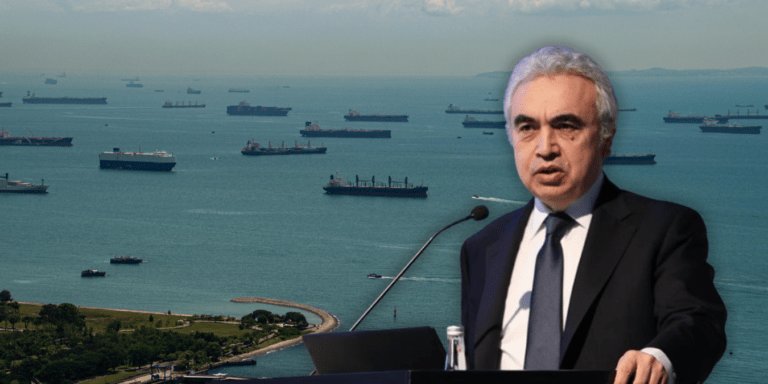
Beyond Oil: The 9 Commodities That Markets Forgot Are Also Being Crushed by the Hormuz Closure — Aluminum, Fertilizer, and More
When the Strait of Hormuz makes headlines, the conversation almost always defaults to crude oil. Analysts rush to update Brent forecasts, energy traders glue themselves to screens, and television pundits debate gasoline prices at the pump. It is an entirely predictable media reflex — and it leaves a massive blind spot. The Strait of Hormuz is not merely an oil corridor. It is the jugular vein of the global commodity system, and when it tightens, the pain radiates far beyond the petroleum complex into industries that most investors, policymakers, and consumers rarely associate with Persian Gulf geopolitics.
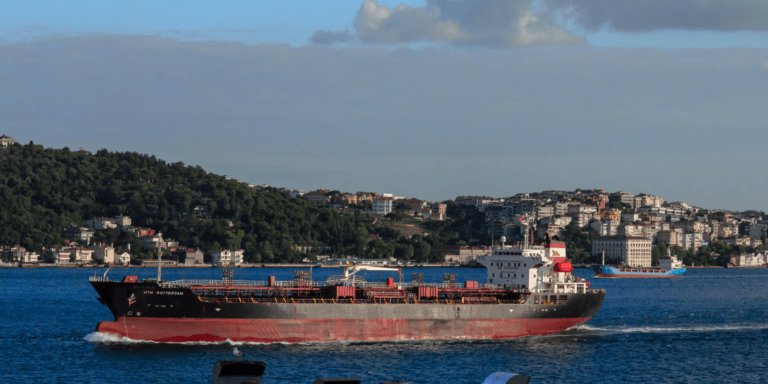
The strait, which narrows to roughly 33 kilometers at its tightest navigable point, handles an estimated 20 to 21 million barrels of oil per day — about one-fifth of the world’s total petroleum consumption. That statistic is cited so frequently that it has become the entire story. But flowing alongside those tankers are liquefied natural gas carriers, bulk carriers loaded with petrochemical feedstocks, vessels transporting aluminum oxide, ships moving sulfur and ammonia for global fertilizer supply chains, and container ships carrying finished industrial goods. A serious disruption does not just raise your energy bill. It reprices the food on your table, the car you drive, the packaging around your medicine, and the fertilizer sustaining the farms that feed a billion people. Understanding the full commodity map of Hormuz exposure is not an academic exercise. It is essential knowledge for anyone trying to navigate supply chains, investment portfolios, or public policy in an increasingly fragile world.
Why Hormuz Is a Multi-Commodity Chokepoint
The Gulf region’s commodity significance has compounded steadily over the past four decades. Saudi Arabia, the UAE, Qatar, Kuwait, and Iraq collectively sit atop some of the world’s largest reserves not only of hydrocarbons but of the natural gas liquids, petrochemical precursors, and mineral inputs that modern industrial economies depend on. Qatar alone accounts for roughly 20 to 25 percent of global liquefied natural gas trade, virtually all of which exits through Hormuz. The UAE has built one of the world’s most sophisticated aluminum industries, powered by cheap gas, and exports a substantial share of its output through Gulf waters. Saudi Arabia’s SABIC and other petrochemical giants ship ethylene, propylene, polyethylene, and polypropylene to Asia and Europe through the same strait.
This geographic concentration of supply creates a structural vulnerability that markets chronically underappreciate during periods of stability. Disruption scenarios — whether from military conflict, naval mining, drone attacks on shipping, or insurance market freezes — activate a cascade of commodity repricing events that can take weeks to fully surface in data but can be devastating once they do. The nine commodities examined below represent the most consequential non-oil exposures, ranked not by headline drama but by the depth of their supply chain dependencies on unobstructed Hormuz transit.
1. Liquefied Natural Gas
LNG deserves the top position on this list not because it is overlooked, but because its repricing dynamics are uniquely severe compared to crude oil. Qatar’s North Field, the world’s largest single natural gas reservoir, feeds LNG export terminals that collectively export around 77 million tonnes per year, with the vast majority of that cargo sailing through Hormuz toward Japan, South Korea, China, India, and Europe. Unlike crude oil, LNG cannot be rerouted with a simple change of course. Specialized cryogenic carriers require specific port infrastructure, and alternative supply sources — U.S. Gulf Coast, Australian, or West African LNG — require weeks of additional voyage time and are already committed under long-term contracts. A Hormuz closure would trigger a spot LNG price spike comparable in severity to the energy shock Europe experienced in 2022, with downstream impacts on electricity generation, industrial heating, and chemical manufacturing across three continents.
2. Aluminum and Alumina
This is where market participants consistently display the most dangerous ignorance. The UAE, through Emirates Global Aluminium, is one of the world’s top five primary aluminum producers. Bahrain’s Alba smelter is another significant regional producer. Both operations depend on importing alumina — the refined aluminum oxide that is the direct precursor to primary aluminum — and both export finished aluminum ingots through Gulf shipping lanes. Beyond finished aluminum, the Gulf region is a major transit corridor for alumina shipped from Australia and Guinea to smelters across Asia. A prolonged Hormuz closure would simultaneously disrupt alumina supply to Asian smelters and strand Gulf aluminum production, creating a double shock in a metal that is foundational to automotive manufacturing, aerospace, construction, packaging, and the electrical infrastructure required for renewable energy buildout. Aluminum’s connection to Hormuz is structural, not incidental, yet it rarely appears in disruption scenario analyses.
3. Fertilizers: Urea, Ammonia, and DAP
The agricultural world runs on nitrogen, phosphorus, and potassium, and the Gulf is a critical hub for two of those three. Saudi Arabia’s Ma’aden and SABIC are among the world’s largest producers of ammonia and urea. Qatar is a major ammonia exporter. The UAE processes and re-exports significant volumes of diammonium phosphate. These fertilizer products flow through Hormuz to South Asia, Southeast Asia, and East Africa — regions where smallholder farmers have limited ability to absorb price shocks and where food security margins are already thin. A disruption to Gulf fertilizer exports does not immediately show up as hunger. It shows up as a price spike in the season’s input costs, followed months later by reduced crop yields, followed a season after that by tighter food supplies. The lag between the Hormuz event and the food security consequence makes it easy for policymakers to miss the connection entirely. Agronomists and food security analysts who have modeled these scenarios consistently flag Gulf fertilizer exposure as among the most serious humanitarian risks embedded in a Hormuz disruption.
4. Petrochemicals: Ethylene, Propylene, and Plastics Feedstocks
Saudi Arabia’s Jubail Industrial City and the UAE’s Ruwais petrochemical complex together represent one of the densest concentrations of chemical manufacturing capacity on earth. These facilities produce the ethylene and propylene that downstream industries convert into polyethylene, polypropylene, PVC, and hundreds of other plastics and synthetic materials. Global supply chains for packaging, medical devices, automotive components, textiles, and consumer electronics all have significant exposure to Gulf petrochemical supply. When Hormuz is impaired, these feedstocks cannot easily be sourced elsewhere on short notice. The cracker complexes in the U.S. Gulf Coast and in Northeast Asia are already running near capacity and are committed to their own downstream customers. A supply gap in Gulf petrochemicals translates into production slowdowns in industries that most people do not associate with Middle East geopolitics but that are deeply and silently dependent on it.
5. Sulfur
Sulfur is among the least glamorous commodities in the world, and that invisibility is precisely what makes its Hormuz exposure so dangerous. The hydrodesulfurization processes used in Gulf oil refineries generate enormous volumes of elemental sulfur as a byproduct. Saudi Arabia, Kuwait, and the UAE together are among the world’s top sulfur exporters. That sulfur flows primarily to Morocco’s OCP Group and other phosphate fertilizer producers, where it is converted into sulfuric acid and used in the production of phosphate fertilizers. Interrupt the sulfur supply and you interrupt the phosphate fertilizer supply chain, adding a second commodity vector through which a Hormuz closure damages global agricultural inputs. The sulfur-to-phosphate-to-food chain is one of the most underappreciated supply chain dependencies in the entire commodity complex, and virtually none of it makes the evening news when analysts discuss Gulf disruption scenarios.
6. Steel and Iron Ore Transit
The Gulf is not a major iron ore producer, but it is a major transit corridor for iron ore moving from Australian and Brazilian mining operations to steel mills in India, Pakistan, and parts of Southeast Asia. More directly, the region is home to significant steel production capacity. Qatar Steel, Emirates Steel (now part of EMSTEEL), and Saudi Arabia’s HADEED are substantial regional producers that export rebar and structural steel to construction markets across South Asia and East Africa. A Hormuz closure would strand these exports at a moment when infrastructure investment cycles in South Asia are near historic highs, creating supply gaps in construction materials that would delay bridge projects, housing developments, and port infrastructure in countries that can least afford the setback.
7. Polymers and Synthetic Rubber
Closely related to petrochemicals but worth treating separately due to their distinct downstream exposure, polymers and synthetic rubber from Gulf producers feed directly into tire manufacturing, industrial hose production, footwear, and automotive sealing systems. Gulf producers, particularly SABIC subsidiaries and ENOC-linked ventures, have become significant exporters of synthetic rubber precursors and polymer resins. Tire manufacturers in India, China, and Southeast Asia that have integrated Gulf-sourced synthetic rubber into their supply chains would face acute shortages within weeks of a sustained Hormuz closure, affecting logistics and transportation industries globally through reduced tire availability and sharply higher prices.
8. Jet Fuel and Aviation Kerosene
While technically a petroleum product, jet fuel deserves separate treatment because its supply chain dynamics differ substantially from crude oil. The Gulf region, particularly the UAE with its Jebel Ali refinery complex and its role as a global aviation hub, is a net exporter of refined jet fuel to markets across South Asia, East Africa, and even parts of Europe. Airlines operating out of Dubai, Abu Dhabi, and Doha buy fuel locally as well as contract for exports. A Hormuz disruption does not just affect crude oil going out — it affects refined aviation fuel that regional carriers and international airlines operating in the vicinity depend on for operational continuity. The aviation industry’s relatively thin fuel inventory buffers, typically measured in days rather than weeks, mean that repricing in this segment happens faster and more visibly than in crude oil markets.
9. Copper Concentrate Transit
Copper’s presence on this list may surprise even sophisticated commodity traders. While the Gulf does not produce meaningful quantities of copper, it serves as a critical transit route for copper concentrate shipped from African and Central Asian mines to Chinese smelters. Zambian, Congolese, and Kazakhstani copper concentrates that reach the Indian Ocean frequently pass through or near the Hormuz transit zone on their way to Chinese processing facilities. A closure that disrupts Gulf transit lanes more broadly — through insurance market freezes, naval escort requirements, or rerouting mandates — extends voyage times and costs for copper concentrate carriers, contributing to tighter refined copper supply at a moment when electrification demand is already straining global copper markets. Copper’s role in electric vehicle batteries, power grid infrastructure, and data center cooling systems means that even a marginal supply disruption arrives into a market with essentially no price tolerance for additional stress.
The Insurance Market Multiplier
One dimension of Hormuz risk that applies across all nine of these commodities — and that analysts systematically underweight — is the insurance market response. Lloyd’s of London and the broader marine insurance market classify the Persian Gulf as a war risk zone during periods of elevated tension. When conflict risk rises, war risk premiums spike, and at sufficiently high premium levels, many carriers simply refuse to transit regardless of the underlying economics of the cargo. This insurance market freeze can be more commercially disruptive than an actual physical closure, because it activates across all commodity classes simultaneously, creates immediate spot shortages even before a single ship is physically blocked, and persists long after the original trigger event has de-escalated because underwriters rebuild their risk models conservatively.
The 2019 tanker attacks in the Gulf of Oman provided a preview of this dynamic. War risk premiums for Gulf voyages spiked by hundreds of basis points within days, and several shipping operators temporarily suspended Gulf transits for high-value cargoes. That episode involved a handful of vessels and lasted weeks. A more sustained or larger-scale disruption would trigger a far more severe and durable insurance market response with consequences extending well beyond oil.
What Investors and Supply Chain Leaders Should Actually Do
The practical implication of Hormuz’s multi-commodity exposure is that resilience planning cannot be organized around oil alone. Supply chain professionals in the aluminum, fertilizer, petrochemical, and polymer sectors need to conduct explicit Hormuz disruption scenario analysis and build inventory buffers, alternative supplier relationships, and logistics contingencies that reflect the full scope of their Gulf exposure. This is not theoretical risk management. It is operational necessity in a geopolitical environment that has grown demonstrably more volatile since 2019.
Commodity investors should track the full basket of Hormuz-exposed assets rather than defaulting to crude oil as the single proxy for Gulf risk. In historical disruption episodes, LNG, aluminum, and fertilizer markets have shown price dynamics that are poorly correlated with crude oil and that often present more attractive risk-adjusted opportunities precisely because they receive less analytical attention. The information asymmetry between oil market coverage and coverage of these secondary commodities is itself a durable investment edge for those willing to do the work.
Policymakers, particularly in South Asia and Southeast Asia where food security and industrial development are directly exposed, should be accelerating efforts to diversify fertilizer supply chains, build strategic reserves of critical agricultural inputs, and develop regional petrochemical capacity that reduces dependence on Gulf export corridors. These are multi-year infrastructure investments, which means the time to begin is not when the next crisis emerges, but right now, during the windows of relative stability that geopolitical cycles still occasionally provide.
The Cognitive Bias That Keeps Markets Blind
There is a broader intellectual problem embedded in how financial markets and media cover Hormuz risk. Crude oil is liquid, continuously priced, and universally understood, so it serves as the default vessel for all Gulf-related anxiety. This is a form of availability bias — reaching for the most familiar and most legible metric rather than the most accurate one. The result is that markets chronically mispriced non-oil commodity exposure to Gulf disruption risk during calm periods, leaving them vulnerable to sharp repricing when disruption actually materializes.
Correcting this bias requires deliberately expanding the frame through which Gulf risk is analyzed. It requires fertilizer analysts sitting in the same scenario planning rooms as energy analysts. It requires shipping companies modeling their aluminum and polymer cargo exposures alongside their crude tanker books. It requires journalists asking their Gulf risk sources not only about oil prices but about what happens to South Asian wheat yields if ammonia shipments from Saudi Arabia are interrupted for three months. The Strait of Hormuz is a keystone of the global commodity system in its totality, and the sooner markets internalize that reality, the better prepared the world will be for the disruptions that historical pattern and present geopolitical trajectory strongly suggest are coming.
The commodity dependencies described in this article are based on publicly available trade flow data, regional production statistics, and shipping route analyses current as of early 2026. Supply chain exposures evolve over time as producers diversify and infrastructure investments mature.