Apple Drops 5 Exciting New Models —Actually Worth Your Money
In a single week Apple announced five major new products that collectively redefine what creative professionals and everyday users can expect from a laptop, tablet, and display — all powered by next-generation M5 and M4 silicon with AI baked into every core. Here is a complete breakdown of every launch, every price, and what it means for your next creative toolkit.
Apple’s Biggest Product Week in Years
Apple CEO Tim Cook teased a ‘big week ahead’ on social media before March 2026, and the company delivered on the promise — and then some. Over three days, Apple unveiled a wave of hardware updates that spanned its entire creative-facing lineup: powerful new MacBooks, a redesigned display family, a revamped mid-range tablet, and a new budget iPhone.
For designers, video editors, musicians, photographers, 3D artists, and developers, this is arguably the most significant single week of Apple hardware launches in recent memory. Five products — five meaningful upgrades — all shipping by 11 March 2026.
Below, we break down each product in detail: what changed, who it is for, and whether it is worth upgrading.
At a Glance: All 5 New Models and Prices
| Product | Key Chip | Starting Price | Ships |
| MacBook Pro 14″ & 16″ | M5 Pro / M5 Max | From $1,999 | 11 March 2026 |
| MacBook Air 13″ & 15″ | M5 | From $1,099 | 11 March 2026 |
| iPad Air 11″ & 13″ | M4 | From $599 | 11 March 2026 |
| Studio Display (2026) | — | From $1,599 | 11 March 2026 |
| Studio Display XDR | — | From $3,299 | 11 March 2026 |
Source: Apple Newsroom, March 2026. Pre-orders open 4 March 2026.
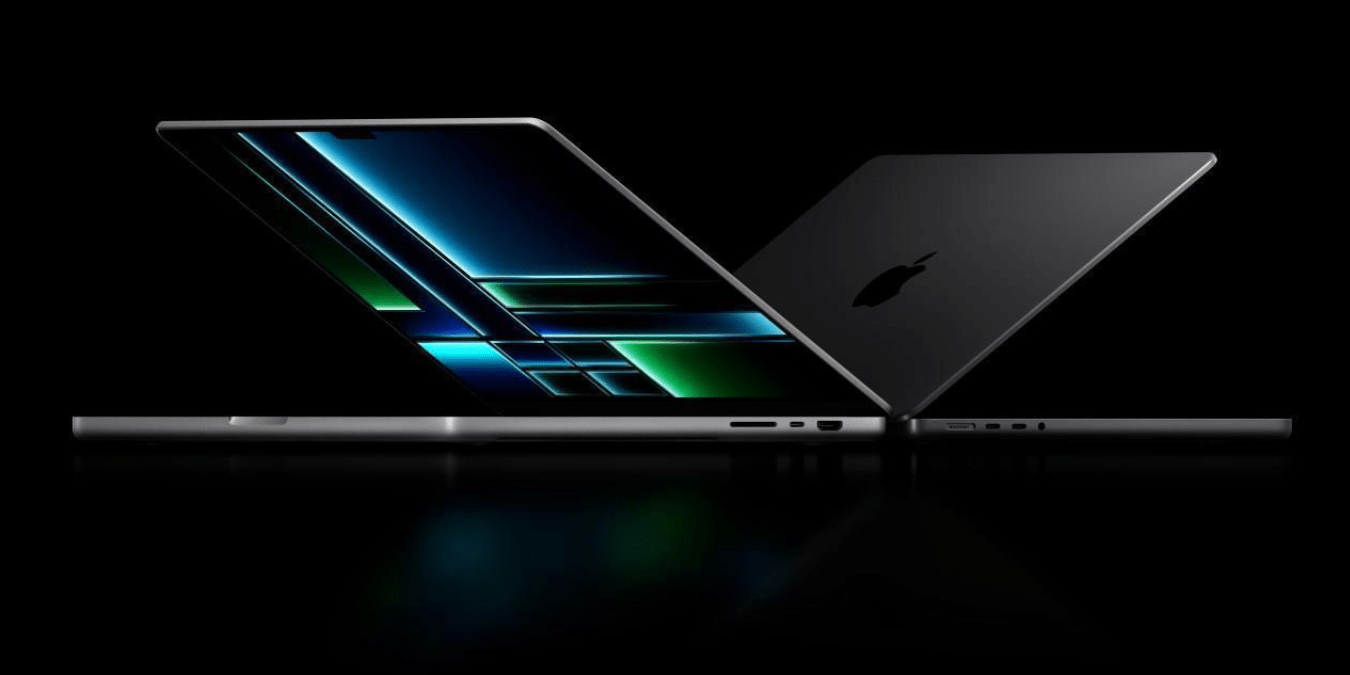
1. MacBook Pro with M5 Pro and M5 Max — The Pro Creative Workhorse Gets Dramatically Faster
The headline announcement for professional users came on Tuesday: the 14-inch and 16-inch MacBook Pro, now powered by the all-new M5 Pro and M5 Max chips. These are not incremental improvements. Apple’s own benchmarks, conducted in January and February 2026, show performance gains that will meaningfully change how creative professionals approach demanding workloads.
What’s New in the M5 Pro and M5 Max?
- Up to 4x faster AI performance compared to M4 Pro and M4 Max, and up to 8x compared to M1 models
- Up to 50% increase in graphics performance over the previous M4 generation
- Up to 4x faster LLM prompt processing — critical for AI-assisted creative workflows
- Up to 2x faster SSD speeds, with 1TB of starting storage on M5 Pro and 2TB on M5 Max
- Wi-Fi 7 and Bluetooth 6 via Apple’s N1 wireless chip — replacing Wi-Fi 6E and Bluetooth 5.3
- Unified memory bandwidth improvements enabling complex AI model training and massive video projects
For motion designers working with complex 3D scenes, the 50% GPU uplift means real-time previews that previously required a render farm. For VFX artists, it means instant effect previews. For AI researchers training custom models locally, the 4x LLM improvement changes what is feasible on a laptop entirely.
A Neural Accelerator is now built into every GPU core — not just a standalone block. This architectural change means AI operations run in parallel with graphics tasks, rather than queuing behind them. The practical result: AI-powered tools in video editing, music production, and design feel instantaneous rather than sequential.
Storage and memory also took a significant step forward. All MacBook Pro models now start at 1TB of storage — double the previous minimum. M5 Max configurations can be fitted with up to 128GB of unified memory, making this the most capable laptop Apple has ever shipped for memory-intensive workflows like large-scale 3D renders, multi-track audio production at high sample rates, or training AI models locally.
MacBook Pro M5 Pro / Max: Who Should Buy It?
- Professional video editors working in 4K and 8K HDR timelines
- 3D designers and animators using Cinema 4D, Blender, or Maya
- Music producers running large Logic Pro or Pro Tools sessions with high plugin counts
- AI researchers and developers training or fine-tuning language models on-device
- Anyone upgrading from an M1 or M2 MacBook Pro — the performance gap is substantial



2. MacBook Air with M5 — The World’s Best-Selling Laptop Gets Smarter and Faster
Apple’s MacBook Air is the world’s most popular laptop, and the M5 version raises the bar in every dimension that matters to creative professionals who prioritise portability over maximum performance.
MacBook Air M5 Key Upgrades
- Up to 9.5x faster AI performance than MacBook Air with M1
- Up to 4x faster AI task performance than MacBook Air with M4
- 153GB/s of unified memory bandwidth — a 28% improvement over M4
- Up to 6.9x faster AI video enhancement in Topaz Video vs MacBook Air M1
- Up to 6.5x faster 3D rendering with ray-tracing in Blender vs MacBook Air M1
- Starting storage doubled to 512GB at the base price — configurable up to 4TB
- Wi-Fi 7 and Bluetooth 6 via the N1 wireless chip
- Up to 18 hours of battery life with a 10-core CPU and up to 10-core GPU
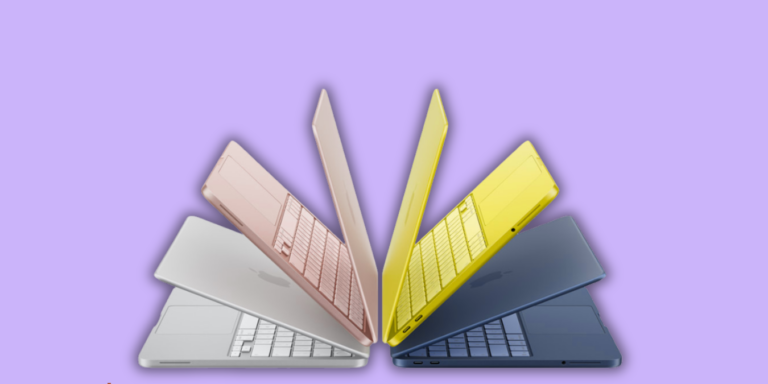
The MacBook Air M5 comes in 13-inch and 15-inch sizes, in four finishes: sky blue, midnight, starlight, and silver. It is priced at $1,099 for the 13-inch model and $1,299 for the 15-inch, making it the most accessible entry point into the M5 chip family.
The addition of sky blue as a new colour option and the doubling of base storage to 512GB are the two details turning heads among the developer community. Starting storage at 512GB was previously only available on higher-spec builds — it is now standard across the entire MacBook Air range.
3. iPad Air with M4 — The Creative Tablet Mid-Tier Leaps Forward
Apple’s iPad Air received its M4 upgrade this week, bringing with it a substantial performance and memory improvement at the same starting price. Available in 11-inch and 13-inch models, the M4 iPad Air is now positioned as a genuinely capable device for professional creative work on the go.
iPad Air M4 Key Specs and Improvements
- M4 chip with a 10-core CPU and up to 10-core GPU — up to 30% faster than M3 iPad Air
- Up to 2.3x faster than iPad Air with M1 overall
- 12GB of unified memory — 50% more than the previous generation
- Over 4x faster 3D pro rendering with ray-tracing vs M1 iPad Air
- Apple’s N1 wireless chip: Wi-Fi 7 and Bluetooth 6 support
- Apple’s C1X cellular modem: up to 50% faster cellular data, 30% less modem energy usage vs M3
- Same starting price: $599 for 11-inch, $799 for 13-inch
For illustrators, designers, and digital artists using Apple Pencil, the M4’s Neural Engine — running at the higher memory bandwidth of 12GB — makes AI-assisted drawing tools and real-time image generation smoother than ever. For students and content creators who carry their creative workflow in a bag, the iPad Air M4 paired with an Apple Pencil and Magic Keyboard is now a credible laptop replacement.
The iPad Air M4 is the first mid-tier iPad to run iPadOS 26, which brings game-changing windowing improvements and expanded multitasking capabilities. For creatives who use the iPad as their primary device, this combination of hardware and software is the most significant upgrade since the iPad went full Apple silicon.
4 & 5. Studio Display (2026) and Studio Display XDR — Apple’s Display Lineup Is Completely Reborn
Perhaps the most exciting announcement for studio-based creatives came with not one but two new displays. Apple discontinued the Pro Display XDR — its aging $4,999 flagship — and replaced it with a completely overhauled display family that delivers better technology at lower prices. This is the most significant shift in Apple’s display strategy in years.
The New Studio Display (2026) — From $1,599
- 27-inch 5K Retina display (5120×2880 at 218 ppi), 600 nits brightness, P3 wide colour
- New 12MP Center Stage camera with improved image quality and Desk View support
- Six-speaker sound system with four force-cancelling woofers delivering 30% deeper bass
- Two Thunderbolt 5 ports (up to 120Gb/s) — a major upgrade from the previous Thunderbolt 3
- Upstream port charges connected MacBook at up to 96W
- Standard or nano-texture glass options (nano-texture adds $300)
The All-New Studio Display XDR — From $3,299
- 27-inch 5K Retina XDR display with advanced mini-LED backlight and 2,304 local dimming zones
- Up to 1,000 nits sustained SDR brightness; 2,000 nits peak HDR brightness
- 120Hz ProMotion refresh rate with Adaptive Sync (47Hz to 120Hz)
- 1,000,000:1 contrast ratio — extreme HDR performance for colour-critical work
- P3 wide colour plus Adobe RGB gamut — more than 80% Rec. 2020 coverage for HDR editing
- Thunderbolt 5 upstream port with 140W charging — enough to fast-charge a 16-inch MacBook Pro
- 12MP Center Stage camera with Desk View, studio-quality three-mic array, spatial audio
- New DICOM medical imaging presets with Medical Imaging Calibrator (pending FDA approval)
| Feature | Studio Display (2026) | Studio Display XDR |
| Panel Type | LED (5K, 60Hz) | Mini-LED (5K, 120Hz) |
| Peak Brightness | 600 nits (SDR) | 2,000 nits (HDR) |
| Colour Gamut | P3 Wide Colour | P3 + Adobe RGB |
| Thunderbolt 5 Charging | 96W upstream | 140W upstream |
| Adaptive Sync | No | Yes (47–120Hz) |
| Starting Price | $1,599 | $3,299 |
| Best For | Photo/Video editing, coding, music | HDR video, 3D rendering, colour grading |
The Studio Display XDR is the most important display Apple has launched for creative professionals since the original Pro Display XDR in 2019 — and at $3,299 (versus the Pro Display XDR’s $4,999 plus $999 for the stand), it democratises professional-grade HDR colour work for a much larger audience. The 4x increase in local dimming zones compared to the Pro Display XDR (2,304 vs 576) should mean significantly better contrast handling with less blooming in high-contrast scenes.
Both new Studio Displays are compatible with recent iPads running iPadOS 26.3.1 or later, including iPad Pro and iPad Air models with USB-C ports. This means creative professionals can now use a professional Apple display directly with an iPad — a genuinely new workflow possibility.
What Apple’s Big Week Means for Creative Professionals in India
For Indian creative professionals, this Apple launch week lands at a pivotal moment. The post-pandemic boom in content creation, the explosion of freelance design and video work, and the growing adoption of AI-assisted tools across studios and agencies have collectively raised the baseline requirements for a professional creative workstation.
The M5 MacBook Pro, in particular, addresses the workflows that were previously driving Indian post-production professionals toward expensive workstation builds. Running DaVinci Resolve, After Effects, and Blender simultaneously on a laptop with 128GB of unified memory and 4x AI performance over the previous generation is no longer a compromise — it is a genuinely viable primary workstation.
For students and independent creators, the MacBook Air M5’s doubled base storage and Wi-Fi 7 connectivity at $1,099 makes it the most compelling entry into Apple silicon yet. And the iPad Air M4’s unchanged pricing at $599, combined with M4 performance and the full iPadOS 26 feature set, makes the case for a fully mobile creative workflow stronger than it has ever been.
India-specific note: Apple products are available through Apple’s online store at apple.com/in, authorised resellers, and Reliance Digital / Croma outlets. Import duties affect Indian pricing — expect Indian retail prices to be 15–25% above the US base prices listed in this article. Pre-orders open 4 March 2026; availability begins 11 March 2026.
Quick Verdict: Which Product Should You Buy?
| You Are… | Best Buy |
| A professional video editor or 3D artist | MacBook Pro 16″ with M5 Max |
| A freelance designer or developer on the go | MacBook Air 15″ with M5 |
| A student, illustrator, or digital creator | iPad Air 13″ with M4 |
| A studio professional needing a colour-accurate display | Studio Display XDR |
| An everyday creative user wanting a desktop monitor upgrade | Studio Display (2026) |
The Bottom Line
Apple’s March 2026 product week is not a routine update cycle. It is a statement about where professional creative computing is headed: on-device AI so fast it feels instant, storage that no longer forces creative compromises, displays that match or exceed dedicated broadcast monitors at accessible price points, and a hardware ecosystem designed to work together seamlessly across Mac, iPad, and display.
For creatives — whether you are a freelance illustrator in Mumbai, a post-production studio in Bengaluru, or a content creator in Delhi — there has never been a better moment to evaluate an Apple upgrade. The products announced this week will be relevant and powerful for years to come. Pre-orders are open now, shipping on 11 March 2026.

With over 15 years of experience in Banking, investment banking, personal finance, or financial planning, Dkush has a knack for breaking down complex financial concepts into actionable, easy-to-understand advice. A MBA finance and a lifelong learner, Dkush is committed to helping readers achieve financial independence through smart budgeting, investing, and wealth-building strategies, Follow Dailyfinancial.in for practical tips and a roadmap to financial success!